
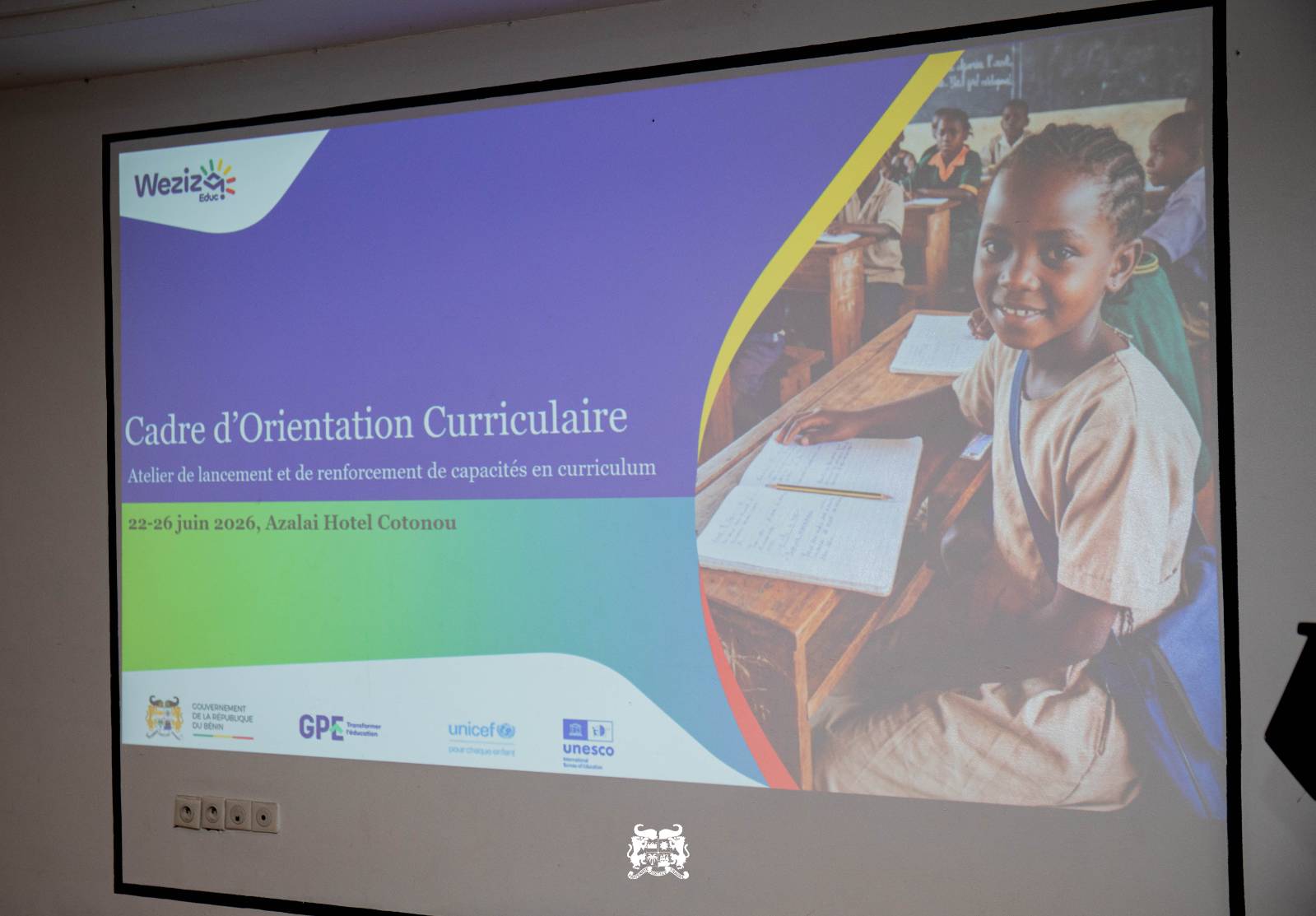
The heartbeat of Bénin’s educational transformation is pulsating this week in Cotonou. From June 22 to 26, 2026, the Azalaï Hotel serves as the epicenter for a landmark workshop focused on crafting a National Curriculum Framework. Spearheaded by Minister Armand Kuyema Natta, this pivotal initiative aims to streamline education from early childhood through higher learning, ensuring a cohesive, modern system that reflects the country’s socio-economic realities and prepares the next generation of citizens.
Unprecedented ministerial rally for the future of Bénin’s youth
The official launch of the workshop on Monday, June 22, underscored the magnitude of the occasion through an unprecedented turnout. Nearly every minister overseeing Bénin’s diverse educational sectors gathered to signal the cross-cutting urgency of this reform.
Representatives from early education, primary, secondary, higher education, scientific research, technical training, and vocational programs were present, alongside officials from the National Education Council (CNE). The delegation also included Madame Laure Weisgerber, Director of the French Development Agency (AFD), representing the collective of technical and financial partners.
This mobilization reflects a deliberate departure from traditional siloed governance. Rather than piecemeal reforms, the initiative champions a unified, inclusive, and structured dialogue to overhaul the entire national education system.
Curriculum reform: reflecting the aspirations of Béninese society
During the opening ceremony, Wilfried Guezodjè, Permanent Technical Secretary of the Sectoral Education Plan (PSE), framed the philosophical and technical foundations of the reform. For him, curriculum revision transcends administrative tasks—it embodies the very essence of societal choices for future generations.
« A curriculum is not merely a pedagogical document; it is a mirror of the society we wish to build for our children. It determines what they learn and, more importantly, the kind of citizens they will become. »
Guezodjè described the process as « demanding yet hopeful, » emphasizing that the collective ambition is to equip every Béninese child with the skills needed for personal growth and future employability. The framework’s core challenge lies in balancing local relevance with international quality standards.
From isolated updates to a unified learning journey
The morning’s keynote speech by Minister Armand Kuyema Natta laid bare the limitations of past sector-specific reforms. While previous efforts successfully reopened and updated primary and secondary programs, they lacked continuity—a critical flaw in a system where students transition seamlessly between levels.
« Updating programs in isolation, no matter how thorough, is insufficient, » the minister asserted. « A student leaving primary school must seamlessly integrate secondary education without methodological gaps, and a high school graduate must arrive at university with the prerequisites for their chosen field. The National Curriculum Framework serves as this unifying thread, ensuring shared guiding principles across all educational stages. »
International partners reaffirm commitment to a transformative project
A reform of this scale demands robust support and sustainable partnerships. Madame Laure Weisgerber, AFD Director, used the platform to reaffirm her institution’s unwavering commitment to Bénin’s government.
Technical and financial partners view this initiative as a structural reform with the potential to maximize the impact of investments in education. By aligning programs with real labor market demands—especially in technical and vocational training—Bénin positions itself to combat youth unemployment and catalyze economic development.
A decisive milestone for Bénin’s future
The Cotonou workshop, concluding on June 26, marks a renewed social contract between the State, educators, families, and learners. By prioritizing harmonized programs, Bénin is choosing coherence over hasty reforms.
The drafting of a National Curriculum Framework represents a watershed moment. While the challenges of on-the-ground implementation remain, the political will displayed this week—backed by international partners—signals a promising future for Bénin’s schools. An education system that is more unified, inclusive, and unequivocally forward-looking.