
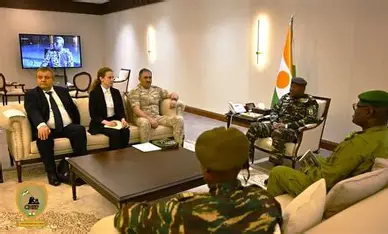
Three years following the military realignment with Russia subsequent to the July 2023 coup d’état, Niger continues to grapple with an escalating jihadist insurgency. Despite the transitional authorities’ pledge to restore stability, coordinated attacks have intensified, inflicting heavy casualties on the nation’s defense and security forces.
Between targeted strikes on military outposts and ambushes on supply convoys, the past three years have witnessed a marked deterioration in security conditions. Military sources report that in a single three-day period, at least 265 Nigerien soldiers were killed in synchronized assaults—a sequence of events ranking among the deadliest in recent history.
While the pivot toward Moscow introduced Russian military advisors and facilitated the gradual withdrawal of Western partners, these adjustments have yet to translate into a sustainable improvement in security. In fact, the frequency and severity of violent incidents have surged since 2023, contradicting initial expectations of enhanced stability.
Data from the Armed Conflict Location & Event Data Project (ACLED) indicates that Niger recorded approximately 225 attacks in 2023, mirroring 2022’s figures but accompanied by a 27% increase in fatalities. This alarming trend has only intensified, as evidenced by a 2025 assessment from the Assessment Capacities Project (ACAPS), which documented over 700 civilian deaths—more than double the 2023 toll—marking a historic peak in violence.
The northern regions of Tillabéri and Tahoua, along with border areas adjacent to Mali and Burkina Faso, remain the epicenters of the insurgency, driven by factions aligned with the Islamic State and the Jama’a Nusrat ul-Islam wa al-Muslimin (JNIM). Major incidents include the loss of more than 60 soldiers in Tabatol in October 2023, followed by the fatal ambush of 23 troops near Tillabéri in March 2024. A relentless wave of attacks on civilian settlements, military patrols, and supply routes has further strained the operational capacity of Niger’s armed forces.
The persistent inability to curb the jihadist threat has fueled scrutiny of the new security partnership. Three years after the strategic shift, the insurgency shows no signs of abating, underscoring the enduring challenges faced by Niger’s military in reclaiming control over its territory.