
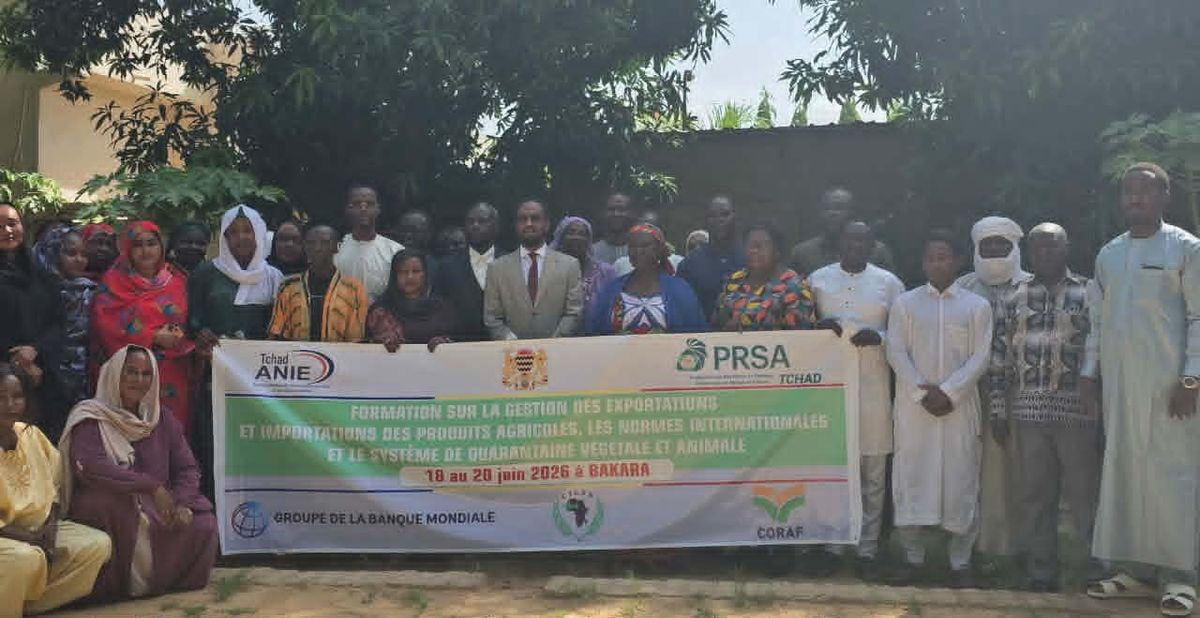
In a significant move to strengthen its agricultural sector, Chad is rolling out an intensive training program designed to enhance export management capabilities. The initiative, led by the World Bank and the National Investment and Export Agency (ANIE), kicked off today in Bakara with a focused session on international trade standards and compliance.
Overcoming export barriers through targeted expertise
At the heart of this initiative is the Agricultural Sector Resilience Program (PRSA), which has identified export challenges as a critical bottleneck for Chadian producers. The training aims to address these hurdles by equipping participants with essential skills in international certifications, logistics management, and compliance with sanitary and phytosanitary measures.
The session highlighted the persistent struggles faced by local farmers and agribusinesses, who often grapple with complex export procedures, stringent quality controls, and cross-border regulatory demands. By providing practical tools and knowledge, the program seeks to streamline these processes and unlock new market opportunities.
Aligning with national economic priorities
The ANIE’s Deputy Director General, Dadi Adoum Arsin, emphasized the alignment of this initiative with Chad’s broader economic vision. The government’s Tchad Connexion 2030 development plan positions private sector growth, local value addition, and export promotion as key drivers of economic transformation. This training is a direct response to those objectives, reinforcing Chad’s ambition to become a regional economic player.
Arsin noted, “Boosting agricultural exports isn’t just about producing more—it’s about selling more. To achieve this, we must build an economy that meets international standards and can compete in global markets.”
Seizing continental trade opportunities
The timing of this initiative coincides with the launch of the African Continental Free Trade Area (AfCFTA), which presents a massive opportunity for Chadian businesses. With access to a market of over 1.4 billion consumers, Chad’s agricultural sector stands to benefit significantly—but only if local operators are equipped to meet the demands of this new economic landscape.
The training underscores the importance of quality assurance, standardization, and compliance in positioning Chadian products for success in both regional and international markets. By investing in these areas, Chad can ensure its producers are not left behind in the continent’s economic integration drive.
A step toward a more competitive agricultural sector
This program brought together a diverse group of stakeholders, including public officials, private sector representatives, and agricultural experts. The goal is to foster collaboration across the value chain—from production and processing to export logistics and market access.
The ANIE’s vision extends beyond mere compliance; it aims to create an enabling ecosystem where businesses have access to technical support, market intelligence, and strategic partnerships. By acting as a bridge between producers and global buyers, the agency seeks to elevate the profile of Chadian agricultural products on the world stage.
Today’s training marks a pivotal moment in Chad’s journey toward a more resilient and competitive agricultural sector. It reflects a commitment to innovation, quality, and economic sovereignty—key pillars that will shape Chad’s future in regional and global trade.