
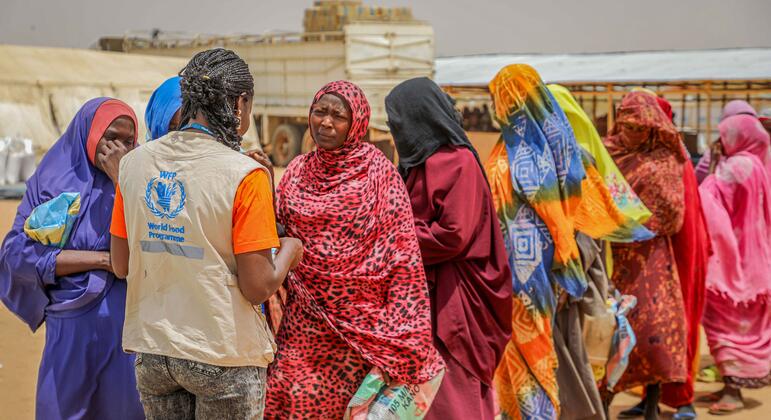
More than a million Sudanese refugees in Chad are confronting imminent and potentially life-threatening reductions in critical aid, including food, water, shelter, healthcare, and protection services. This alarming situation has been highlighted by United Nations agencies, as the conflict in Sudan enters its fourth year of devastation.
Survival at stake amid funding shortages
The UNHCR and the World Food Programme (WFP) have issued urgent warnings, stating they currently lack over half the required resources to meet the growing needs of refugees. Without immediate intervention, essential aid is set to be slashed in the coming months, leaving vulnerable populations in dire straits.
«Essential support for refugees in Chad will be further reduced in the coming months unless a funding gap of $428 million — $289 million for UNHCR and $139 million for WFP — is urgently addressed», the agencies stressed in a joint statement.
Chad bears the brunt of Sudan’s crisis
Chad has become the frontline of the Sudanese conflict’s fallout, hosting an unprecedented 1.3 million Sudanese refugees. Since 2023 alone, over 900,000 have fled across the border, making up one in thirteen residents nationwide — and nearly one in three in the country’s eastern regions.
Despite mounting pressure on already strained resources, Chadian authorities continue to keep borders open, while local communities persist in welcoming new arrivals. Since January 2026, nearly 15,000 additional refugees have crossed into Chad, further intensifying demands on humanitarian aid.
Only 40% of refugees receive basic assistance
On the ground, the consequences of underfunding are already catastrophic. The UNHCR reports that only four out of ten refugees are receiving basic assistance, leaving hundreds of thousands without adequate access to clean water, safe shelter, or essential healthcare.
«The situation in eastern Chad vividly demonstrates the human cost of funding shortfalls», warned Patrice Ahouansou, UNHCR Representative in Chad. Over 80,000 families are now homeless, and in some areas, refugees survive on less than half the minimum daily water requirement. Overcrowded health centers, reduced protection services — especially for survivors of sexual violence — and overwhelmed education systems with class sizes exceeding 100 students per teacher, paint a grim picture of the unfolding crisis.
Moreover, more than 243,000 people remain stranded in border zones due to insufficient funds for relocation to safer areas within the country. Many families sleep in the open or under makeshift shelters, exposed to disease, insecurity, and extreme weather conditions.
Food aid drastically reduced
The WFP, which supports over a million people in host zones, has seen its resources cut by more than half. As a result, food rations have been halved for the majority of refugees, disproportionately affecting women and young children who are most vulnerable to malnutrition.
«With only a fraction of the required resources, we cannot provide sufficient food assistance to those in greatest need», said Sarah Gordon-Gibson, WFP Country Director and Representative in Chad. «Families will be forced into desperate coping mechanisms that put lives at risk».
An urgent call for global solidarity
International aid agencies are sounding the alarm: without immediate donor support, conditions will worsen rapidly. «By the end of 2025, we had secured only about a third of the funding needed to fully respond to this emergency», the agencies stated. «Without urgent action this year, we face deeper budget cuts, harsher living conditions, and escalating suffering for families who have already fled war».
While acknowledging past donor generosity, UNHCR and WFP urge the international community to step up support over the next six months to sustain vital assistance.
«Chad’s continued openness must be matched by a fairer sharing of global responsibility before the situation deteriorates further».