
Congo’s shadow state: the invisible force behind the throne
In the Democratic Republic of Congo, power has never been seized in broad daylight—it is taken in the darkness. Since 1960, each president, coup, and transition has relied on an unseen architect: the intelligence services. These institutions are not just state tools; they are the state itself. When the Sûreté Nationale coughs, the presidential palace shudders. When the CND listens, ministers fall silent. When the ANR arrests, the courts obey.
Why? Because Congo was born in Cold War intrigue, coups, and deep distrust. On June 30, 1960, independence was declared. By September 14, Mobutu had staged his first coup. Between those dates: a void. And the Sûreté filled it.
Three decades of fear: the architects of Congo’s shadow state
Their official mandate—collecting political, economic, and social intelligence—was just the surface. Unofficially, they did three things:
- Protect the leader: From enemies, from the military, from the people.
- Watch everyone: Opponents, ministers, clergy, students, the diaspora.
- Instill terror: So no one dared challenge the system.
Between 1960 and 1990, one system wore three masks. Three men wrote Congo’s rulebook of fear:
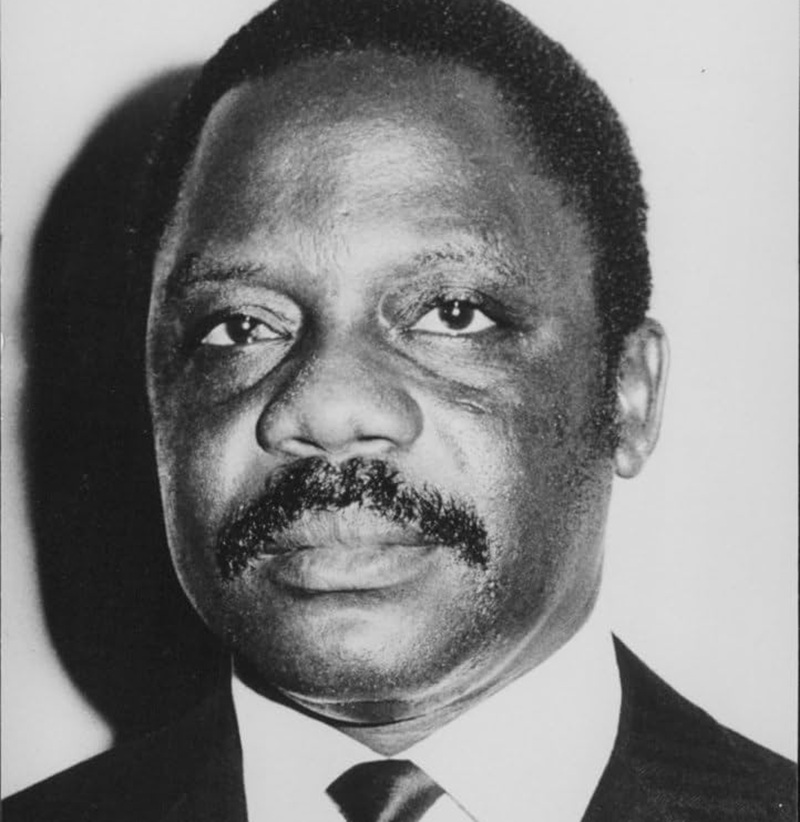
- Victor Nendaka Bika, the “Congolese Oufkir”: A nurse turned spymaster who turned the colonial Sûreté into a political weapon. He declared: the head of intelligence answers only to the president—never to ministers.
- Seti Yale, the “Grey Eminence”: A man trained by Israel and the U.S., he built the CND—the “Zairean KGB”—installing wiretaps, surveillance, and torture as standard practice.
- Honoré Ngbanda, “Terminator”: He industrialized fear. Every ministry had its spy. Every embassy, its listening post. Terror reached even Europe.
The golden rule from 1960 to 1990 was simple: “Who controls intelligence, controls power.” Mobutu understood this early. He created multiple agencies—CND, SNIP, SARM, DSP—to keep them all watching each other. But he never let one man control the machine too long. Nendaka was fired in 1965. Seti Yale was sidelined. Ngbanda was dismissed in 1990.
In 1997, the system collapsed with Mobutu. But it did not die. It evolved. SNIP, AND, ANR—the acronyms changed. The basements remained. The methods stayed.
The birth of a monster: Victor Nendaka and the making of a spy empire
October 1960. Congo is three months old. Mobutu has just overthrown Lumumba. He needs a man to secure the state—one who asks no questions. That man is Victor Nendaka Bika.
Within months, Nendaka reorganized the Sûreté Nationale into a political machine. He created the Bureau d’Investigations Nationales (BIN), turning it from a crime-fighting unit into a tool for silencing Lumumbists. He joined Mobutu’s shadow council, the Groupe de Binza, becoming a key player in the nation’s silent leadership.
Why was he called the “Congolese Oufkir”? Because he imposed three rules that would haunt Congo for decades:
- The intelligence agency above the law: When Minister Christophe Gbenye tried to fire him in December 1961, Nendaka surrounded his office with troops. Gbenye was dismissed instead.
- Intelligence as political project: As a Groupe de Binza member, he helped appoint and remove prime ministers, with CIA backing.
- No accountability: Even when accused in the death of Patrice Lumumba, he shifted blame: “It wasn’t me—it was D’Aspremont, Tshombe, Lahaye.”
By 1965, Mobutu removed him—too powerful. But the machine was already running. Seti Yale and Honoré Ngbanda would only refine Nendaka’s methods.
The Lumumba file: a shadowy transfer and a nation’s silence
January 16, 1961. A yellowed note in an old man’s hand becomes a historical bombshell.
“When we learned that Tshombe would host Lumumba, the evacuation plans for three prisoners were changed by André Lahaye, a Sûreté agent… I kept this document,” Victor Nendaka testified decades later before a Belgian inquiry commission.
The document authorized the transfer of Patrice Lumumba, Maurice Mpolo, and Joseph Okito to Elisabethville. That night, January 17, they were executed. Nendaka’s defense: “Kasa-Vubu agreed to the transfer. We believed Lumumba would be safe in Katanga. Killing opponents was not our way— palavers under the baobab tree were the tradition.”
Historians disagree. Many suspect Nendaka played a direct role. Yet he maintained his innocence until death, claiming the inquiry was “trying to trap him.”

The legacy of shadows: from BIN to ANR, the machine lives on
Nendaka’s dismissal in 1965 did not end the system—it perfected it. Seti Yale, trained in Israel and the U.S., transformed the small BIN into the CND, a full-fledged intelligence empire. Wiretaps, torture, disappearances—methods became institutionalized. Honoré Ngbanda, “Terminator,” expanded the network globally, embedding spies in every ministry and embassy.
Though Mobutu fell in 1997, the shadow state did not die. It mutated. The CND became the ANR. The methods remained. The fear endured.
This is the real history of power in Kinshasa—not the one broadcast on radio, not the one written in official speeches. It is whispered in windowless offices, scribbled in secret dossiers, spoken in the language of fear.
And it began with an infirmier who became the architect of the Congo’s silent empire.