
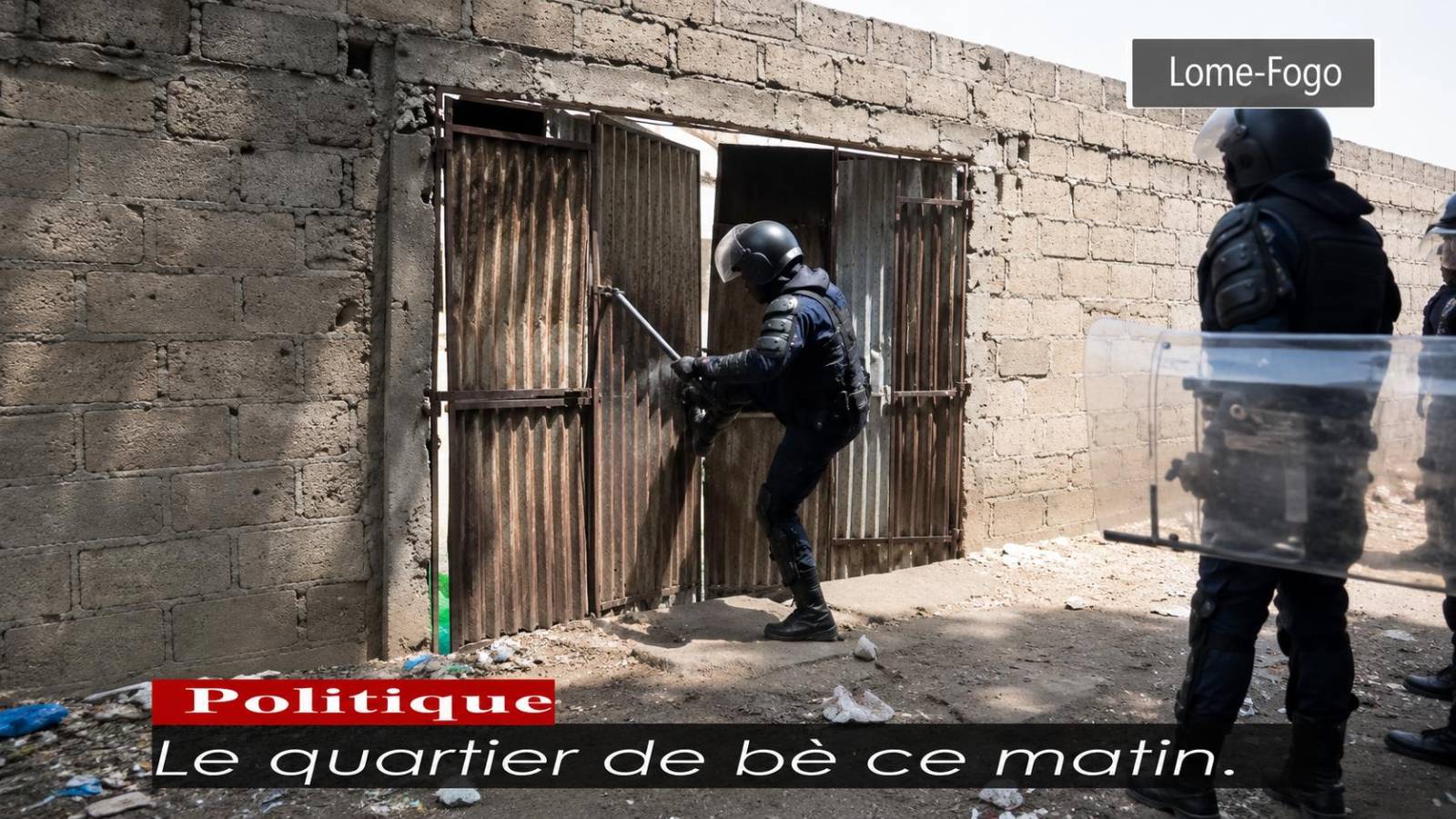
The military is meant to be a shield of protection, the guardian of peace and stability. Yet in Togo, this noble role is often overshadowed by a harsh truth: soldiers, entrusted with safeguarding the nation, have been turning their weapons inward—invading private homes and unleashing violence on unarmed citizens.
When the home is no longer a sanctuary
Home is where safety should reign supreme. But in Togo, especially in cities like Lomé and Sokodé, the sound of breaking doors and shouts in the night has replaced the quiet comfort of a family’s refuge. Soldiers, sometimes without warrants or justifiable cause, raid homes under the guise of “teaching a lesson.” What begins as a knock at the door too often ends with fists, humiliation, and fear.
Beating a man in front of his children or dragging a youth from his courtyard is not bravery—it is cowardice disguised as authority. These acts do not uphold order; they erode trust in the very institutions sworn to protect the people.
Why leadership silence is dangerous
When a uniformed soldier raises a hand against a civilian, it’s not just one rogue act. It signals a deeper failure: a command structure that tolerates brutality, or worse, uses fear as a tool of control. The consequences are far-reaching:
- Broken trust: A citizen beaten by soldiers no longer sees the state as a protector—but as a threat.
- Rising anger: Treating citizens like enemies doesn’t earn respect; it fuels resentment and sows the seeds of unrest.
- Legal violations: No law in Togo—civil or military—allows soldiers to assault civilians in their homes. Such acts are not just unethical; they are criminal.
Soldiers are not police—and civilians are not targets
One root of the problem lies in mission confusion. Soldiers are trained for combat, not community policing. When deployed to maintain public order, they often default to force, treating neighborhoods like war zones and neighbors like enemies. This misalignment doesn’t bring peace—it brings trauma.
“An army that the people fear is not a national army—it is an occupying force in its own land.”
Restoring honor through accountability
True military honor is not measured in the number of fists thrown, but in the respect shown to every citizen. A soldier’s duty is to uphold the law, not to terrorize families for expressing dissent or living in certain areas.
Real change begins when impunity ends. Until soldiers who abuse their power face consequences, the divide between the people and the armed forces will only widen. Togo doesn’t need more violence to stay stable—it needs justice, discipline, and dignity.