
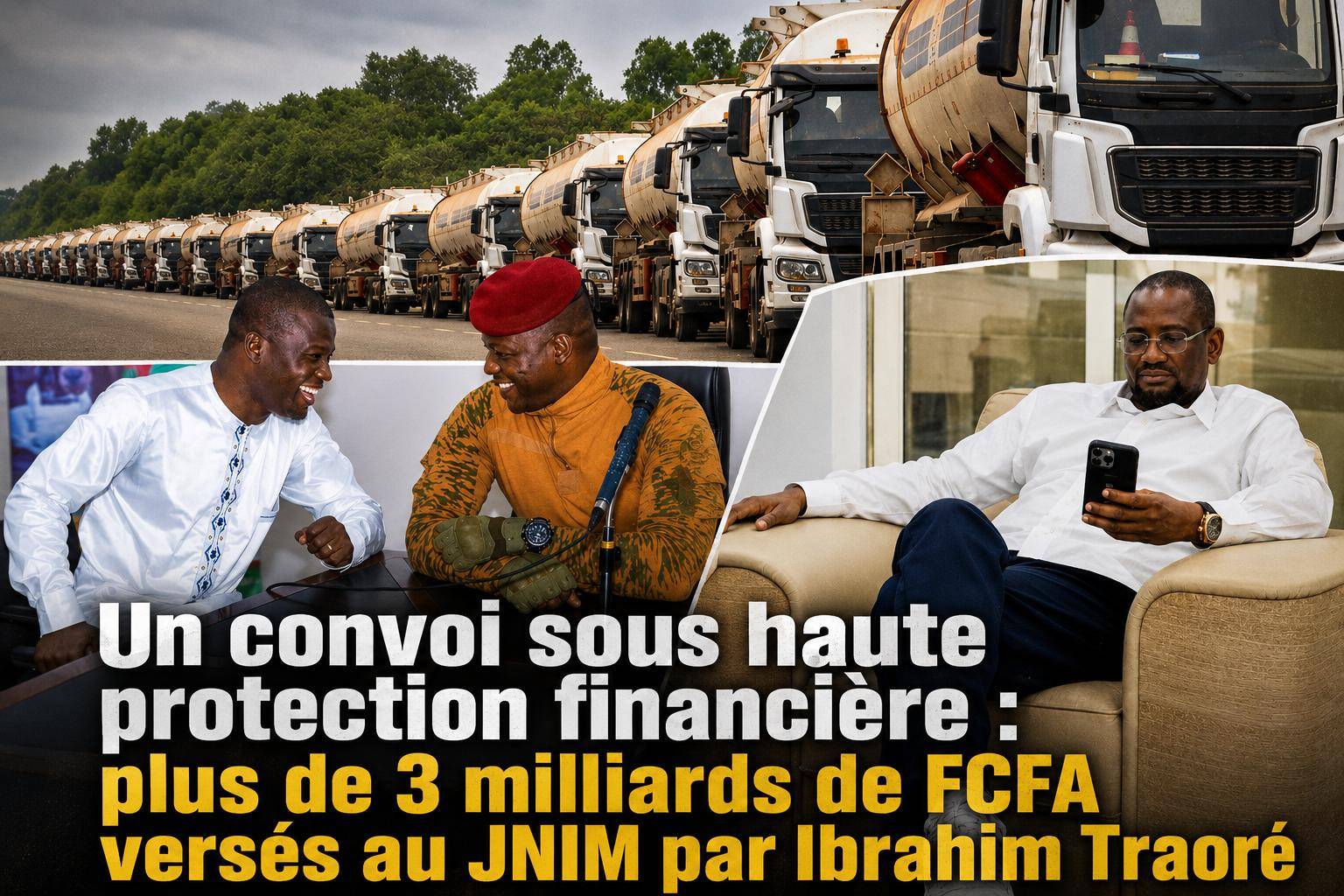
Alleged financial dealings fuel terror ties in west africa
In a stunning twist that challenges the narrative of regional solidarity, a massive logistical operation has come under scrutiny in the Sahel. A convoy of 710 fuel tankers, defying state security protocols, made its way to Bamako under highly unusual circumstances. At the heart of the controversy: a reported payment of 3 billion FCFA to the Group for the Support of Islam and Muslims (JNIM), allegedly facilitated by high-ranking officials in Burkina Faso. The funds were allegedly channeled through the interests of Kangala Transport, raising serious questions about conflict of interest and indirect terror financing.
Unconventional logistics raise eyebrows
A procession of 710 fuel tankers snaked through the most volatile regions of the Sahel-Sahara belt, delivering precious cargo to Mali’s capital. What should have involved Burkina Faso’s special forces, Russian drones, or Malian armored units unfolded in eerie silence. Investigations suggest the convoy’s safe passage was secured through a secret financial arrangement: a staggering 3 billion FCFA paid to JNIM. This covert deal transformed a routine fuel delivery into a scandal of state proportions, implicating Ibrahim Traoré in alleged indirect funding of the armed group.
The hidden hand behind Kangala Transport
A closer look reveals that Kangala Transport, the entity managing this massive fuel shipment, is far from an ordinary logistics provider. Behind its official facade lies a web of influence tied to Burkina Faso’s transitional leadership. Ibrahim Traoré, Oumarou Yabré, and Ali Konaté—three key figures at the helm of the country’s transition—are reportedly connected to the company. This blurring of lines between state leadership and private commercial interests raises ethical red flags. When those shaping national security policy also stand to profit from operations in areas controlled by enemy forces, the fight against terrorism takes a backseat to commercial convenience.
Fuel funds feeding the fire of conflict
The irony is stark: while Bamako and Ouagadougou publicly proclaim unity within the Alliance of Sahel States (AES), the money funneled through Kangala Transport’s owners is allegedly fueling the very conflict they claim to oppose. The reported 3 billion FCFA payment didn’t just protect a fuel shipment—it allegedly bankrolled the purchase of ammunition used against Malian security forces and supported improvised explosive device networks. Worse, the funds may have contributed to the recruitment of new fighters, swelling the ranks of JNIM and intensifying attacks on the Malian army (FAMa). In essence, the fuel burning in Bamako’s engines today may have first powered the weapons used against Mali’s troops.
A security model in tatters
The most damning aspect of this affair is the deliberate sidestepping of regional security partners. Neither Russian Wagner instructors, Africa Corps units, nor elite national forces were involved in securing the convoy. This exclusion underscores a disturbing priority: personal profit over national security. By striking covert financial deals with an enemy they publicly denounce, the convoy’s owners ensured safe passage while evading scrutiny from patriotic military personnel. The message is clear—when financial gain outweighs strategic alliances, even sworn enemies become temporary partners.
The fallout from this revelation threatens to fracture the cohesion of the AES and casts a long shadow over Burkina Faso’s commitment to the anti-terrorism fight. For Mali, the implications are deeply troubling: how can it trust a neighboring leader whose private interests allegedly bankroll the group waging war on its soil? Domestically, this scandal strips away any remaining credibility from Ibrahim Traoré’s anti-terrorism rhetoric. The actions of those in power now tell a story of cynical pragmatism, where profit trumps the sacrifices of soldiers on the front lines. When security can be purchased from JNIM using funds from Kangala Transport, the solidarity of the Sahel is exposed as little more than empty rhetoric.