
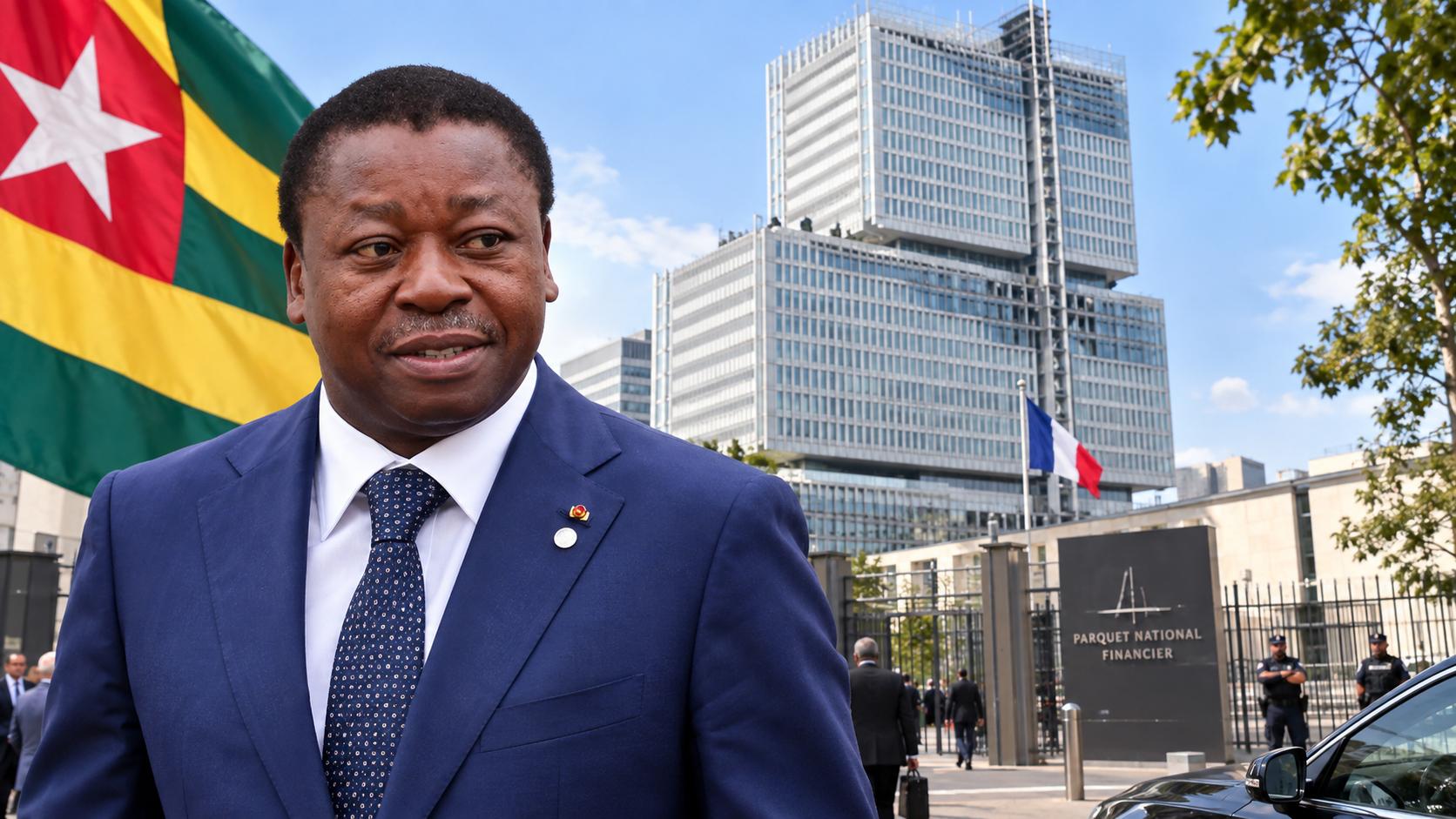
The Parquet National Financier (PNF) in France is stepping up its scrutiny of assets held by foreign leaders, with President Faure Gnassingbé of Togo and his associates now in the crosshairs. A complex web of shell companies, luxury properties, and suspected money laundering has emerged, casting a shadow over the financial dealings of the Togolese presidency.
Unpacking the financial trail in France
This isn’t the first time such allegations have surfaced. The case has resurfaced in the past, stirring debates in both diplomatic circles and judicial chambers. While high-profile investigations have previously targeted leaders from Central Africa, such as Teodorín Obiang and the Bongo family, Faure Gnassingbé now faces legal repercussions for assets allegedly acquired through embezzled public funds from Togo.
Key findings from the ongoing investigation
The PNF, in coordination with France’s Office central pour la répression de la grande délinquance financière (OCRGDF), is dissecting a series of suspicious financial transactions linked to the Togolese leader’s inner circle. Their focus includes:
- Luxury real estate holdings: Eight Haussmannian apartments and five stately townhouses in Paris and the Île-de-France region, often structured through Sociétés Civiles Immobilières (SCIs) and nominee owners.
- Complex financial maneuvers: Offshore accounts in tax havens, including two in Fiji, and transactions routed through low-tax jurisdictions.
- Allegations of money laundering and corruption: Prosecutors are probing whether these multi-million-euro properties—some valued at tens of millions—were acquired through diverted public funds. The inquiry also examines whether the president’s official salary (estimated at 70-80 million FCFA annually) could realistically account for such wealth. Independent investigations and investigative journalism have valued the president’s fortune at over 3,000 billion FCFA.
- Connections to historical intermediaries: Key figures like former Togolese Minister of State Barry Moussa Barqué and financial flows tied to disputes over Lomé’s Autonomous Port concessions, linked to the Bolloré Group.
A fractured legacy: family disputes and contested assets
The Togolese presidency’s real estate portfolio in France isn’t a recent phenomenon. Its origins trace back to the era of Étienne Eyadéma Gnassingbé, the late president and father of the current leader. Upon his death in 2005, the family’s inheritance sparked bitter legal battles, with seizures and ownership disputes further complicating the matter.
Among the properties repeatedly flagged by investigative journalists and anti-corruption NGOs are:
- Three buildings on avenue du Maréchal-Maunoury in Paris.
- High-end residential units in the Hauts-de-Seine department.
- Recent acquisitions linked to official visits to Paris.
France’s evolving stance on ‘ill-gotten gains’
For over a decade, France’s crackdown on ‘biens mal acquis’ primarily targeted families from Gabon, Congo-Brazzaville, and Equatorial Guinea. However, recent legislative changes—including mechanisms to return confiscated assets to affected populations—have sharpened magistrates’ resolve to scrutinize the finances of any foreign leader whose French holdings exceed their declared income.