
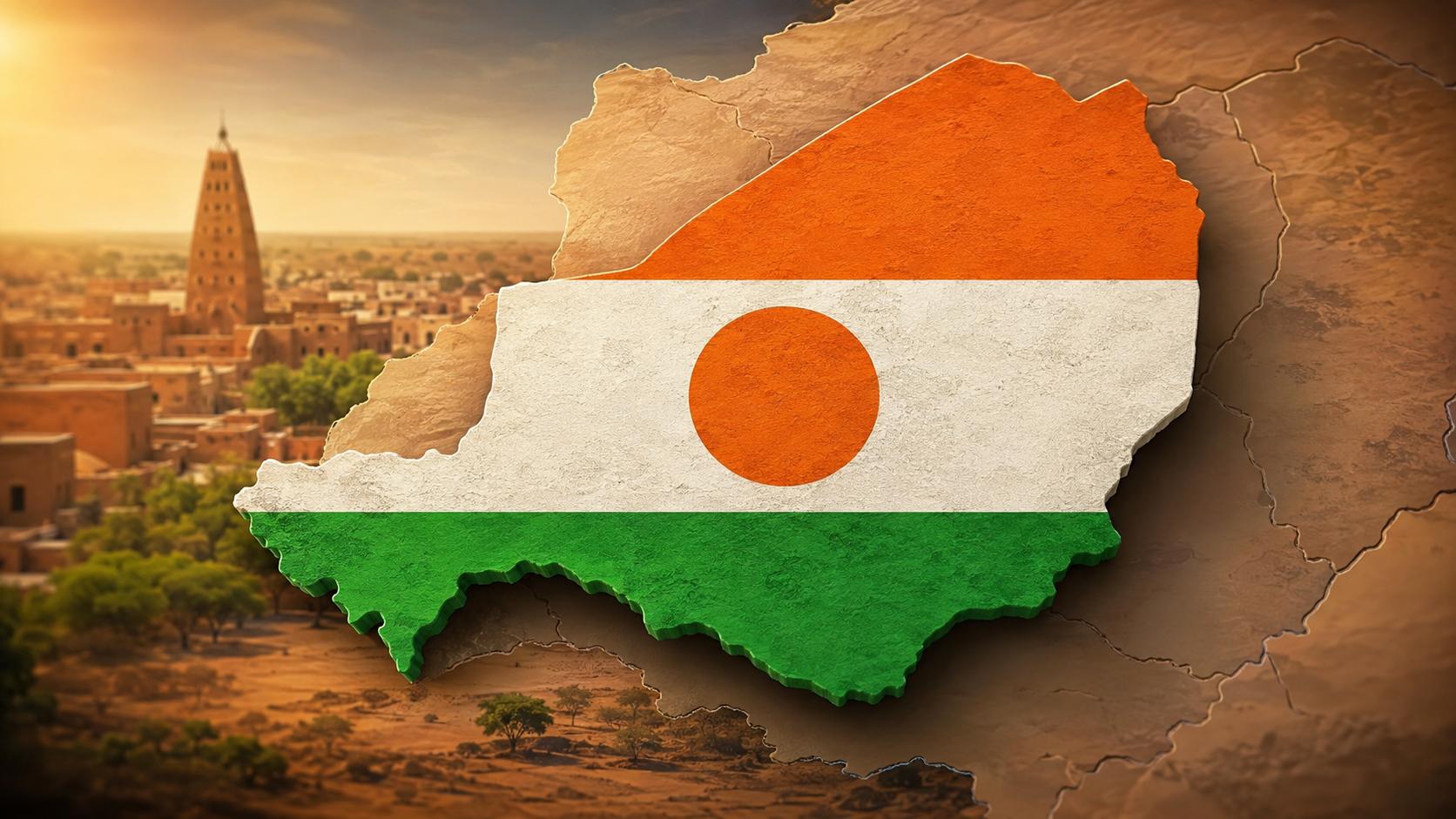
The violent clashes that erupted in Niamey on August 29 and 30 exposed deep fractures within Niger’s military establishment and raised critical questions about the stability of General Abdourahamane Tiani’s regime. While the attempted coup was thwarted, the mutiny—orchestrated by elements within the country’s own armed forces—has left a lasting mark on the political and security landscape of the nation.
Internal military rebellion exposes regime vulnerabilities
The mutiny, spearheaded largely by special forces and units stationed near the capital, targeted key locations including the presidential palace and the 101st Air Base at Niamey-Diori Hamani International Airport. The attack was not a foreign incursion or insurgent assault, but an internal military uprising, signaling a severe crisis of confidence within Niger’s defense apparatus.
Frustration among troops appears to stem from worsening security conditions and mounting casualties in the ongoing fight against jihadist groups, particularly those affiliated with Al-Qaida and the Islamic State. These groups continue to launch deadly attacks, even in close proximity to the capital, including multiple strikes on the airport in 2026.
The irony is striking: General Tiani, who seized power in July 2023 under the banner of restoring security and combating extremism, now faces armed resistance from within the very institution he once led. What began as a promise to prioritize national safety has collided with a harsh reality—one in which jihadist violence persists despite three years of military rule.
Foreign support reshapes the power balance in Niamey
In the face of this internal military challenge, the regime turned to external allies for critical assistance. Reports indicate that elements of the Russian Africa Corps actively participated in recapturing the 101st Air Base and neutralizing the mutineers. Moscow confirmed its support for Niger’s authorities, while drone deployments and coordinated operations played a decisive role in quelling the rebellion.
This intervention underscores a significant shift in Niger’s security partnerships. Since severing ties with Western allies and expelling French and American forces, Niamey has increasingly relied on Moscow as a key military partner. Yet, the paradox remains: a government that champions sovereignty and strategic autonomy found itself compelled to call on foreign fighters to defend itself from its own soldiers.
Algeria’s military aid adds regional complexity
Algeria also extended military support to Niger, deploying four fighter jets and additional equipment in response to what Algiers described as an attempt to destabilize the country. Given Algeria’s long border with Niger and its long-standing concern over Sahelian insecurity, its intervention carries both strategic and symbolic weight.
The combined assistance from Russia and Algeria highlights a stark contrast: while regional allies like Mali and Burkina Faso—both members of the Alliance of Sahel States (AES)—offered political backing, they did not provide direct military support during the crisis.
AES solidarity tested: rhetoric vs. action
The AES was established in 2023 by Mali, Burkina Faso, and Niger as a mutual defense pact against shared threats. Yet, when Niger’s regime faced an existential military threat, the alliance’s response remained largely symbolic.
Both Bamako and Ouagadougou condemned the coup attempt and reaffirmed their political support for Tiani and Niger’s institutions. The AES issued statements endorsing loyalist forces. But the absence of tangible military intervention raises serious questions about the alliance’s operational credibility.
In theory, the AES was designed to respond to precisely this kind of crisis. If a member state is under armed attack, should its partners not be expected to deploy forces in support? The events in Niamey suggest otherwise. While Russia and Algeria provided visible, operational assistance, Mali and Burkina Faso limited their role to declarations—leaving the AES’s effectiveness in doubt.
Security crisis deepens amid military divides
Beyond the immediate threat to the regime, the mutiny has exposed a dangerous dual reality in Niger. Despite Tiani’s rise to power on promises of security, the country remains trapped in a cycle of violence. Jihadist groups continue to inflict heavy losses, driving frustration within the armed forces and eroding trust in military leadership.
The attack on Niamey’s airport and other strategic sites demonstrates that even the capital is not immune to insecurity. This internal rebellion was not a rejection of the jihadist threat, but a protest against a war that continues to extract a devastating human cost.
A pyrrhic victory for Tiani
Tiani’s regime survived the mutiny, thanks to the decisive intervention of Russian forces and Algeria’s military support. Loyalist units, including the presidential guard, reclaimed key positions and restored order in the capital. Yet military success does not equate to political stability.
The crisis has laid bare deep divisions within the army, exposed the regime’s growing dependence on foreign partners, and revealed the limited operational capacity of the AES. The image of a military government, itself born of a coup, now relying on external forces to suppress a rebellion within its own ranks paints a troubling picture of vulnerability.
Three years after seizing power, Tiani holds onto the presidency—but the foundations of his rule have been severely shaken. The failed coup is not just an isolated incident; it reflects a broader crisis of legitimacy, cohesion, and security. In a Sahel where juntas vow to reclaim control over their destinies, Niger now stands as a cautionary example: proclaimed sovereignty does not guarantee territorial security, military unity, or the ability of regional alliances to move from words to action.