
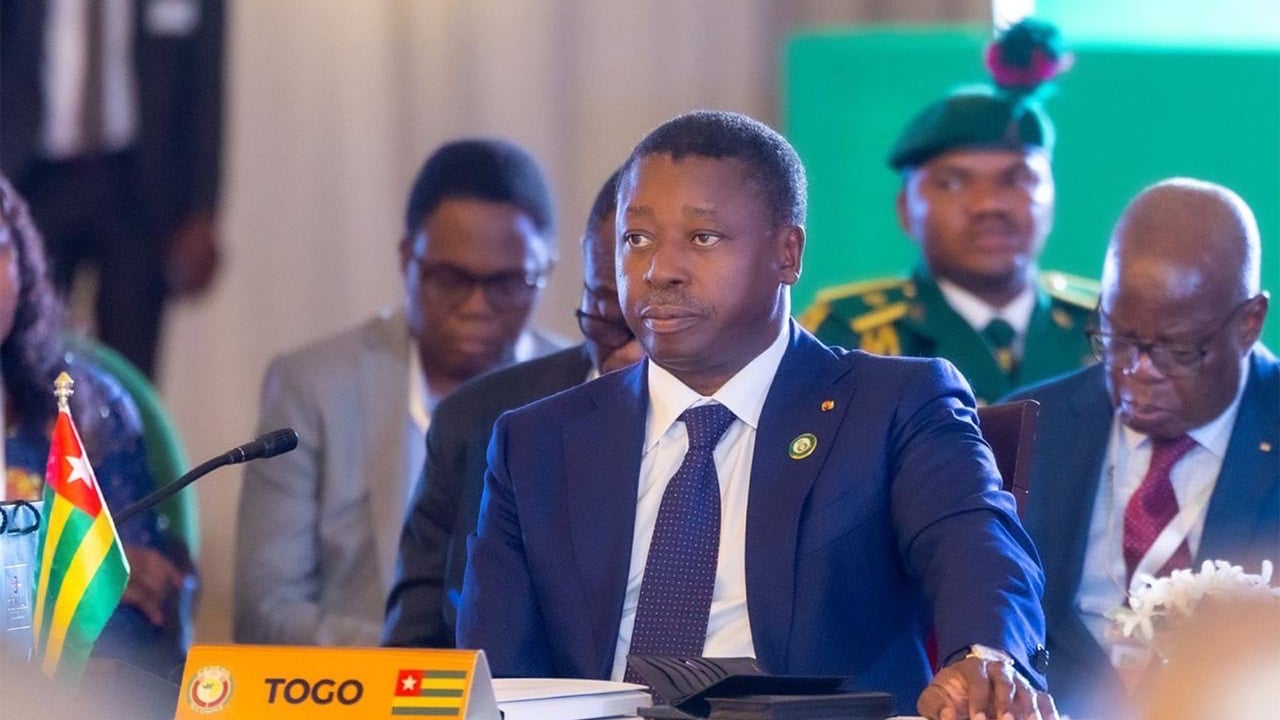

Togo’s diplomatic maneuvers often speak volumes without uttering a word. On March 9, a significant yet unpublicized meeting took place in Lomé, where the Togolese President Faure Essozimna Gnassingbé welcomed Russia’s Defense Minister, Andrei Belousov, who arrived by plane the previous day. While an official statement from the Togolese presidency confirmed the encounter to Jeune Afrique, no public announcement was made, leaving room for speculation about the underlying motives.
Balancing act: Togo’s strategic positioning in a shifting geopolitical landscape
The clandestine nature of this high-level discussion underscores Togo’s delicate balancing act between competing regional and international blocs. As global powers and African alliances recalibrate their alliances, Faure Gnassingbé appears to be leveraging diplomacy as a tool to secure his nation’s interests amid mounting pressures.
ECOWAS: navigating economic and security partnerships
The Economic Community of West African States (ECOWAS) remains a cornerstone of Togo’s diplomatic engagements. While the bloc promotes regional stability and economic integration, its relations with certain member states have become increasingly strained. Togo, positioned as a mediator, seeks to maintain constructive dialogue to avoid isolation and foster economic resilience. Recent engagements within ECOWAS frameworks highlight the country’s commitment to collaborative security and trade initiatives, despite divergent political views among its neighbors.
Alliance of Sahel States (AES): aligning with emerging regional dynamics
The formation of the Alliance of Sahel States—comprising Burkina Faso, Mali, and Niger—introduces another layer of complexity for Togo’s foreign policy. While not a member, Togo must carefully navigate its relationships with these nations, particularly as they redefine their partnerships with external actors such as Russia. The AES’s pivot toward Moscow presents both challenges and opportunities for Lomé, which must balance its historical ties with Western partners while exploring new alliances.
Russia’s expanding influence in West Africa
Russia’s growing footprint in West Africa has become a defining feature of the region’s geopolitical landscape. Through military cooperation, economic investments, and diplomatic overtures, Moscow is positioning itself as a key player in African affairs. For Togo, engaging with Russian officials—even discreetly—signals an openness to diversifying partnerships beyond traditional Western allies. This approach allows Lomé to hedge its bets in an era of global realignment, ensuring it remains a relevant actor on the continental stage.
Why Togo’s diplomatic silence matters
The absence of an official communiqué following the meeting with Russia’s Defense Minister is not merely an oversight. It reflects a calculated strategy to avoid provoking unnecessary tensions while keeping diplomatic channels open. In an environment where alliances are fluid and trust is scarce, Togo’s low-profile diplomacy enables it to maintain relationships with multiple stakeholders without committing to any single bloc.
For Faure Gnassingbé, this equilibrium is not just about survival; it’s about leveraging Togo’s strategic location and political stability to emerge as a key mediator in West Africa. By avoiding overt alignment with any single power, Lomé can position itself as a neutral ground for dialogue, economic cooperation, and security collaboration.
What’s next for Togo’s diplomacy?
The coming months will reveal whether Togo’s balancing act can withstand the pressures of a rapidly evolving geopolitical landscape. As ECOWAS, the AES, and other regional blocs jockey for influence, Faure Gnassingbé’s ability to maintain equilibrium will determine whether Togo can turn its diplomatic silence into a strategic advantage.