
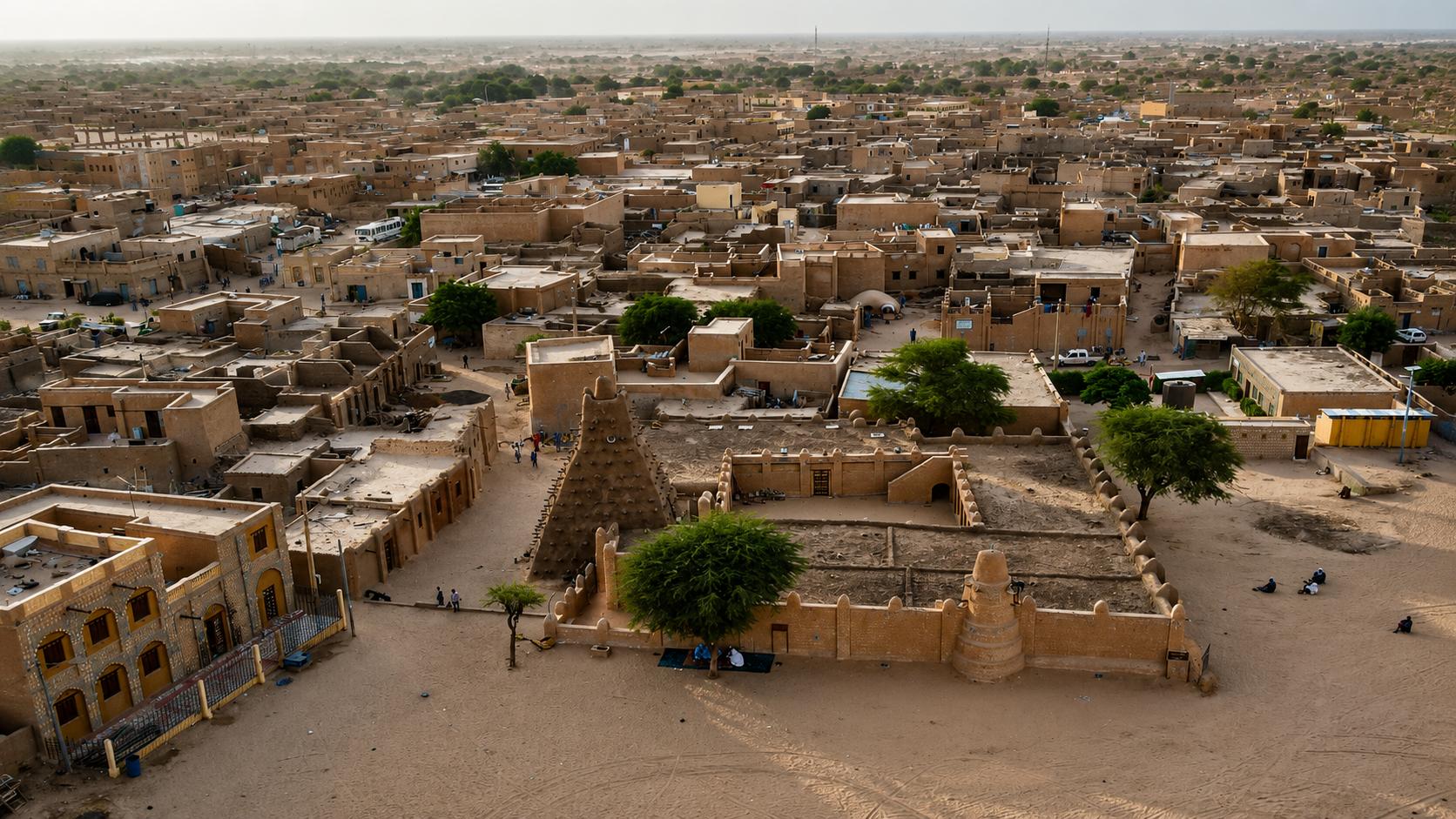
In Tombouctou, the scorching sun pushes temperatures past 40 degrees Celsius, but the usual hum of fans and refrigerators has vanished. The historic city of 333 saints is currently enduring a brutal energy and water blackout. With the local thermal plant managed by EDM-SA completely offline due to a lack of fuel, the city has been thrust into a technological void that has also paralyzed Somagep, the national water utility.
A city strangled by a logistical blockade
While the capital, Bamako, deals with frequent power cuts, Tombouctou is facing a much more severe isolation. This crisis is the direct consequence of a fuel shortage that has lasted over a month, driven by a deliberate strategy of isolation.
- Road blockades: Militants from JNIM have established a suffocating grip on the main supply routes. Fuel tankers destined for the north are frequently intercepted or blocked, making regular deliveries nearly impossible.
- The collapse of the local economy: With official supply lines cut, the city is forced to rely on irregular military convoys or an expensive black market. The skyrocketing price of fuel has made it impossible for small businesses or private citizens to run their own generators.
The humanitarian and health toll
The lack of electricity has shattered the cold chain, endangering food supplies and essential medicines. At the Tombouctou regional hospital, the situation is critical. Medical teams are forced to perform emergency procedures using mobile phone lights or limited solar power that cannot sustain the entire facility.
A feeling of abandonment
In response to the drying taps, local officials have deployed water trucks to distribute drinking water. However, these temporary measures do little to soothe the growing frustration of the residents. There is a palpable sense that Tombouctou has been sidelined by the central government’s priorities. While military operations continue, the failure to secure basic services like electricity and water leaves EDM-SA and Somagep unable to fulfill their missions.
Restoring the pulse of the city
Tombouctou cannot survive indefinitely on emergency rations and empty fuel tanks. For the transition to be seen as a success, the restoration of public services is just as vital as territorial control. Until the roads are safe and fuel can reach the north, the pearl of the desert remains at risk of total paralysis, one neighborhood at a time.