
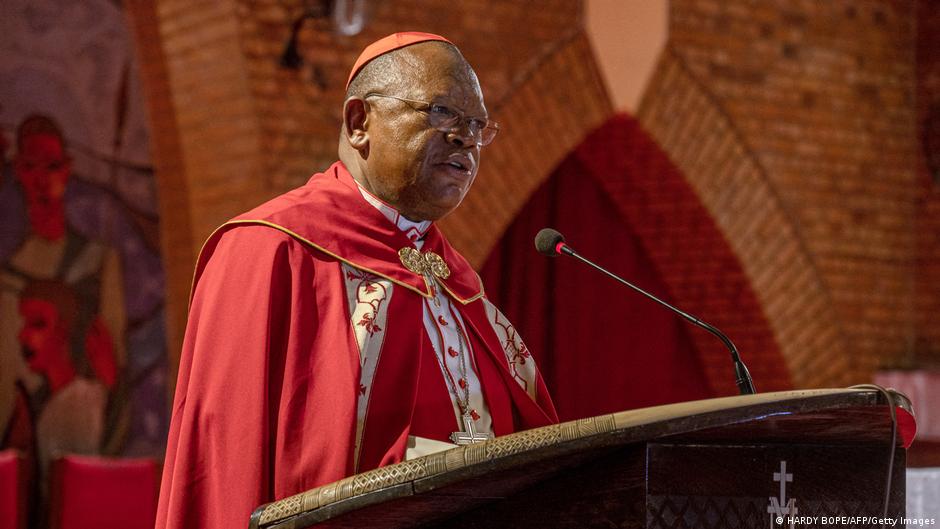
On the 66th anniversary of the nation’s independence, Cardinal Fridolin Ambongo has presented a sobering evaluation of the current state of the République démocratique du Congo. Speaking to congregants at the Notre-Dame du Congo Cathedral, the Archbishop of Kinshasa highlighted a series of grave challenges, including persistent insecurity, ongoing armed conflicts, the presence of foreign military forces, widespread poverty, and the re-emergence of the Ebola virus. Under these circumstances, he argued that amending the Constitution is far from a priority.
“Do we truly believe that altering the Constitution, which is being marketed as a fix for these deep-seated issues, is the right response? Especially when such changes appear aimed at securing a third term? Given the severity of our current reality, there is neither a need nor an urgency to modify our fundamental law. The primary objective for the République démocratique du Congo must be peace. This is why the Conférence épiscopale nationale du Congo remains committed to fostering an inclusive and global dialogue,” Ambongo declared.
Opposition and religious leaders unite
This stance is echoed by the Comité laïc de coordination, the Cenco, and the Église du Christ au Congo. These organisations collectively maintain that a constitutional overhaul is unnecessary in the current national climate.
During the ceremony, Marie-Ange Mushobekwa, a former minister and representative of the Front commun pour le Congo — the political alliance of former President Joseph Kabila — reiterated her group’s firm opposition to any changes to Article 220.
“Article 220 cannot be touched. Our Constitution is explicit: an elected president serves a term that can be renewed only once. After two terms, power must be handed over to a successor chosen by the Congolese people. Consequently, every political entity within the FCC will participate in actions to block any constitutional modifications. We intend to take to the streets on July 8 to safeguard our Law,” Mushobekwa stated.
Protests scheduled for July 8
Civil society movements are also mobilising. Plamédie Bamata, representing the Patriotisme movement, has called upon the youth of the country to join the opposition-led protest on July 8.
“We are set on stopping this third-term project. The people of this country have already sacrificed too much blood to establish this Constitution. On July 8, we will march to the Palais de la Nation to voice our rejection of any plans that threaten the integrity of our nation,” Bamata emphasised.
Following approval by both houses of Parliament, a bill outlining the procedures for a constitutional referendum has been sent to the President for final approval. While the government and the parliamentary majority describe the law as a necessary legal framework for referendums, the opposition fears it is a strategic move to facilitate a revision of the Constitution.