
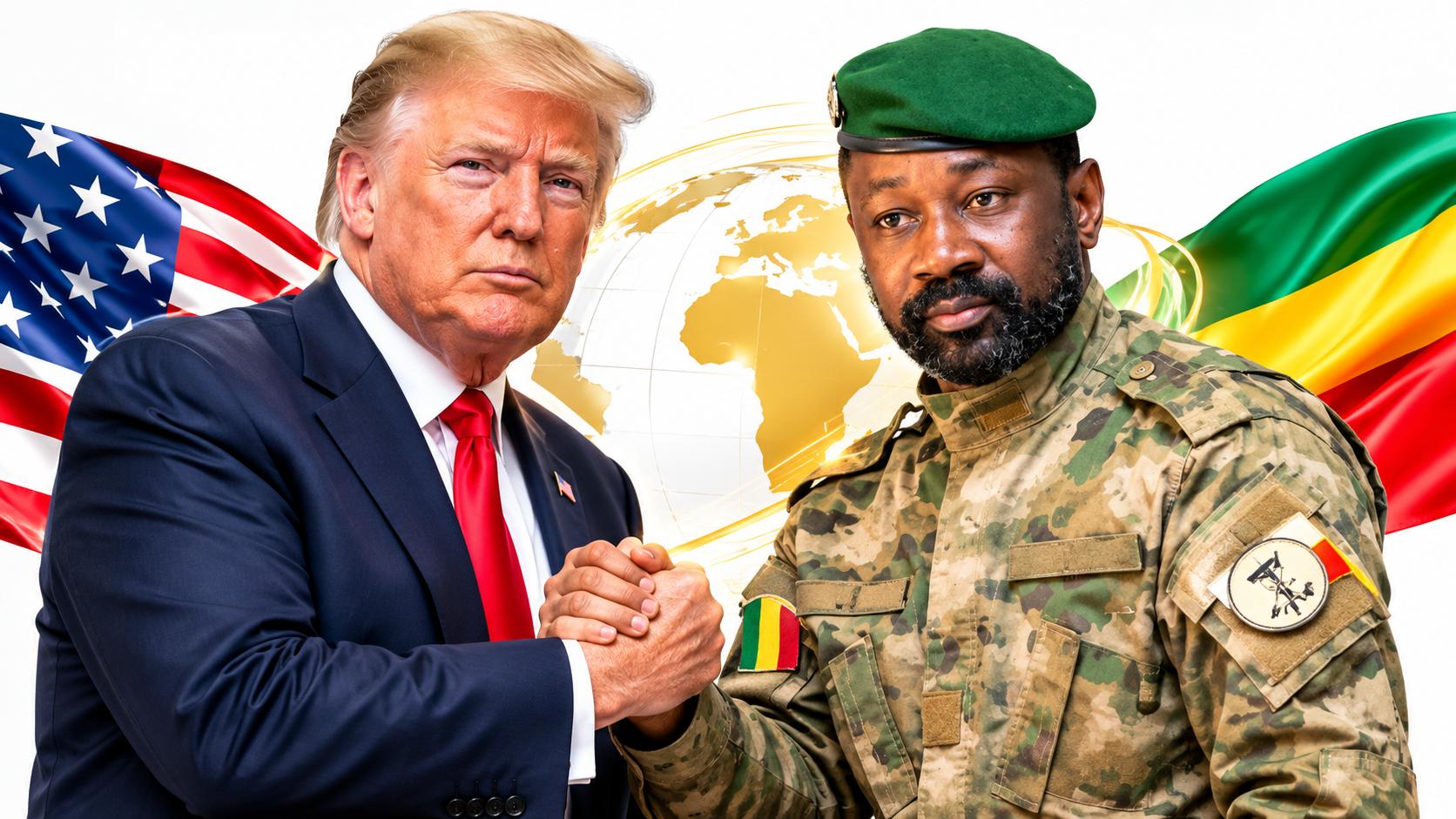
The Alliance of Sahel States (AES) has long positioned itself as a force of radical ideological breakaway from traditional Western powers, including the United States and France. Yet, behind closed doors, a pragmatic diplomatic pivot is unfolding—one that hinges on a single, game-changing financial incentive: a $410 million (≈ $370 million) fund allocated by Washington to outsource migration management to third-party countries.
Financial survival trumps ideological resistance
Since military-led transitions took power in Mali, Niger, and Burkina Faso, access to conventional funding sources—such as the European Union and the World Bank—has dwindled. Harsh financial sanctions have drained public coffers, leaving these governments scrambling for alternative revenue streams. Against this backdrop, the U.S. program emerges as a lifeline: a promise of $410 million in total funding for countries—across Africa and Latin America—to receive or process migrants expelled from the United States. For cash-strapped Sahelian treasuries, grappling with soaring military expenditures and scarce foreign currency, the allure of tapping into this financial envelope far outweighs anti-Western rhetoric.
From confrontation to cooperation: the value proposition of migration outsourcing
Washington’s track record of using financial transfers—millions already disbursed to countries like Cameroon, the Democratic Republic of the Congo, and Eswatini—proves that the “checkbook diplomacy” approach is a powerful tool. For the AES capitals, this initiative offers a three-tiered strategic advantage:
- Direct budgetary relief: Access to funds—either through direct disbursements or via specialized agencies—can finance logistics, equipment, and infrastructure upgrades.
- Diplomatic leverage: By positioning themselves as essential partners in global migration control and security, these regimes assert their indispensability on the international stage, all while negotiating from a position of fiscal need.
- Operational continuity: Leveraging U.S. funding allows for the maintenance of critical services—such as border surveillance and migrant processing—without diverting domestic resources.
The illusion of sovereignty: when money dictates realpolitik
The official narrative of the AES rests on a proud declaration of regained sovereignty and resistance to foreign interference. Yet, the response to Washington’s proposal exposes a stark contradiction: while Western military and civilian presence is rejected under the banner of national dignity, bilateral talks with the U.S. remain open—provided they come with a hefty financial package. This double standard underscores a harsh reality: when the stakes involve hundreds of millions of dollars, economic pragmatism trumps ideological purity. The magnetism of the $410 million migration outsourcing deal proves that financial liquidity is the ultimate arbiter of geopolitical realignment in the Sahel. Far from a clean break, the AES’s evolving relationship with Washington reflects the region’s relentless pursuit of self-preservation—where rhetoric bows to the realities of hard cash.
What’s next for Sahel’s shifting alliances?
As the AES navigates between anti-Western posturing and financial necessity, the coming months will reveal whether this $410 million lifeline will solidify a new era of cooperation—or merely delay the inevitable reckoning with sovereignty and self-reliance. One thing is certain: in the Sahel, where ideology meets austerity, the balance sheet doesn’t lie.