

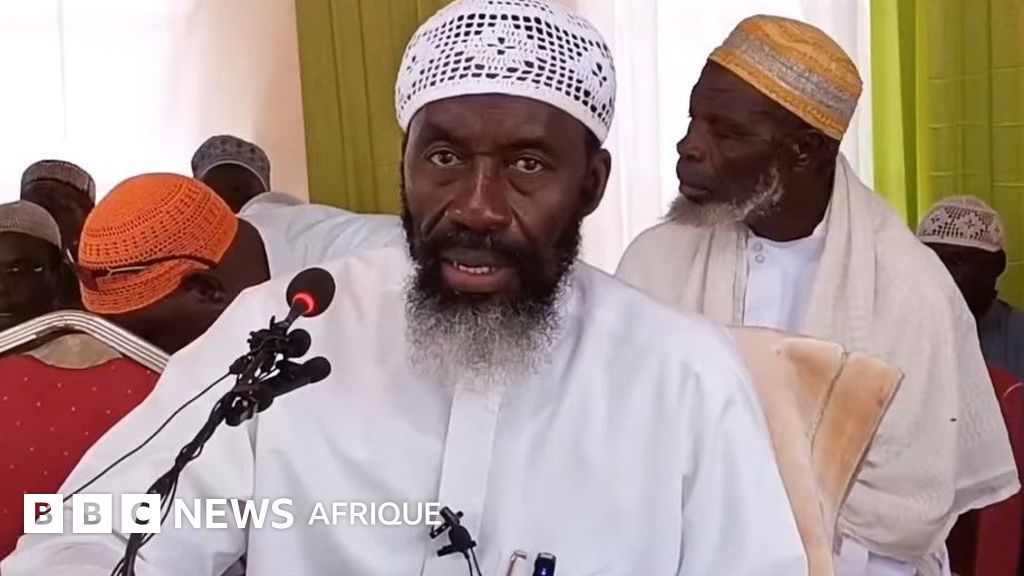
Shockwaves in Ouagadougou after arrest of prominent imam Mohamad Kondo
Photo credit: YouTube screenshot
An arrest that has sent ripples through Burkina Faso’s faith community. Influential Sunni imam Mohamad Ishaq Kondo, president of the country’s Sunni Oulémas association, was taken into custody in Ouagadougou on Tuesday, May 26, by security forces acting under unclear circumstances.
His detention came just two days after he publicly criticized the new religious freedoms bill passed on March 19, drawing sharp reactions from both supporters and critics.
Sudden arrest during Eid preparations
According to close associates who witnessed the scene, the operation unfolded around 2:00 PM local time, the day before Eid al-Adha, as security personnel—including masked police and military officers—forced their way into the imam’s location. Witnesses described the scene as tense, with worshippers attempting to intervene and several sustaining injuries during the confrontation.
A statement from the Fédération des Associations Islamiques du Burkina (FAIB) confirmed the arrest but noted that no official explanation for his detention has been provided. The federation has since initiated formal inquiries with relevant authorities to seek clarity and secure his release.
Controversial remarks fuel tensions
Days prior to his arrest, a widely shared audio recording captured Kondo questioning the new religious bill, which aims to regulate religious practices in Burkina Faso. He urged authorities to “reflect deeply on the consequences of their actions” before enforcing such measures, adding that no leader—regardless of power—can restrict public prayers.
His comments resonated strongly across social media, sparking both support and condemnation. Hours after his arrest, hundreds of protesters gathered in central Ouagadougou, demanding his immediate release. Authorities responded by dispersing the crowd with tear gas, according to eyewitness accounts.
The FAIB called for calm, urging Muslims to remain measured and avoid escalating tensions during this sensitive period.
No official statement on Kondo’s fate
In the aftermath of the arrest, public figures, including religious leaders and civil society actors, have remained tight-lipped. The silence from government officials has only deepened concerns among the faithful and human rights observers.
On Eid al-Adha, President Ibrahim Traoré addressed the nation via social media. While praising security forces for their ongoing counterterrorism efforts, he warned against any attempts to destabilize the state, vowing that those who disrupt national cohesion will face full legal repercussions.
However, no mention was made of Kondo’s detention, leaving many to question the government’s next steps.
New religious law under scrutiny
The controversial bill, adopted in a March 19 cabinet meeting, seeks to regulate religious practices in Burkina Faso. Authorities frame it as a measure to curb online hate speech, radicalization, and violent extremism, though critics argue it risks infringing on religious freedoms.
Mariem Sanogo, Director General of Religious, Customary, and Traditional Affairs, has sought to reassure the public, emphasizing that the law is not entirely new but has been updated to address rising security threats. She stressed that its primary goal is to strengthen national cohesion by preventing divisive rhetoric online and offline.
Key provisions of the law include a ban on building places of worship within public institutions, with exceptions for hospitals, prisons, and military facilities. Authorities clarified that public prayers remain permitted as long as they respect the beliefs of others.
Since the military takeover in 2022, Burkina Faso has seen a tightening of restrictions on dissent, with critics pointing to the recent wave of arrests of regime opponents. The government justifies its stringent policies as necessary to combat the decade-long jihadist insurgency that has engulfed much of the country.
The arrest of Mohamad Kondo has once again highlighted the delicate balance between security imperatives and religious freedoms in Burkina Faso—a debate that shows no sign of abating.