
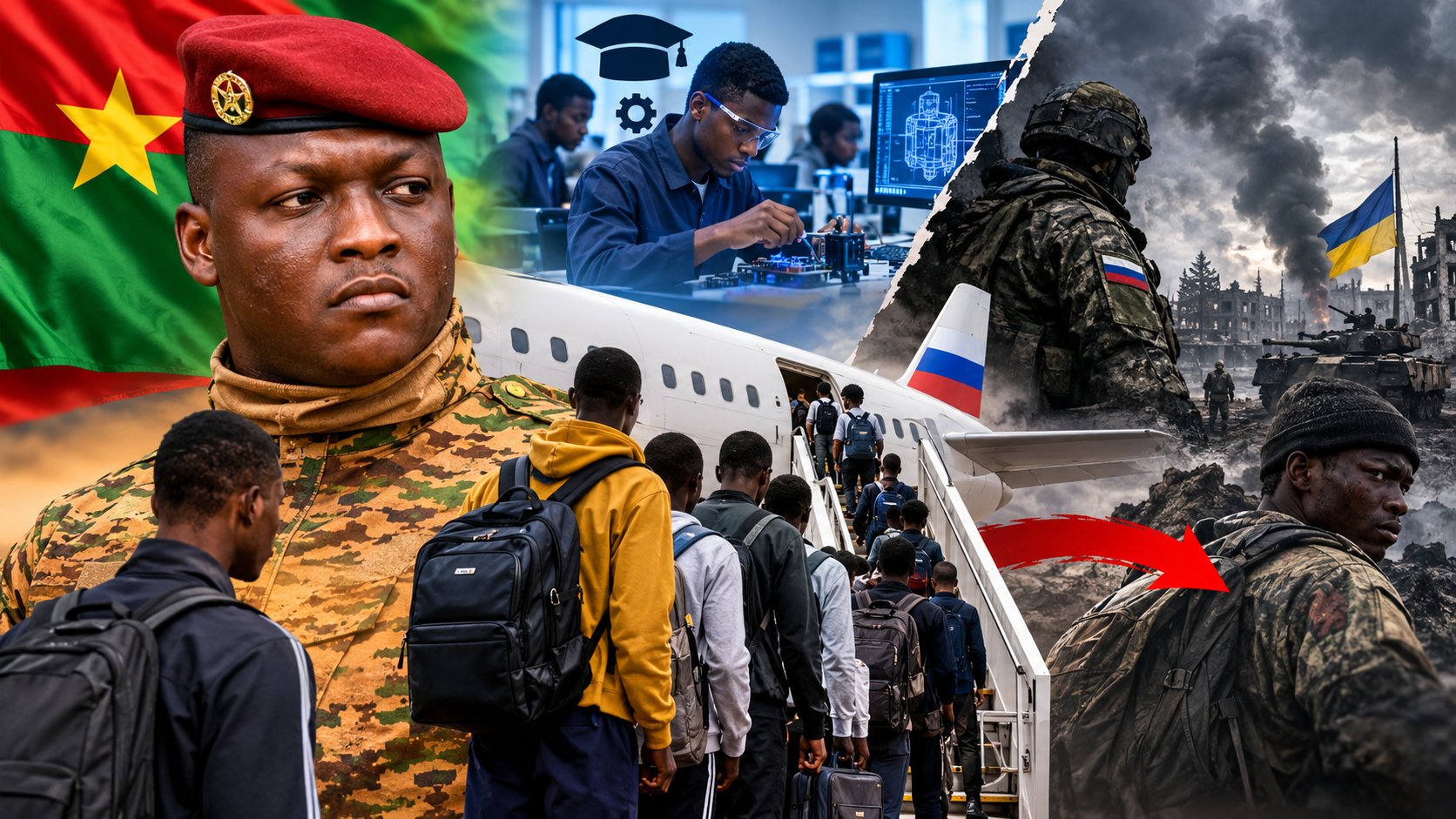
Why is Burkina Faso betting its youth on Russia’s military-industrial complex?
Under the guise of cutting-edge technological training, a troubling question looms over Burkina Faso’s decision to send young citizens to Russia: are these students truly gaining skills for their nation’s future, or are they being funneled into a far deadlier reality? With Moscow deeply entrenched in the Ukraine war, the stakes couldn’t be higher for Ibrahim Traoré’s administration and for the families of those young Burkinabè poised to make the journey.
From national pride to foreign dependence: the shifting priorities of Ibrahim Traoré
Only months ago, Captain Traoré championed a vision of sovereign education, vowing to cultivate Burkina Faso’s talent within its own borders. Yet today, his government is steering the nation’s youth toward Russian institutions a clear departure from the earlier pledge to foster homegrown expertise. The contradiction raises alarming questions: if the goal was always to uplift the youth, why abandon local infrastructure for a distant and volatile destination?
The shift is all the more puzzling given that Traoré once framed foreign education as a last resort, not a first choice. What changed? And more critically what safeguards are in place to ensure these young minds return as engineers and innovators, rather than as frontline recruits?
Russia’s shadow war: a training ground or a recruitment pipeline?
Russia’s war in Ukraine has demonstrated a troubling pattern: the Kremlin is not above leveraging foreign talent for its military ambitions. Reports from other African nations reveal how students, lured by promises of study or employment, have found themselves swept into combat roles. The Burkina Faso government must confront this reality: does Moscow’s offer of advanced training come with strings attached?
Without transparent agreements, independent oversight, and ironclad legal protections, the risk is undeniable. Will these students receive diplomas or will they be handed rifles? The burden of proof lies with Traoré’s administration to dispel these fears.
What do Burkinabè families need to know before agreeing to this program?
For any parent, the decision to send a child abroad for education is fraught with uncertainty. In this case, the stakes involve not just academic rigor but personal safety. Families deserve clear answers to pressing questions:
How many youth will participate, and what selection criteria will be used?
Which Russian institutions will provide the training, and are they subject to international scrutiny?
What legal protections guarantee students remain civilians and what penalties exist for violations?
Will the government ensure their safe return, or is this a one-way ticket to an uncertain fate?
Is there a clause preventing any form of military recruitment, whether voluntary or coerced?
Silence is not an option. Traoré’s government must move beyond vague assurances and deliver concrete commitments.
Can Burkina Faso afford to gamble with its young talent?
The cost of this gamble extends beyond economics. Burkina Faso’s future depends on its ability to nurture a skilled workforce capable of driving innovation and self-sufficiency. If the goal is truly technological advancement, why not invest in domestic universities, technical schools, and research centers? The resources spent on foreign programs could instead reinforce national institutions, ensuring long-term benefits for the country.
Traoré’s earlier rhetoric emphasized sovereignty and self-reliance. Today, his actions risk undermining that very principle. The youth of Burkina Faso deserve better than to become pawns in a geopolitical chess game they did not choose to play.
Protecting the next generation: a duty, not a privilege
At its core, this issue is about more than political strategy it’s about human dignity. No family should fear that their child’s education abroad could end in tragedy. The government must prioritize transparency, accountability, and the safety of its citizens. The promise of technological training is hollow if it comes at the cost of exposing Burkinabè youth to the horrors of war.
As the days tick by without answers, the urgency grows. Will Ibrahim Traoré’s administration step up to protect its youth or will they be left to navigate a perilous path alone?
By Yvette Tchuente — Journalist