
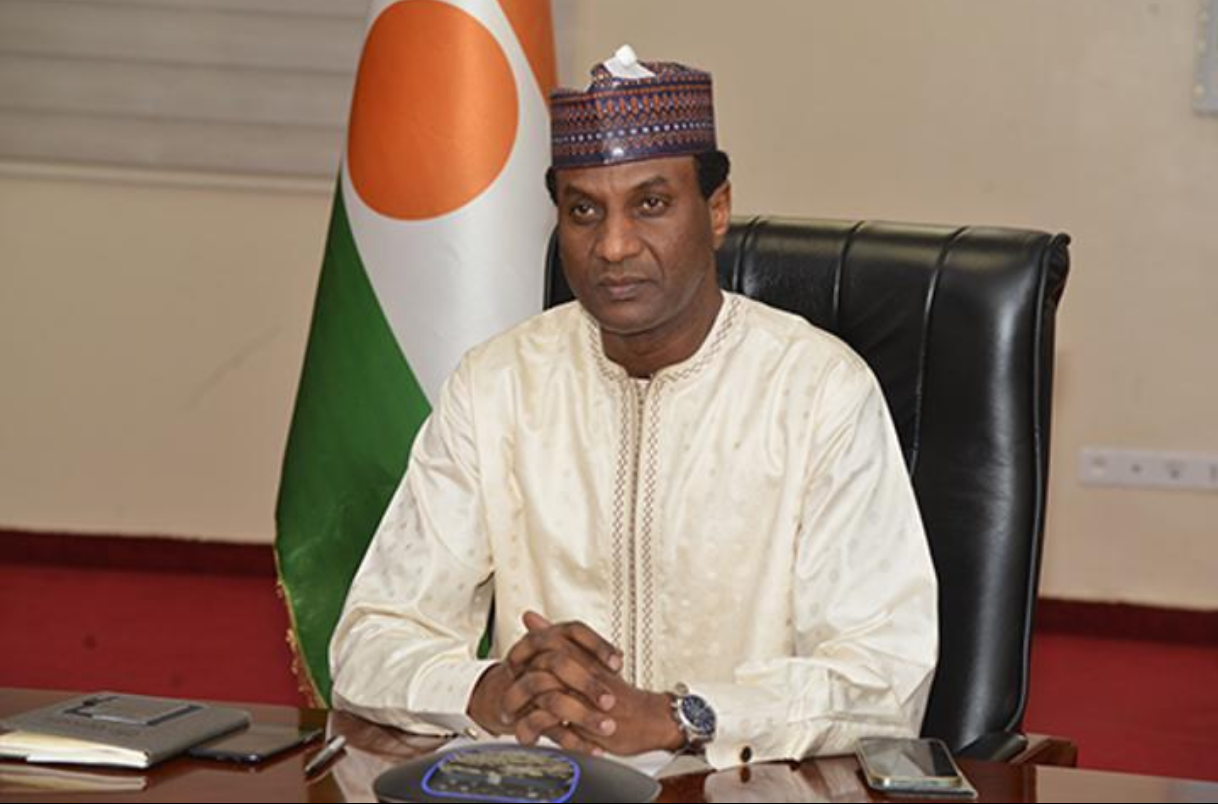
The Niger-Libya strategic partnership took a decisive turn on November 1, when Prime Minister Ali Mahaman Lamine Zeine landed in Benghazi—not just for diplomacy, but to ink a far-reaching Protocol of Strategic Cooperation with eastern Libya’s leadership. But behind the official photo ops and brotherly declarations lies a high-stakes chess game reshaping the Sahel’s fragile security landscape.
Why the Benghazi visit matters more than just symbolism
The timing was no accident. Just days earlier, on October 25, Algeria’s Parliament broke decades of military restraint by greenlighting the deployment of the Algerian National People’s Army (ANP) into Niger. For a regime that once avoided foreign interventions, this move signals a tectonic shift—one that threatens to redraw the power map between Algiers, Benghazi, and Niamey.
The Nigerien premier’s trip to Benghazi wasn’t merely symbolic. His counterpart, Saddam Haftar—the de facto military leader of eastern Libya—and Libyan Prime Minister Oussama Hammad framed the visit as a turning point for a region where security vacuums are widening by the day. What began as economic and humanitarian dialogue could soon extend into defense, intelligence, and border security coordination.
The Algeria gambit: securing its southern flank
Algeria’s military expansion into Niger isn’t just about protecting oil assets or the stalled Trans-Saharan Gas Pipeline. It’s about control. The proposed forward operating base near Madama—within striking distance of both Libyan and Malian borders—would give Algiers real-time surveillance over jihadist movement corridors and smuggling networks that have long undermined its southern stability.
But this strategic depth comes at a cost. A permanent Algerian military presence in Niger could:
- Challenge Haftar’s influence in southern Libya, where his Libyan National Army (LNA) has been quietly consolidating control over key trade and migration routes;
- Restrict Algeria’s ability to shape outcomes in Tripoli, where it has traditionally backed the Government of National Accord (GNA);
- Force Niamey into an impossible choice: lean toward Algiers or risk losing both trade and security support.
In short, Algeria is playing a long game—and Haftar’s generals are running out of time to respond.
The Niger factor: balancing on the edge of two fires
For a country caught in the crossfire of terrorism, food insecurity, and collapsing governance, Niger’s leadership faces an unenviable dilemma. With Algerian troops now authorized to operate on its soil, Niamey must decide whether to:
- Acquiesce to Algerian dominance, gambling that economic stability outweighs political autonomy;
- Leverage the Haftar card, using eastern Libya as a counterweight to Algerian pressure and a gateway to alternative security partners;
- Seek third-party mediation, perhaps through the African Union or regional blocs like ECOWAS, to dilute both influences.
Prime Minister Zeine’s Benghazi talks suggest the latter two options are in play. By signing a cooperation protocol with Haftar’s administration, Niger may be signaling that it won’t accept Algerian domination without pushback. But the devil lies in the details—and so far, the document remains shrouded in secrecy.
What the protocol could—could—include
While the full text hasn’t been released, informed observers speculate it may cover:
- Joint border security initiatives, targeting armed groups operating near the triple frontier;
- Cross-border intelligence sharing, potentially drawing on Haftar’s extensive network in southern Libya;
- Economic concessions, including preferential trade terms or energy cooperation between Diffa and Benghazi;
- Military training and logistics support, enabling Niamey to diversify its defense partners beyond traditional allies like France and the U.S.
The Haftar-Algeria rivalry: no longer just a Libyan affair
Algeria and Haftar’s forces have long eyed each other with suspicion. Algiers backs the Tripoli-based Government of National Unity (GNU) and champions a negotiated settlement to Libya’s civil war. Haftar, meanwhile, has cultivated ties with Egypt, Russia, and now—potentially—Niger, as a bulwark against Algerian influence.
The unfolding drama in Niamey could accelerate this rivalry into a full-blown proxy competition. Should Haftar successfully embed his proxies in southern Niger, Algeria may feel compelled to escalate its military footprint—triggering a dangerous escalation spiral.
Already, whispers in regional capitals suggest that Algerian advisors are quietly lobbying for a “preemptive” deployment to counter Haftar’s growing influence. If realized, this could turn the triple frontier into a flashpoint reminiscent of the Cold War’s covert battles.
What comes next? Three possible trajectories
As the dust settles from the Benghazi talks, three scenarios emerge for how this geopolitical standoff could evolve:
1. The Balancing Act: Niger plays both sides
Niamey maintains parallel relationships with Algiers and Benghazi, extracting maximum concessions from both. This would require delicate diplomacy, but could preserve Niger’s sovereignty—at least temporarily. Success hinges on avoiding entanglement in any direct confrontation between the two powers.
2. The Proxy War Scenario: Algeria vs. Haftar in Nigerien soil
Should Algeria refuse to accept Haftar’s advances, covert operations and proxy militia deployments could escalate. This would mirror Syria or Yemen’s fragmented conflicts, where foreign powers back local factions to carve out spheres of influence. Niger’s porous borders make it an ideal battleground.
3. The Diplomatic Reset: A regional compromise
Under intense international pressure—especially from the African Union or France—Algiers and Haftar could agree to a de-escalation pact. This would likely involve a phased withdrawal of foreign troops and a commitment to refrain from destabilizing each other’s proxies. But such an outcome demands trust that neither side currently possesses.
Bottom line: The Sahel is no longer just a Sahelian game
The Niger-Libya-Haftar-Algeria axis is reshaping the geopolitics of the Sahara. What began as a bilateral dispute over Libyan legitimacy has metastasized into a regional power struggle with Niger as the main battleground.
One thing is clear: Algeria’s military surge has backfired. Instead of isolating Haftar, it has pushed Niamey toward Benghazi—giving the eastern Libyan strongman a foothold in West Africa he never had before. And in doing so, it has transformed a local crisis into a geostrategic earthquake whose aftershocks will be felt across the Sahel and beyond.
For now, the only certainty is uncertainty. But one question looms larger than all others:
In a region where borders are as fluid as alliances, can Niger survive—and thrive—amid this escalating storm?