
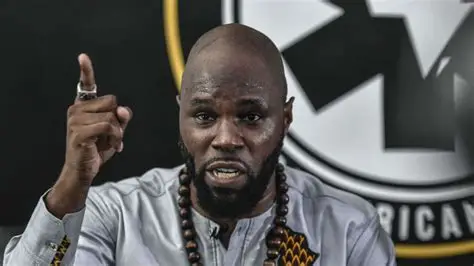
A recently surfaced audio recording has triggered a diplomatic earthquake across the region. In a candid and cynical exchange, Kémi Séba appears to dismantle the very image he spent years cultivating. The activist’s private admissions suggest a deep-seated disdain for the masses and a surprising level of subservience to Moscow.
Opulence amidst crisis: the Niamey hotel lifestyle
The recording provides a jarring look at the reality behind the rhetoric. It describes a world where activists view themselves as the masterminds behind the collapse of democratic systems, while military figures are accused of hijacking revolutionary movements. Far from a grassroots struggle, the “fight for the people” is portrayed as a paid service for the Kremlin, rewarded with high-end privileges.
One of the most striking revelations involves the lavish lifestyle of the movement’s leaders. The audio confirms that Kémi Séba and Nathalie Yamb have been residing in luxury hotels in Niamey, fully funded by the state. While the local population in Niger grapples with international sanctions and persistent insecurity, their self-proclaimed defenders are enjoying public resources.
Expanding the coup: the plot against Benin
By appointing these activists as “Special Advisors” or diplomatic representatives, General Tiani appears to be prioritizing a loud communication strategy over actual governance. This approach involves hiring voices to drown out the difficult reality on the ground.
The audio also highlights Séba’s direct coordination with individuals like Pascal Tigri to undermine Patrice Talon’s administration in Benin. This supports concerns that the Alliance of Sahel States (AES) has evolved into an offensive coalition. Rather than simply managing internal issues, the group seems intent on toppling neighboring democracies to establish a zone of total impunity in West Africa.
The Kremlin’s influence and the proxy game
Perhaps the most damaging part of the leak is Séba’s tacit admission that the AES serves Russian interests under the guise of national sovereignty. The manipulation of African populations through social media is presented as a calculated strategy funded by Moscow. In this context, these influencers act less like community leaders and more like digital proxies, trading on the anger of African youth to secure personal benefits from military leaders seeking international legitimacy.
A legacy in question
This leaked evidence suggests that the “AES Revolution” may be more of an intellectual deception than a genuine movement. By sharing these private thoughts, Séba has potentially compromised his own historical standing, appearing not as a modern-day Sankara, but as a broker for a different form of imperialism.
While soldiers and civilians in Burkina Faso, Mali, and Niger face the dangers of the front lines, their supposed advocates are allegedly comparing diplomatic perks in air-conditioned suites. In this perspective, sovereignty becomes a script written in Russia and delivered by verbal mercenaries. His recent arrest in South Africa appears to be the inevitable conclusion for a figure who blurred the lines between liberation and foreign intelligence operations.