
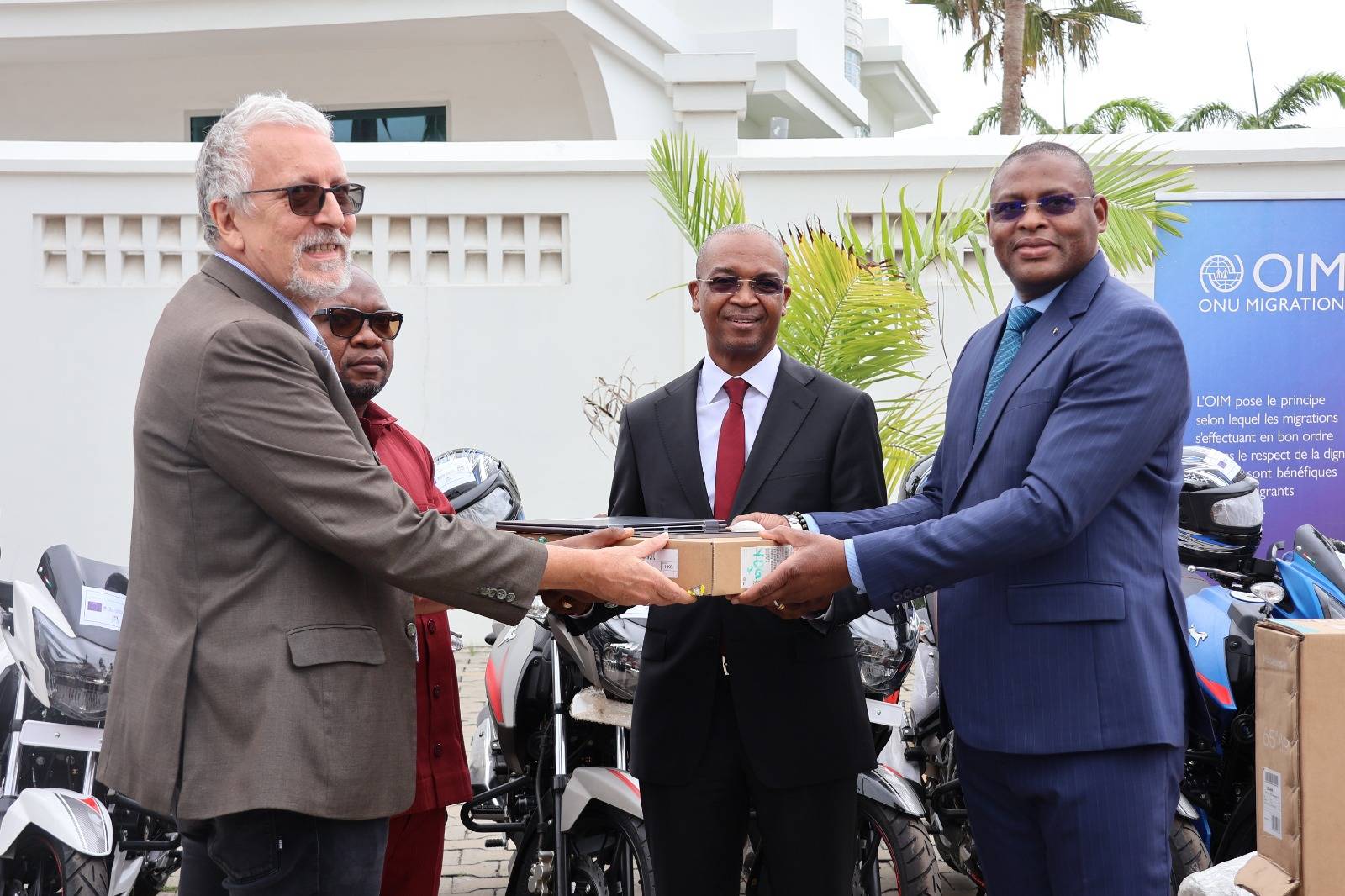
The Benin Civil Protection Agency (ABPC) has reached a decisive turning point in its operational modernization this week, securing a major boost to its capabilities following an official handover ceremony in Cotonou. The event, held at the Ministry of Interior and Public Security headquarters, marked the delivery of a comprehensive set of resources—including vehicles, computer systems, and logistical tools—funded by the International Organization for Migration (OIM). This strategic support is designed to elevate crisis response, protect vulnerable communities, and strengthen border security.
As climate-related disasters intensify, migration flows grow more complex, and regional security threats evolve across West Africa, the speed and efficiency of emergency services have become a cornerstone of national stability. This week’s equipment handover in Cotonou underscores a proactive shift in Benin’s approach to disaster management and public safety, reinforcing the country’s commitment to timely, coordinated intervention.
Strategic partnership fuels long-term resilience for Benin’s civil protection teams
The ceremony brought together top civil protection officials and members of the diplomatic corps, with speakers emphasizing the significance of this support beyond mere symbolism. The event was led by Djibril Mama Cissé, Benin’s Minister of State for Interior and Public Security, alongside Étienne Banga, Head of the OIM Office in Benin, and a senior representative from the European Union Delegation in Cotonou.
The collaboration reflects a deeper partnership between Benin and its international allies, with the OIM leveraging European Union funding to help restructure and scale up the ABPC’s operational readiness. This initiative is part of a broader strategy to build sustainable emergency response systems that can withstand future challenges.
High-performance tools to slash response times and improve coordination
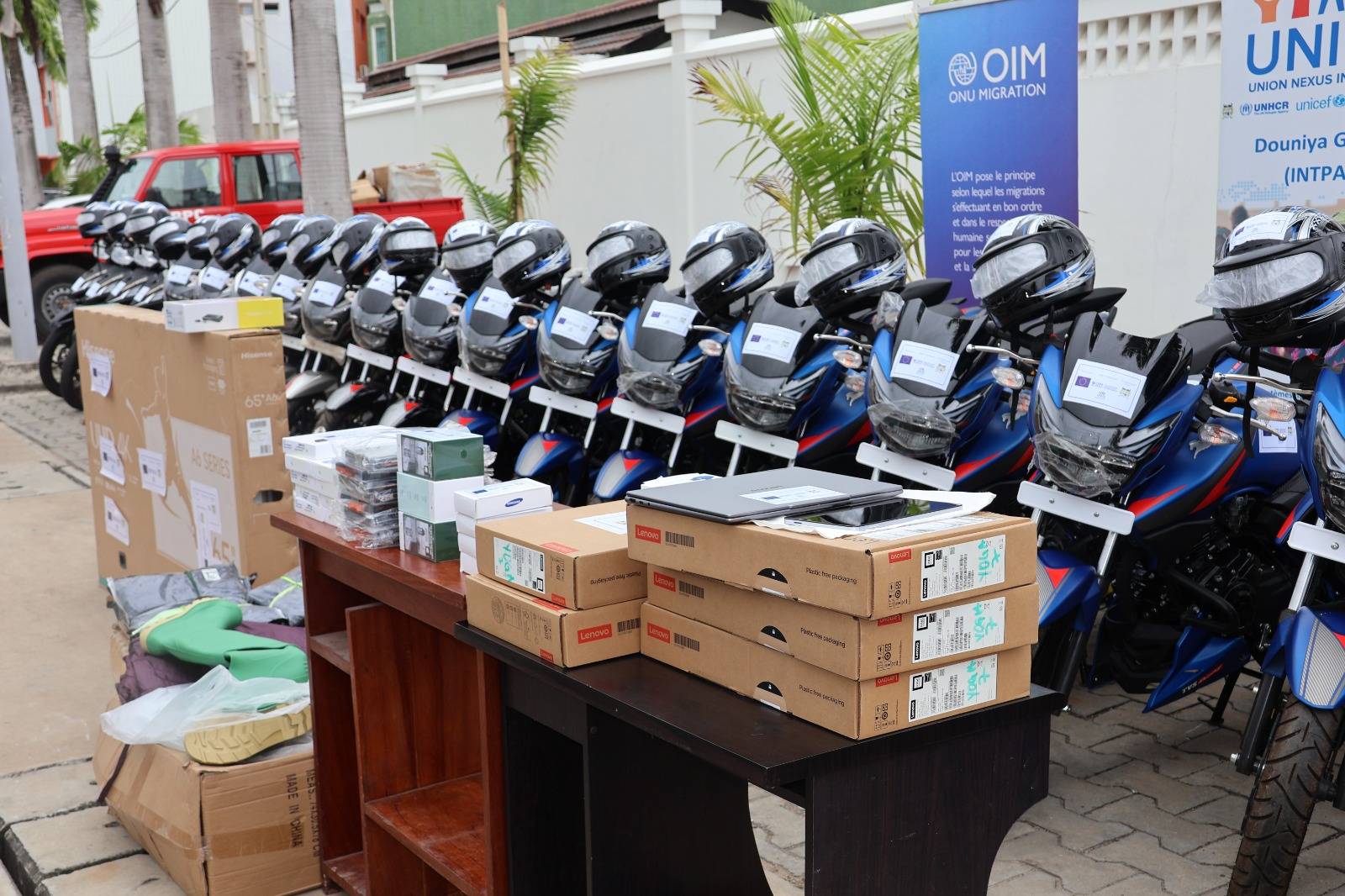
The newly delivered equipment addresses key gaps identified in recent evaluations of the ABPC’s deployment capacity. The package includes:
- Specialized vehicles: rugged 4×4 units and off-road vehicles designed for rapid access to remote areas during floods, landslides, or humanitarian emergencies.
- Digital infrastructure: high-performance laptops, secure data servers, and real-time communication tools to enhance situation monitoring, risk mapping, and inter-agency coordination.
- Emergency response gear: first aid kits, hazard marking equipment, and personal protective gear to ensure agent safety during high-risk interventions.
By expanding the ABPC’s vehicle fleet and upgrading its digital backbone, this upgrade will significantly reduce reaction times while improving command-and-control efficiency from the national operations center down to regional brigades.
Border security and humanitarian response take center stage
Speaking at the event, Étienne Banga highlighted the interconnected nature of migration management, disaster preparedness, and social cohesion in civil protection work.
“Effective civil protection isn’t just about responding to natural disasters—it’s about safeguarding human dignity at borders, supporting displaced populations, and protecting host communities. Equipping the ABPC with modern tools ensures that assistance is delivered with dignity, speed, and precision.”
The border regions—often the first line of defense against both security threats and humanitarian crises—will see the most immediate benefits. Enhanced data tracking systems will enable more accurate monitoring of population movements, while upgraded early warning systems will help prevent humanitarian emergencies before they escalate.
Government reaffirms commitment to operational excellence in civil protection
Addressing the gathering, Minister Djibril Mama Cissé expressed the government’s deep appreciation for the OIM and EU’s sustained support. He framed the handover as a pivotal moment in Benin’s broader vision to modernize internal security and build national resilience.
The Minister also urged ABPC staff to utilize the new equipment with discipline and care, emphasizing that every investment in civil protection translates directly into lives saved and properties protected during emergencies. His remarks underscored a clear message: this upgrade marks more than a milestone—it signals a new era of accountability and capability for Benin’s emergency response teams.
ABPC charts a course toward self-sufficient, forward-thinking civil protection
The Benin Civil Protection Agency stands at the forefront of the country’s disaster risk management efforts. With these new resources, the agency gains the tools it needs to anticipate crises, train its personnel, and deploy swiftly across the nation. In a subregion where climate shocks and security risks increasingly overlap, this operational leap reflects Benin’s determination to provide a safer, more resilient environment for all its citizens.
The success of this initiative hinges on continued collaboration, strategic investment, and a shared vision with international partners—all aimed at turning today’s challenges into tomorrow’s safeguards for Benin’s communities.