
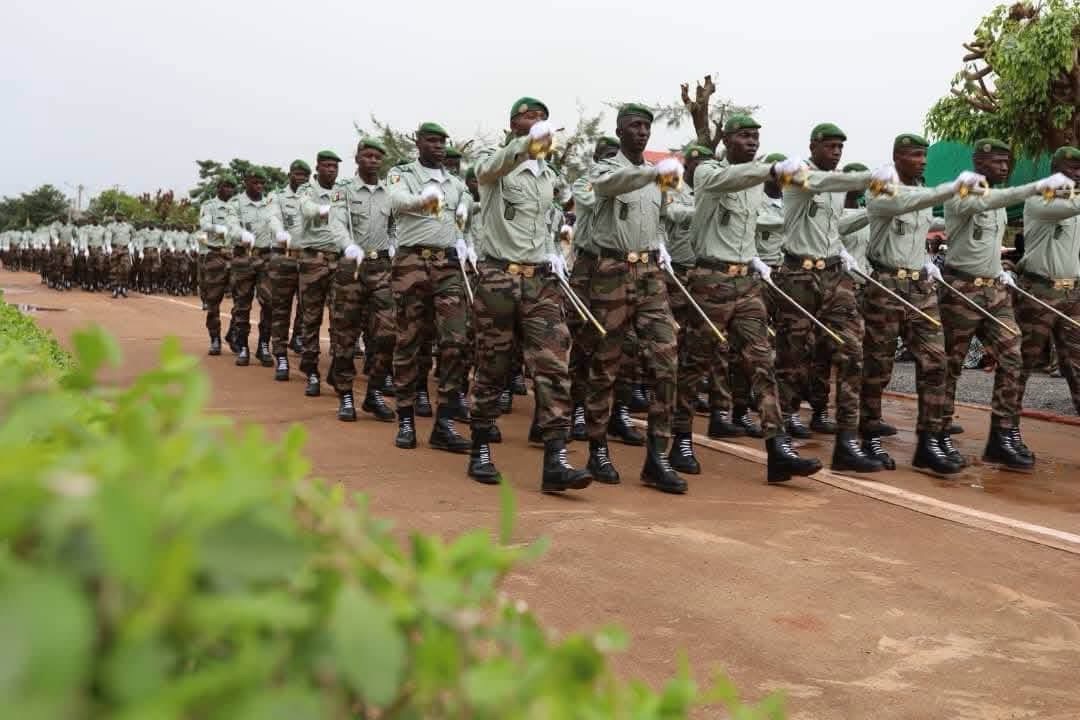
The Republic of Mali marked its 66th independence anniversary on September 22, 2026, with a military parade led by transitional President General Assimi Goïta. The ceremony in Bamako included troop reviews, displays by security forces, and aerial demonstrations, reaffirming the nation’s sovereignty and historical legacy. While the event followed tradition, it occurred against a backdrop of unprecedented regional cooperation that demands deeper examination.
Beyond national symbols: testing the cohesion of the AES
The celebration of Mali’s independence on September 22, 2026, was not merely a routine observance of sovereignty. It unfolded at a critical juncture in the evolution of the Alliance of Sahel States (AES), the emerging confederal structure uniting Mali, Burkina Faso, and Niger. The timing raised questions about the compatibility between national identity and collective regional integration under the AES framework.
The military parade in Bamako, attended by top government officials, symbolized Mali’s continued assertion of its historical narrative. Yet this gesture unfolded just one day after foreign ministers from all three AES member states convened in New York to coordinate a unified stance at the United Nations General Assembly. The juxtaposition of national commemoration and regional coordination underscores a pivotal moment in the AES project.
Can shared sovereignty coexist with national identity?
The Mali independence ceremony highlighted a key paradox: while the AES promotes a vision of unified political, economic, and security cooperation, each member state retains its own national calendar, symbols, and institutions. The question now is whether such duality is sustainable or if it risks diluting the very essence of the confederal project.
Following the Bamako festivities, the real test of AES cohesion will not lie in the grandeur of military displays, but in the implementation of concrete measures. These include:
Economic integration: progress on joint infrastructure, trade facilitation, and resource development initiatives
Security cooperation: synchronization of defense strategies and joint counterterrorism operations
Diplomatic unity: sustained alignment on international positions and negotiations
Institutional development: strengthening the governance structures of the AES to give them real decision-making power
These dimensions will determine whether the AES can evolve from a symbolic alliance into an effective political and economic bloc. The independence parade, while visually powerful, only represents a fraction of the broader equation.
Uncharted territory: national pride within a confederation
The celebrations in Bamako did not signal a withdrawal from the AES. In fact, coordinated diplomacy and shared policy initiatives have intensified in recent months. Yet the persistence of independent national observances such as Mali’s September 22 event raises a critical governance challenge: Can a confederation preserve the sovereignty and identity of its members while building a unified political entity?
This dilemma is not unique to the Sahel. Historically, confederations have succeeded when they balanced centralization with member autonomy. The AES appears to be navigating this balance, but the true measure of its success will be seen in the months ahead. Will the three states deepen their integration without eroding their distinct national narratives?
As the AES seeks to define its future, one thing is certain: the path forward will be determined not by ceremonial displays, but by the political will to translate shared vision into tangible outcomes.
By Henri Nkeng — Reporter