
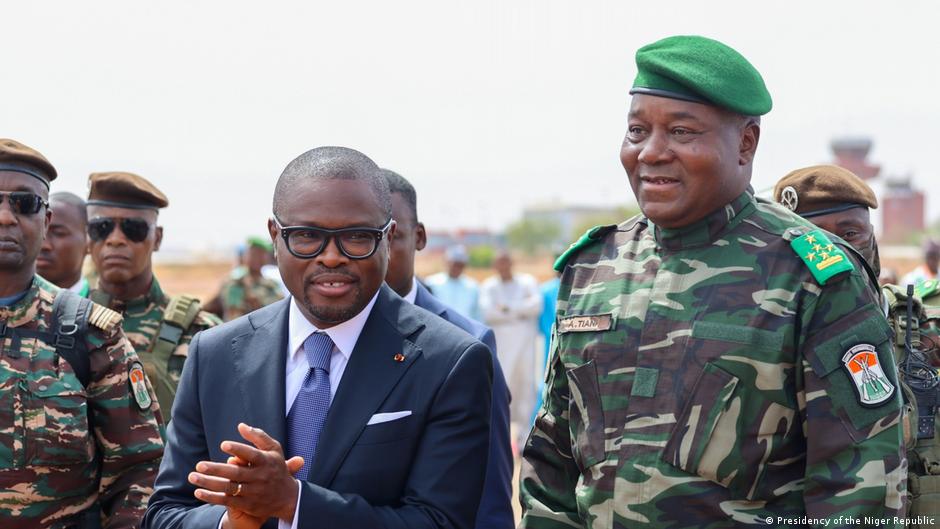
A joint expert committee has ignited fresh hope for resolving the prolonged border dispute between Benin and Niger. The breakthrough comes after months of stalled negotiations that have crippled regional trade and strained bilateral relations. Economic analysts now suggest the thaw in diplomatic tensions may pave the way for reopening the critical cross-border corridor.
Three non-negotiable conditions from Niamey
The negotiations reached a critical phase this week as Niger outlined three non-negotiable prerequisites for reopening the border with Benin, closed since 2023. These demands reflect deep-seated security concerns and sovereignty issues that have simmered since the military transitions in both nations.
- Mutual non-aggression pact: Niger insists on a formal defense agreement with Benin to guarantee no cross-border hostilities or support for destabilization efforts. While analysts view this as standard protocol, analysts note its renewed significance amid recent tensions.
- Joint intelligence sharing: Establishing a real-time information exchange system, particularly for counter-terrorism and cross-border crime, to monitor threats more effectively.
- Military transparency: Full disclosure of foreign military deployments near the border, addressing Niger’s unease over Benin’s international partnerships without infringing on its sovereignty.
“This is fundamentally about mutual trust,” explains Régis Hounkpè, executive director of InterGlobe Conseils. “The two countries must ensure their territories aren’t used as launchpads for attacks against each other. While these conditions may seem routine, their implementation will be crucial given the recent history of mistrust.”
The analyst emphasizes that Benin’s sovereignty in military partnerships must be respected: “Whether it partners with France, China, Russia, or regional allies, as long as these agreements don’t threaten Niger’s security, they’re acceptable. The key is pragmatic cooperation that prevents regional instability.”
Economic fallout of the closed border
The impasse has exacted a heavy toll on both economies. For Niger, a landlocked nation, Benin serves as its primary maritime gateway—nearly 70% of imports transit through Cotonou’s port. The closure has triggered a 30-50% spike in logistics costs, diverting trade to riskier routes through Nigeria and Ghana. Critical supplies like construction materials, fuel, and food staples face severe shortages, with prices surging accordingly.
The Benin-Niger pipeline, a 2,000km infrastructure linking Niger’s Agadem oil fields to Cotonou’s Sèmè-Kpodji port, has seen its operations suspended. Each delayed shipment represents millions of dollars in lost revenue for both nations, with analysts warning of unsustainable budgetary strain. Benin’s port congestion has also disrupted regional trade flows, redirecting maritime traffic to Togo and Nigeria and eroding its status as West Africa’s premier logistics hub.
Régis Hounkpè highlights the pipeline’s strategic importance: “At 90,000 barrels per day, every delayed cargo costs both countries dearly. No Sahelian budget can absorb such hemorrhaging indefinitely.”
Human cost of the diplomatic freeze
The border shutdown has devastated local communities. At Malanville (Benin) and Gaya (Niger), market vendors report customer traffic halved, forcing shop closures and job losses. Families separated by the closure face mounting hardship, while increased smuggling and extortion networks thrive in the power vacuum.
Transport costs have skyrocketed, turning once-routine trips into financial burdens. “The alternative routes are longer, more dangerous, and far costlier,” notes Hounkpè. “This isn’t just an economic crisis—it’s a humanitarian one.”
Path forward: Economic imperatives outweigh politics
The renewed dialogue stems from economic necessity rather than ideological alignment. Benin’s newly elected President Romuald Wadagni prioritized border normalization within days of taking office, culminating in the joint expert committee’s formation. His June 2026 visit to Niamey signaled a willingness to address Niger’s security concerns head-on.
Hounkpè remains optimistic about the prospects for cooperation: “Geopolitics can’t override geography. These leaders are condemned to collaborate—it’s a matter of economic survival, logistical stability, and regional security.” He predicts a phased border reopening, with priority given to essential goods under enhanced monitoring protocols.
Beyond bilateral benefits, a successful resolution could serve as a model for other ECOWAS and Alliance of Sahel States members grappling with similar tensions. “This thawing of relations, driven by pragmatism over ideology, could inspire similar breakthroughs—like the recent détente between Mali and Côte d’Ivoire.”
For now, both nations stand at a crossroads. The joint committee’s findings offer a glimmer of hope, but the path to reconciliation demands compromises neither side can afford to ignore.