
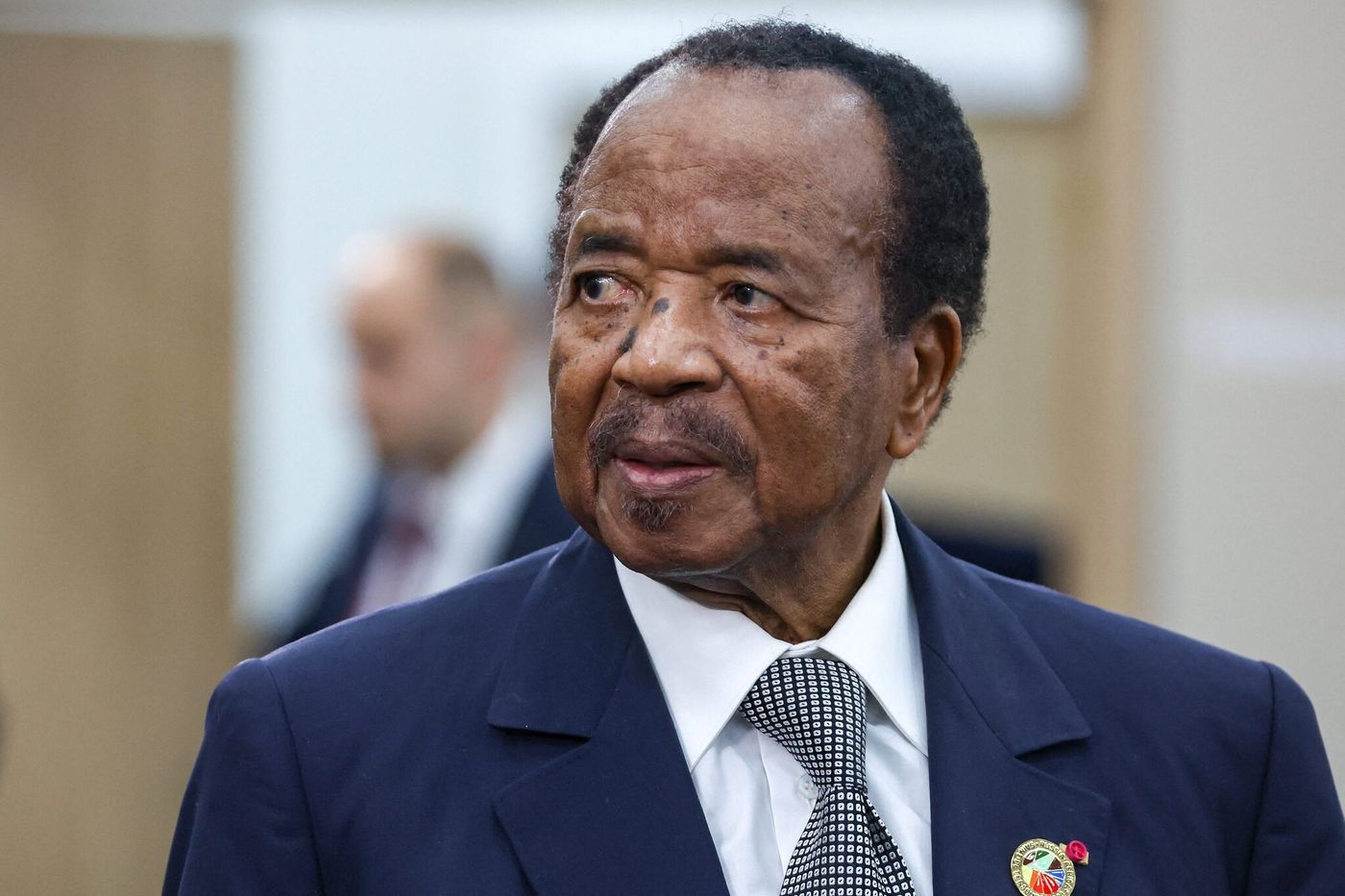
Cameroon’s long-serving president, Paul Biya, who has led the nation since 1982 and holds the distinction of being the world’s eldest head of state, made his return to Yaoundé on Thursday, August 20. His presence was eagerly anticipated after an absence spanning more than two months, a period that intensely rekindled national discussions regarding his ability to govern the country effectively.
The 93-year-old Cameroonian leader had departed Yaoundé on June 7, embarking on what the presidency described as a “short private stay in Europe.” Local media outlets, however, indicated his presence in Geneva, Switzerland, accompanied by his family and a select group of his closest advisors.
Following a 73-day sojourn outside the nation, Paul Biya’s motorcade departed Yaoundé airport. From the slightly ajar window of his vehicle, he offered a wave to the assembled crowd as he made his way towards his official residence, the Etoudi Palace, accompanied by his wife, Chantal Biya. Dozens of loyal supporters from the presidential party, many adorned in vibrant fabrics bearing the president’s likeness, had convened at the airport, creating a celebratory atmosphere for his arrival.
President Biya’s health, a frequent subject of speculation given his regular stays in Geneva, often generates rumors that the government occasionally refutes. For instance, on June 18, Minister of Communication René Emmanuel Sadi publicly denied press reports claiming the Cameroonian leader had been hospitalized at a Geneva clinic.
This particular absence, notable for its extended duration, reignited intense discussions about the perceived inertia within the Cameroonian government. It also provoked strong condemnation from opposition factions, who decried an “institutional vacuum” and suggested the country was operating on “autopilot.” These criticisms emerged amidst long-standing expectations for the appointment of a new government and a vice-president, which have been pending for several months.
“Spectacle”
“In a democracy such as ours, it is entirely natural for a president’s prolonged absence to prompt inquiries,” stated Gilles Owono, a 30-year-old educator who was present at the airport to greet the head of state. He further asserted, “However, this period did not alter the nation’s operational capacity, as the country continued to function seamlessly.”
James Fame Ndongo, a prominent figure within the presidential party and the Minister of Higher Education, dismissed claims of a power vacuum in late July. He maintained that “regardless of his location, the head of state diligently reviews the dossiers presented to him by his collaborators.”
Nevertheless, these frequent absences, a recurring pattern over two decades, consistently fuel frustration among numerous Cameroonian citizens. “His presence or absence makes no difference. When he is here, he accomplishes nothing. Therefore, I see no necessity in participating in this charade,” remarked Prosper Nkou Mvondo, leader of the opposition Univers party, expressing his sharp disapproval.
President Paul Biya’s re-election to an eighth term in October 2025 had previously triggered demonstrations that were met with violent repression. The government itself acknowledged “several dozens” of fatalities, though it never provided an exact death toll. The election results, vehemently disputed by the opposition, also led to a noticeable coolness from Western diplomatic missions.
The extended duration of this overseas stay also intensified speculation regarding the “post-Biya” era, accelerating the unofficial race for his succession, a process that currently remains highly uncertain. In the absence of a designated vice-president, the responsibility for assuming power in the event of a presidential vacancy would fall to the President of the Senate, Aboubakary Abdoulaye, until a new presidential election could be arranged.