
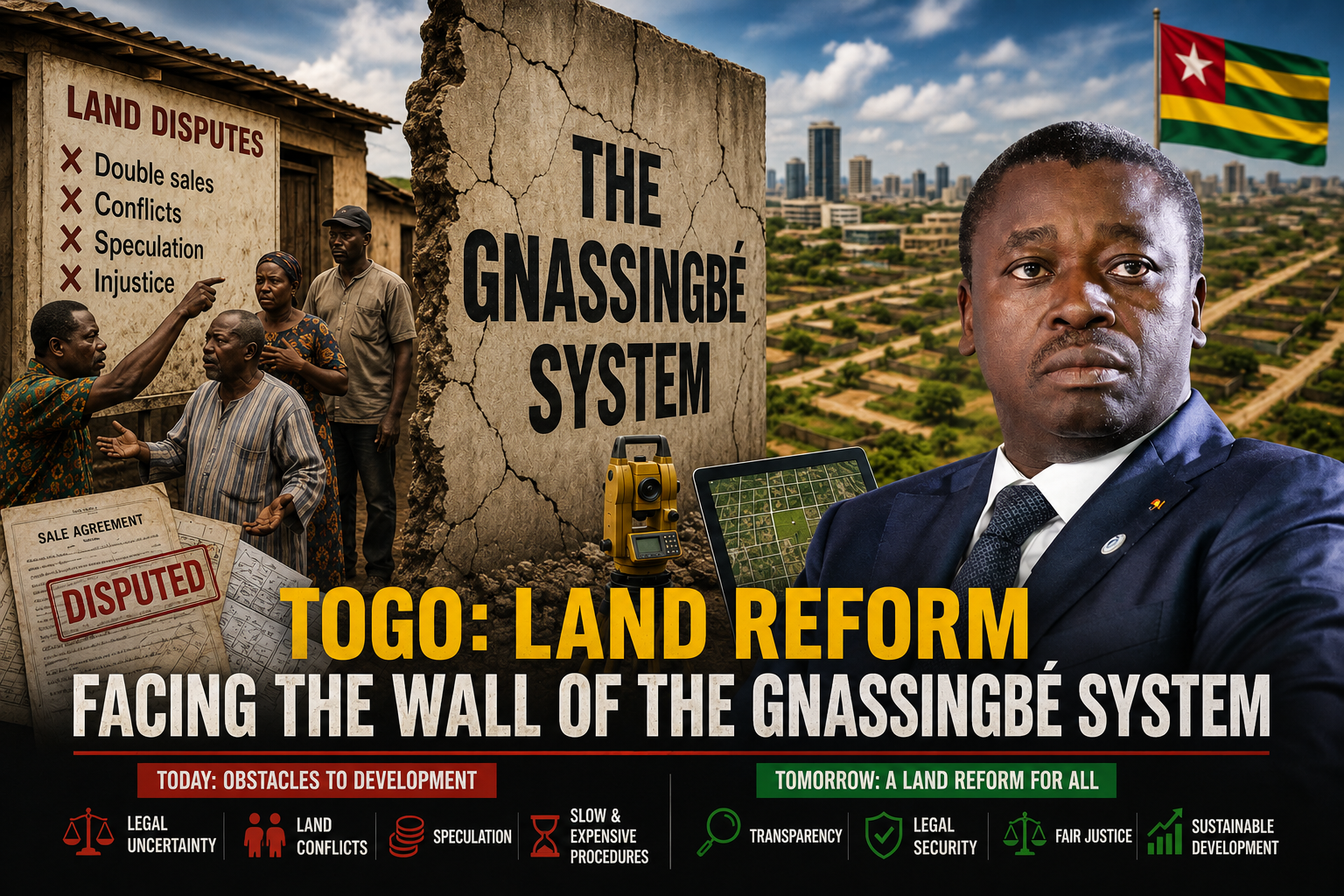
The Togolese government has recently set its sights on revamping the country’s land management framework, aiming to transform it into a key driver for economic growth. However, this ambitious initiative faces formidable obstacles rooted in long-standing structural issues that have plagued the sector for decades.
At the core of the problem are pervasive land disputes, exacerbated by multiple sales of the same parcel, contested ownership claims, inadequate record-keeping, and opaque transaction processes. The lack of legal certainty surrounding private property discourages both domestic and foreign investment, undermines household savings, and often turns land transactions into financial liabilities rather than secure assets.
Administrative bottlenecks and unequal access
Another critical challenge lies in the cumbersome and opaque administrative procedures governing land transactions. Citizens and businesses frequently encounter lengthy, costly, and confusing processes that disproportionately benefit those with financial resources, political connections, or insider knowledge of the system. Without improved transparency and streamlined procedures, the reform’s promise of equitable access to land ownership remains elusive.
The judiciary’s pivotal role
Land disputes that drag on for years do more than disrupt administrative processes; they can fracture families, stall inheritances, and paralyze economic initiatives. For the land reform to succeed, the judiciary must deliver swift, impartial, and enforceable rulings. Only then can conflicts be resolved efficiently, and trust in the legal system be restored. Without an independent and well-resourced judicial system, administrative reforms will yield limited results.
Political interference and entrenched interests
The land sector involves a complex web of stakeholders, including customary landowners, intermediaries, surveyors, local authorities, and government agencies. When some of these actors maintain close ties to political or economic elites, the risk of conflicts of interest and favoritism becomes acute. A credible reform must dismantle these entrenched networks rather than perpetuate them under new guises.
Urban pressure and speculative practices
In rapidly urbanizing areas, surging land values intensify pressure from speculative investors, leading to land grabs, multiple sales, and manipulation of property records. Vulnerable populations often bear the brunt of these practices, as land transitions from a familial asset to a speculative commodity accessible only to those with significant capital.
Social fragmentation and unresolved customary rights
Land conflicts frequently pit family members, neighboring communities, or successive generations against one another over inheritance disputes. Until the formal legal system aligns more effectively with customary practices—while ensuring mediation, conflict prevention, and public awareness such tensions will persist.
The promise and limitations of digital solutions
Digitalization offers a potential pathway to reform, particularly through the creation of a reliable, accessible, and regularly updated land database. Such a system could drastically reduce the incidence of double sales and streamline due diligence for prospective buyers. However, digital tools alone cannot address systemic fraud if the underlying data remains incomplete, manipulable, or unevenly accessible.
Transparency as the cornerstone of trust
Transparency must extend beyond public records to the very institutions responsible for land management. Clarity is needed on how parcels are allocated, the criteria for decision-making, the mechanisms for monitoring transactions, and the penalties for irregularities. Without these safeguards, skepticism will persist, and each new reform will be met with justified doubt.
The economic stakes of land security
A secure land tenure system empowers individuals to invest, businesses to expand, and financial institutions to extend credit. Conversely, insecurity stifles capital flows, halts development projects, and fosters an economy of distrust. The implications are far-reaching, affecting not just landowners but the nation’s broader economic potential.
The central question is not whether Togo can enact another land reform, but whether it possesses the political resolve to implement one that is truly transformative. This would require stringent transparency measures, enforceable penalties for fraudulent practices, a more agile judiciary, tighter administrative oversight, and robust protections for vulnerable citizens.
Without a genuine commitment to dismantling entrenched interests, strengthening the rule of law, and overhauling the land justice system, any reform effort risks becoming little more than a superficial facelift. So long as partisan or private interests continue to take precedence over transparency and legal equality, land will remain a source of conflict rather than the economic catalyst it aspires to be.