
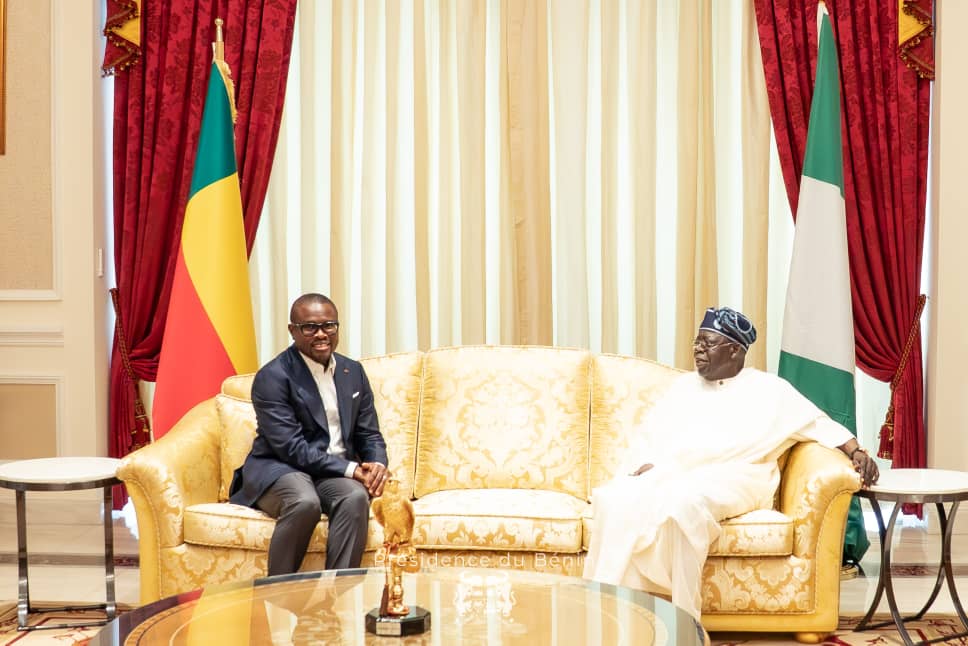
Just days after taking office, Beninese President Romuald Wadagni embarked on his maiden overseas official visit, choosing Nigeria—the West African giant and Benin’s top economic partner—as his first destination. On June 1, 2026, Wadagni landed in Lagos, where he held closed-door talks with Nigerian counterpart Bola Ahmed Tinubu to discuss pressing bilateral and regional issues.
Strategic talks in Lagos: economy, energy and security in focus
The one-on-one meeting between Wadagni and Tinubu covered a broad agenda, including economic and industrial integration, energy cooperation, maritime security in the Gulf of Guinea, and the evolving political landscape in the Economic Community of West African States (ECOWAS). These discussions underscore the depth of the Benin-Nigeria relationship, which has strengthened significantly in recent years.
Diplomatic observers highlight that Wadagni’s choice of Nigeria for his first foreign trip signals a clear commitment to deepening ties with Abuja. With over 800 kilometers of shared border and decades of official diplomatic relations since 1961, the two countries maintain a robust and multidimensional partnership.
Trade ties reach new heights
The Port of Cotonou serves as a vital gateway for Nigerian goods destined for landlocked Sahelian nations. Trade flows have surged, with formal exports from Benin to Nigeria climbing by over 90% in 2024. This economic interdependence reinforces the strategic importance of the Benin-Nigeria corridor in West Africa’s trade network.
Wadagni’s visit comes at a pivotal moment as both nations work to mend relations after the 2019–2020 border closure, which disrupted cross-border trade. Since then, Cotonou and Abuja have launched joint initiatives to restore confidence, ease trade barriers, and foster closer collaboration across sectors.
A diplomatic agenda with regional resonance
Following his engagement in Lagos, President Wadagni continued his regional tour with stops in Niamey, Niger, and Ouagadougou, Burkina Faso. These visits carry symbolic weight, reflecting efforts to rebuild trust with Benin’s northern neighbors after years of strained relations.
The timing of this diplomatic outreach aligns with Wadagni’s broader foreign policy objectives, emphasizing regional stability and shared economic growth as pillars of his administration’s agenda. By prioritizing Nigeria first, he signals both continuity and ambition in Benin’s external relations.