
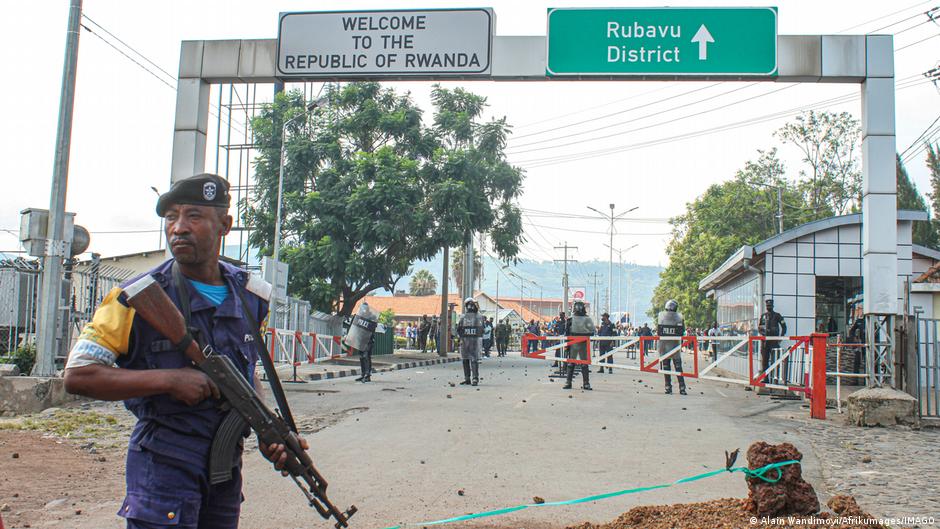
Businesses in Goma are grappling with severe disruptions following the closure of the border with Rwanda, a move that has sent shockwaves through the city’s already fragile economy. The decision has choked off vital trade flows that have long sustained daily commerce and livelihoods in this eastern Congolese city.
The Rwandan government implemented strict border controls as part of broader efforts to curb the spread of Ebola, halting all movement through key crossing points between Goma and the nearby Rwandan town of Gisenyi. While the move was driven by public health concerns, its economic fallout has been immediate and widespread.
daily losses mount for small-scale traders
Local vendors, whose incomes depend on cross-border traffic, are among the hardest hit. Jacques Safari, a street vendor who sells eggs near the border, said his sales have plummeted by more than half since the closure. Previously selling up to five egg cartons daily, he now struggles to move even two.
“Most of my customers came from across the border. Without them, business has nearly collapsed,” he said, describing how the loss of foot traffic has left him scrambling to make ends meet.
supply chains break down for wholesalers
At Birere market, wholesalers are also feeling the squeeze. Hamuli Kasilembo, a distributor in the market, explained that the closure has severed critical supply lines that once allowed quick and efficient restocking of goods like rice, soap, and other essentials.
He added that the slowdown in trade has made transactions more cumbersome, with cash flow tightening and demand dwindling. “We used to rely on daily trips to Rwanda for fresh stock. Now, delays and red tape are pushing up costs and squeezing margins,” he said.
economists warn of deeper consequences
Financial analysts warn that the ripple effects will only grow stronger. Alphonse Muanda, an economist monitoring the situation, pointed out that the border had long served as an economic lifeline for countless small businesses in Goma and Gisenyi.
Many traders depended on quick trips to Rwanda to buy bulk goods at competitive prices, reselling them locally for profit. With the border shut, these opportunities have vanished overnight. “The closure doesn’t just hurt trade—it threatens the very survival of those who earn their living from it,” Muanda said.
As the border remains closed under public health protocols, residents of Goma are bracing for further economic hardship, fearing that the situation will only worsen in the coming weeks.