
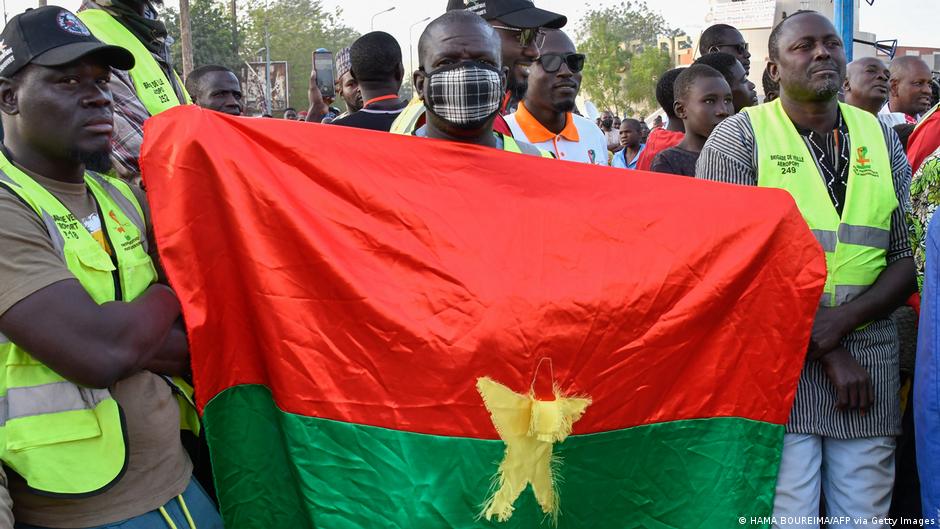
civic space under threat in Burkina Faso amid military rule

The arrest of Imam Mohamed Ishaq Kindo at his home just before Eid al-Adha has sent shockwaves through Burkina Faso’s Muslim community. Witnesses described masked security forces detaining the religious leader without explanation, sparking immediate outrage among his followers.
Why the imam’s detention matters
Imam Kindo was no ordinary cleric. As a member of the Federation of Islamic Associations of Burkina Faso (FAIB), he had previously been a vocal supporter of Captain Ibrahim Traoré, though he maintained a critical stance on government policies. His most recent criticism targeted a proposed law regulating religious practices, including public prayers—a move that drew the ire of military authorities.
The timing of his arrest, coinciding with a major religious holiday, amplified the controversy. Protests erupted in response, leading to clashes that left several injured and dozens detained. FAIB repeatedly called for calm, but the crackdown continued unabated.
Disinformation and digital battles
The crisis took another troubling turn with the spread of fake news. A fabricated statement claiming Imam Kindo’s death circulated widely before being debunked by prosecutors. Some videos allegedly depicting abuses were flagged for inconsistencies, with experts suspecting AI-generated content. Reports also indicated some detainees were taken to a military camp in Kaya, in the Centre-Nord region.
Student union in the crosshairs
The suspension of the General Union of Burkina Faso Students (UGEB)—a 64-year-old institution—marked another escalation. The union’s president, Bazo Wilfried, and several members were arrested after criticizing the military government’s handling of the security crisis, calling it a “civil war” and accusing authorities of “manifest incompetence.”
Charges of “terrorism apologia” and “demoralizing security forces” were leveled against the students, a familiar pattern across the Sahel. Mahamadou Idder Alghabid, deputy secretary-general of the Alliance of Sahel Democrats (ADS), condemned the move: “Accusing unarmed students of terrorism is laughable, but it’s become standard practice in the Sahel. Dissent is silenced under the pretext of counterterrorism.”
Regional repression trends
Burkina Faso is not alone in this crackdown. Similar restrictions on civic space have been documented in Mali and Niger, where military juntas have dissolved organizations, restricted free expression, and used judicial pressure to suppress opposition. The line between legitimate criticism and criminal offense is increasingly blurred.
Alghabid warned: “The propaganda that initially resonated with Sahelians—sovereignty, anti-imperialism—has lost its luster. People are waking up to the emptiness of these promises. The military regimes are losing ground daily.”
The resilience of dissent
Despite the repression, voices of opposition persist, often from exile. Newton Ahmed Barry, a Burkinabè journalist in diaspora, predicted the regime’s downfall: “Excesses are the weakness of brute force. Ibrahim Traoré’s regime is digging its own grave, but the people are fighting back. This is not a society that will remain bowed forever.”
Human rights advocates urge international support for Burkina Faso’s civic space. Ilaria Allegrozzi of Human Rights Watch stressed: “Silence and ambiguity only legitimize authoritarianism. The international community must stand with Burkinabè civil society and defend their right to peaceful expression.”
She added: “Calling out abuses and refusing to normalize military coups is not counterproductive—it’s a moral imperative.”