
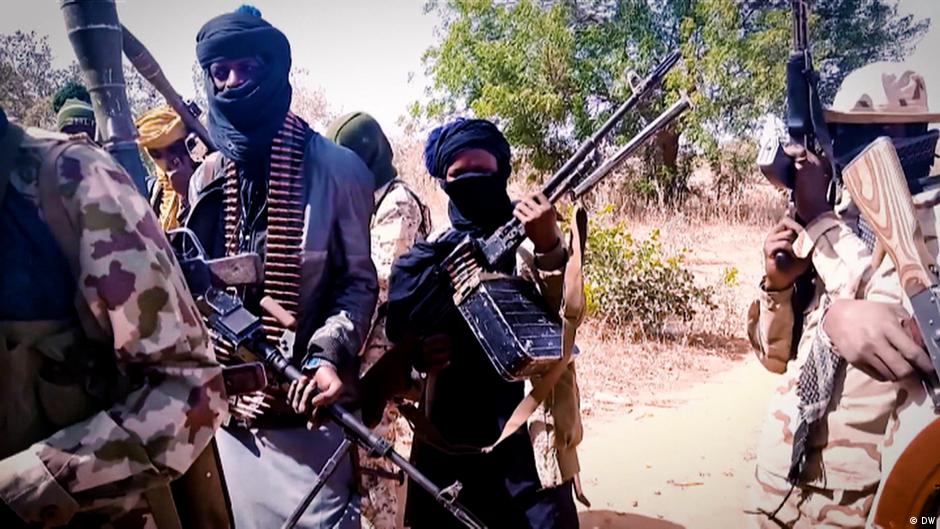
Boko Haram has turned kidnapping into a systematic financial strategy, generating millions through ransoms and recruitment in West Africa’s conflict zones. From Nigeria to Niger, Cameroon and beyond, the militant group’s operations now represent a structured and lucrative industry that fuels its insurgency.
How kidnapping became Boko Haram’s economic engine
Recent data from Nigeria—the epicenter of these crimes—shows the staggering scale of this phenomenon. Between July 2024 and June 2025, over 4,700 people were abducted in nearly 1,000 incidents, with hundreds killed. While schools and communities are frequent targets, the violence extends across Nigeria’s northern and central regions, driven by both Boko Haram (designated a UN terrorist organization in 2014) and its rival, the Islamic State’s West Africa Province (ISWAP).
But the terror network’s reach doesn’t stop at Nigeria’s borders. In Cameroon, Boko Haram claimed responsibility for the 2025 abduction of bus passengers in Zigué, located in the Far North. Meanwhile, in Niger, the group seized seven Chadian nationals near the Tchad border in March 2025, killing one hostage while the rest remain captive. Ransom demands in this case skyrocketed to 50 million CFA francs for five captives, with an additional 500 million CFA francs demanded for a doctor among the hostages—a figure reported by the Chadian Human Rights League.
Dual purpose: funding terror through human suffering
According to Remadji Hoinathy, a researcher at the Institute for Security Studies (ISS), kidnappings serve two critical functions for Boko Haram:
- Forced recruitment: Young men, women, and entire communities are coerced into joining as fighters, laborers, or sexual slaves.
- Revenue generation: Ransom payments—often ranging from thousands to millions of naira or CFA francs—are collected from families, local governments, and occasionally national authorities. These funds directly finance weapons, training, and operational costs.
The Nigerian government officially condemns ransom payments, enacting a 2022 law that criminalizes such transactions, punishable by up to 15 years in prison. Yet enforcement remains inconsistent. Investigations suggest that authorities have paid substantial sums to secure the release of hostages, including 230 schoolchildren and staff from a Catholic school in Niger State in late 2025. While Abuja denies these claims—attributing the releases to intelligence and military operations—experts warn that acknowledging ransom payments could embolden extremist propaganda.
Boko Haram’s strategic stronghold: the Lake Chad Basin
Boko Haram originated in 2002 in Maiduguri, Borno State, under the leadership of Mohammed Yusuf, whose vision was to establish a hardline Islamic state. Rejecting Western influence—embodied in the name Boko Haram (“Western education is sinful” in Hausa)—the group initially operated within Nigeria but rapidly expanded across Niger, Tchad, and Cameroon, consolidating its presence in the Lake Chad Basin.
Remadji Hoinathy explains why this region is pivotal to the group’s survival:
- Transborder sanctuary: The area’s porous borders facilitate movement of fighters and arms, linking the Sahel to Libya—a key transit hub.
- Marginalized terrain: Weak state presence and a robust informal economy (agriculture, pastoralism) provide both resources and cover.
- Geographic concealment: Dense forests, marshes, and remote islands offer ideal hiding spots when military pressure intensifies.
ISWAP: a rival jihadist faction reshaping the conflict
The Islamic State in West Africa Province (ISWAP) emerged in 2016 after breaking away from Boko Haram over ideological and tactical disputes. While Boko Haram’s late leader, Abubakar Shekau, targeted civilians indiscriminately, ISWAP sought to forge alliances with local populations through governance and service provision. This shift in strategy has intensified competition between the two factions, sparking violent clashes over territorial control and resources in the Lake Chad Basin.
Regional response: military coordination meets resilience of extremists
The four affected countries—Nigeria, Niger, Tchad, and Cameroon—have united under the Lake Chad Basin Commission to deploy the Multinational Joint Task Force (MNJTF). Alongside military operations, a regional stabilization strategy focuses on development initiatives and restoring state authority in vulnerable communities. Yet after 15 years of conflict, Boko Haram and ISWAP continue to adapt, regenerate, and launch attacks, underscoring the limitations of current counterterrorism efforts.
Since 2009, this jihadist insurgency has resulted in over 40,000 deaths and displaced 2 million people in Nigeria alone, according to the UN. To bolster Abuja’s counterterrorism capabilities, the United States has stationed approximately 200 troops in Nigeria since 2024, providing training and logistical support.