
An unprecedented sight recently unfolded in Burkina Faso, where 44 media professionals participated in several days of military training focused on “patriotism.” This development has prompted Reporters sans frontières (RSF) to voice serious concerns, labeling it an alarming signal for press freedom in the nation.
An unusual scene at the police academy
Burkinabè journalists, clad in military fatigues, rifles in hand, standing at attention—this was the remarkable scene. For nearly a week, 44 individuals from both public and private media outlets underwent an intensive training program at the Pabré Police Academy, situated approximately twenty kilometers from Ouagadougou. The initiative, spearheaded by the Ministry of Security, spanned from Sunday to Friday. Public broadcaster RTB aired footage depicting the journalists engaged in physical exercises, singing, and handling weaponry. Pingdwendé Gilbert Ouédraogo, the Minister of Communication, notably questioned them on their commitment to being “patriotic and professional journalists.” Their unanimous response: “Affirmative.”
“A journalist who isn’t patriotic is a threat”
The Burkina Faso government openly champions this initiative. Lassina Traoré, Director General of the Police Academy, stated that the program’s aim was to expose journalists to the “operational realities and values” of the defense and security forces. Mahamadou Sana, the Minister of Security, expressed intentions to expand this further, announcing that the training is slated to become an annual “tradition” for media professionals. Plans are also underway to potentially extend this framework to “other socio-professional groups.” From the government’s perspective, this immersion is crucial for bolstering patriotism across the nation, which has grappled with a severe jihadist insurgency for years. This is a significant aspect of current Burkina Faso news.
RSF denounces a threat to press freedom
This initiative has triggered profound apprehension among advocates for press freedom. Sadibou Marong, Director of Reporters sans frontières’ (RSF) Sub-Saharan Africa bureau, conveyed to us that “This initiative represents another deeply troubling indicator for press freedom.” The organization unequivocally reminds all parties that journalists are not military personnel and must not be co-opted as “relays for the war effort.” RSF specifically calls upon the Burkinabè authorities to safeguard the independence of the media.
Growing pressure on the media
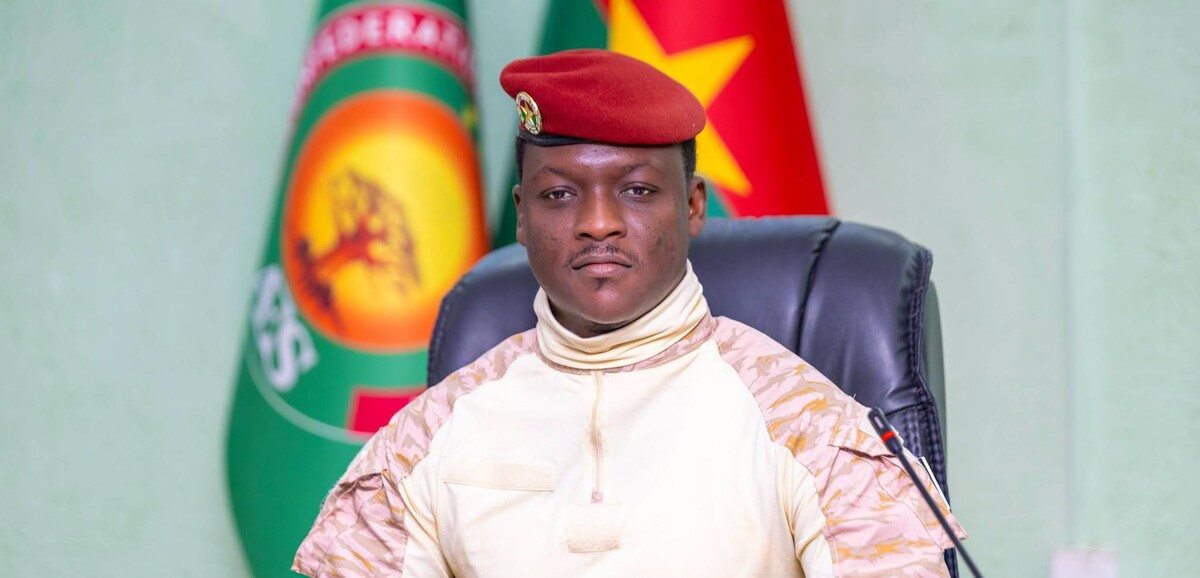
This military training for journalists unfolds within a particularly volatile environment for media practitioners in Burkina Faso. Since the junta, led by Captain Ibrahim Traoré, seized power in 2022, several media outlets have faced suspension, and critical voices have been silenced. Non-governmental organizations have also reported instances of journalists and other individuals critical of the regime being forcibly conscripted to participate in the fight against jihadist groups. The Burkina Faso government, for its part, champions a sovereignist policy and asserts that it is spearheading a “progressive popular revolution,” deeply influencing Burkina politics and Faso security news.
War as justification
Since 2015, Burkina Faso has been battling an insurgency orchestrated by armed groups linked to Al-Qaïda and the Islamic State. These ongoing violent conflicts have resulted in thousands of fatalities and displaced millions of people. It is against this backdrop that the junta justifies its intensified national mobilization efforts. However, the announcement of annual military training for journalists raises a broader, critical question: how far can a nation’s patriotic mobilization extend during wartime without undermining the independence of those whose fundamental role is to inform the public? For RSF, the answer remains unambiguous: a journalist must uphold their journalistic integrity, even amidst conflict.