
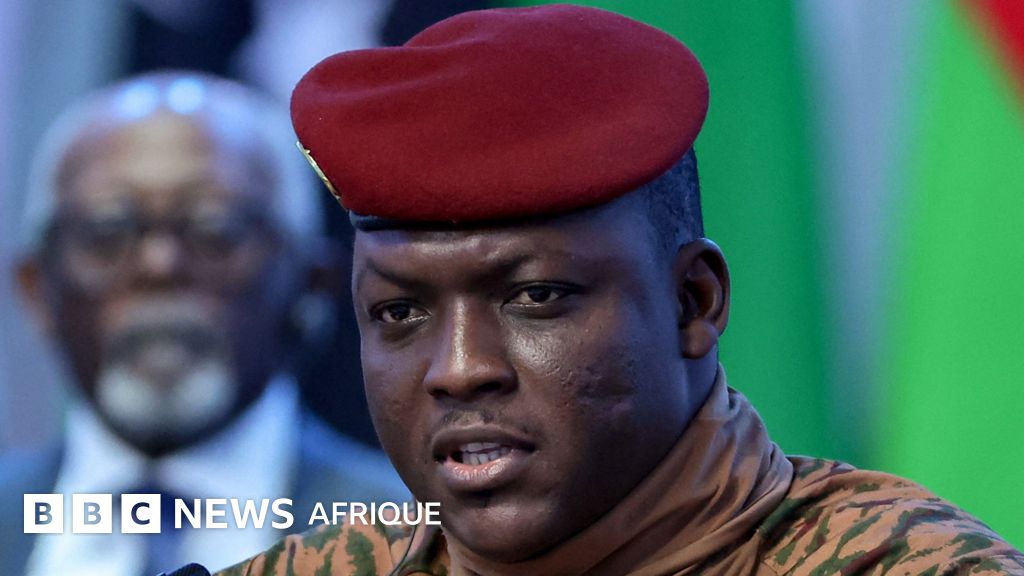
Burkina Faso’s military leader declares democracy unfit for the nation
Captain Ibrahim Traoré, Burkina Faso’s military leader, has declared that the nation must abandon democratic governance, calling the system “toxic” for African societies during a state television interview.
The 38-year-old leader, who seized power in a 2022 coup, argued that democracy has brought nothing but suffering to the continent, citing the ongoing crisis in Libya as evidence. “People must forget about democracy. It is not for us,” Traoré stated firmly, while positioning himself as a revolutionary figure opposing Western imperialism.
The military government had initially pledged to restore democratic rule by July 2024, but reversed course in May, announcing a five-year extension to its transition period. This decision followed the January ban on all political parties, part of what the junta calls a “state reconstruction” plan.
Rejection of political parties and Western influence
Traoré has been vocal about his disdain for Burkina Faso’s former political class, describing traditional politicians as “liars, flatterers, and charlatans” who embody all vices. He claims these parties only serve to divide the nation rather than unite it.
The junta leader emphasized Burkina Faso’s need for an entirely new system built on sovereignty, patriotism, and revolutionary mobilization. “We have our own approach. We don’t even try to copy anyone. We are here to completely change how things are done,” he asserted.
His vision prioritizes traditional leaders and grassroots structures, with economic and military self-reliance as core pillars. Traoré argued that Burkina Faso cannot progress with conventional 6-8 hour workdays, insisting on a more rigorous approach to development.
Human rights concerns amid political transformation
Since taking power, Traoré has systematically suppressed dissent, targeting opposition figures, media outlets, and civil society organizations. Critics of the regime report systematic repression, including forced deployment to frontline combat zones against Islamist militants.
Despite these controversies, Traoré has cultivated significant continental support through his panafricanist rhetoric and vocal opposition to Western influence, aligning Burkina Faso with neighboring military-led governments in Mali and Niger.
The three nations have collectively moved away from Western partnerships in their fight against Islamist insurgencies, instead turning to Russia for military assistance. However, violence in the region continues unabated, with more than 1,800 civilian deaths reported in Burkina Faso since the 2022 coup, according to monitoring organizations.
Human rights observers attribute two-thirds of these civilian deaths to state security forces and their allied militias, with the remainder linked to Islamist militant groups.
Traoré’s bold rejection of democratic norms marks a significant shift in Burkina Faso’s political trajectory, raising concerns about the country’s future governance and human rights protections as it pursues this unconventional path.