
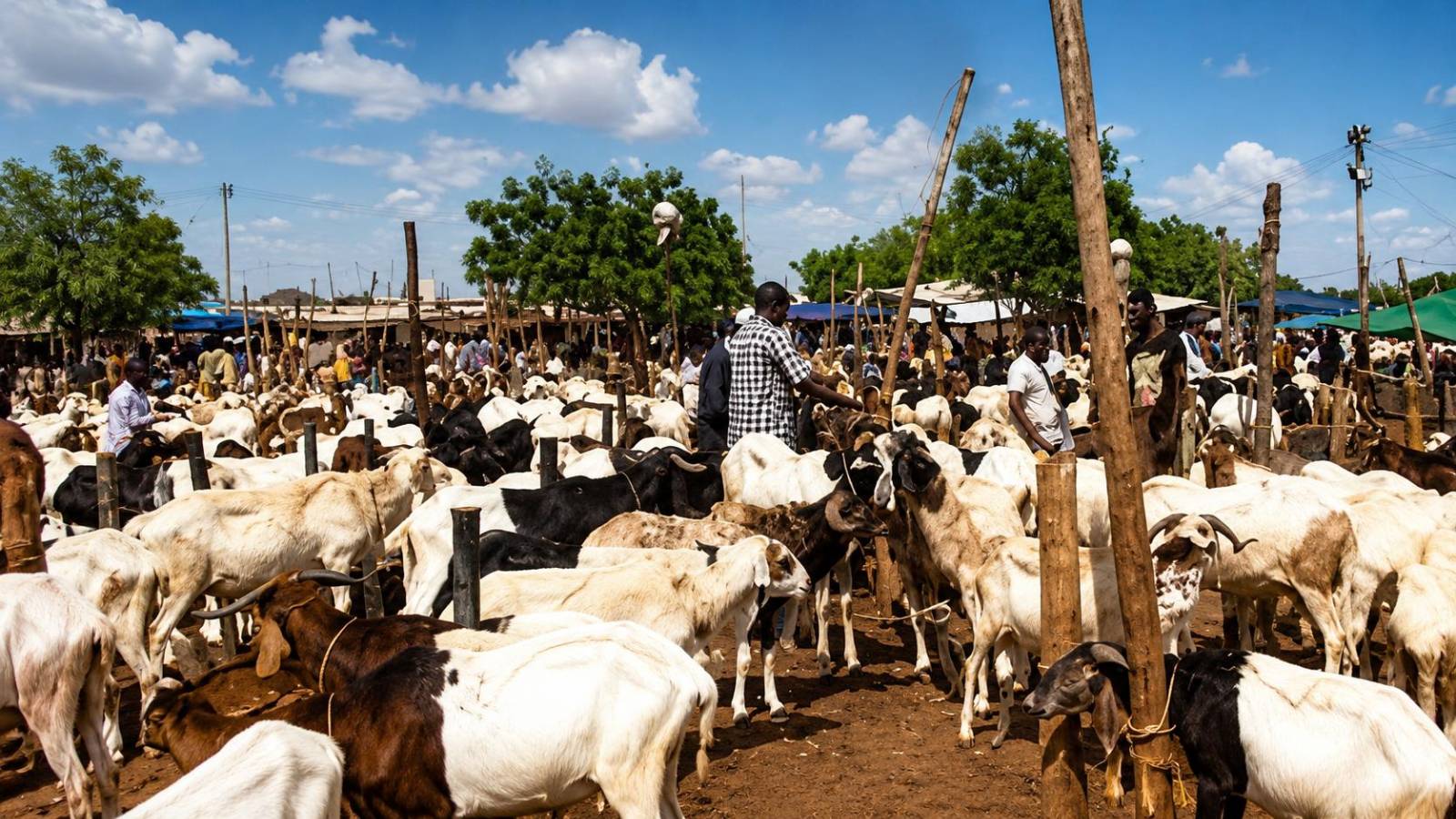
As the Tabaski celebrations approach, the government of Burkina Faso has taken a bold step by banning livestock exports—a move aimed at protecting local consumers but fraught with economic contradictions and unintended consequences.
Boosting urban affordability at the expense of rural producers
At first glance, the decision appears to benefit urban households in cities like Ouagadougou, where rising demand for sheep during Tabaski typically drives up prices. By restricting exports, authorities hope to flood the domestic market, driving down costs for consumers. Yet this strategy comes at a steep price for rural communities.
Burkina Faso’s pastoralists, already struggling under the weight of jihadist violence, cattle theft, and shrinking grazing lands, now face a new threat: the loss of lucrative cross-border markets in Ivory Coast and Benin. These exports often represent their primary source of income, and cutting them off risks pushing an already vulnerable population deeper into poverty. In essence, the government is subsidizing urban celebrations by draining resources from the countryside.
Can Burkina Faso’s market absorb the surplus?
The logic behind the blockade is straightforward: flood the local market to stabilize prices. But livestock is not a static commodity—it requires constant feeding, care, and space. Once the festivities conclude, what happens to the unsold animals?
With no immediate buyers and limited local processing capacity, pastoralists may be forced to sell at a loss or watch their herds perish from neglect. While the government’s long-term plan to expand modern slaughterhouses is promising, current infrastructure cannot handle the sudden influx of livestock. The result? A potential financial collapse in the sector within months.
The ripple effect on regional trade relations
Burkina Faso’s decision to sever livestock exports is more than an economic miscalculation—it’s a geopolitical gamble with lasting repercussions. By weaponizing its cattle trade, Ouagadougou risks alienating key regional partners, including Ivory Coast and Benin, which are now scrambling to secure alternative suppliers. The Ivory Coast, for instance, is already exploring options in Mauritania, a shift that could permanently erode Burkina Faso’s long-standing role in West African trade networks.
This move also exposes the fragility of regional integration. While the government frames the blockade as a step toward self-sufficiency, it undermines decades of trade cooperation. For pastoralists, the consequences are dire: lost markets, reduced incomes, and heightened isolation in an already fractured economic landscape.
The Tabaski blockade may offer short-term relief for urban consumers, but its long-term impact could spell disaster for Burkina Faso’s rural economy and its standing in the region.