
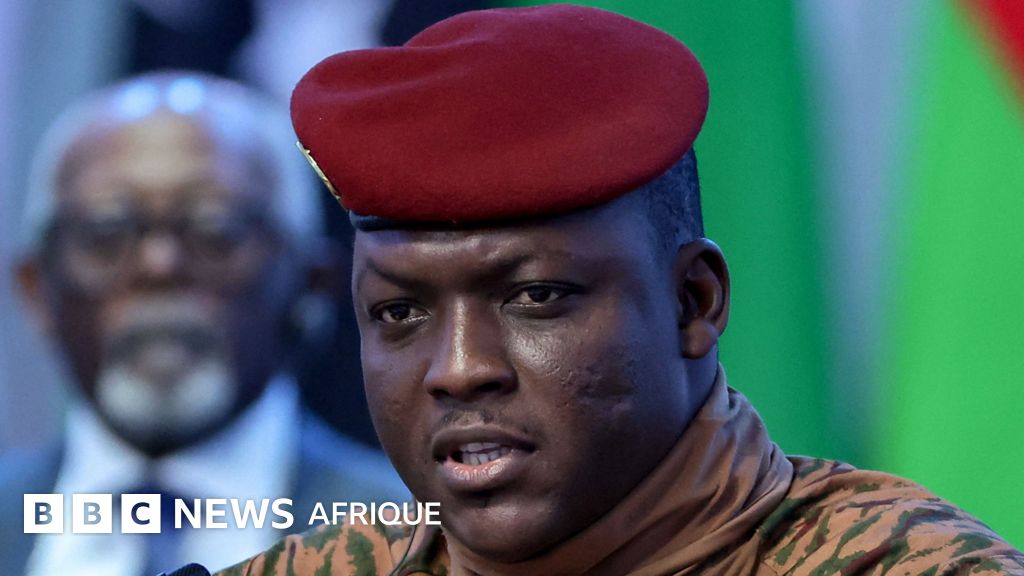
In a televised interview, Burkina Faso’s military leader has declared that the nation must abandon democratic principles, calling the system incompatible with the country’s needs. Captain Ibrahim Traoré, who seized power in a 2022 coup, argued that democracy has failed the Burkinabè people and must be discarded entirely.
Rejection of democracy and proposed alternatives
During the nationally broadcast interview, Traoré stated bluntly, « People must forget about democracy. It is not for us. » He argued that Western-imposed democratic systems have brought nothing but conflict, citing recent turmoil in Libya as an example. The former Libyan leader, Muammar Gaddafi, maintained decades of autocratic rule before his violent overthrow in a Western-backed uprising, leaving the country fractured and unstable.
Traoré’s administration has taken concrete steps toward dismantling democratic institutions. In January, all political parties were banned as part of a broader initiative to « rebuild the state ». The junta leader dismissed political parties as divisive and corrupt, claiming they perpetuate a culture of deceit and empty rhetoric. « A true politician in Africa is a liar, a flatterer, a showman, » he declared, rejecting the entire political class.
Although no detailed alternative system was outlined, Traoré emphasized a commitment to sovereignty, patriotism, and revolutionary mobilization. He insisted that Burkina Faso must forge its own path, free from external influence. « We are not trying to copy anyone. We are here to completely change how things are done, » he asserted.
Military rule, political repression, and shifting alliances
Traoré came to power in September 2022, initially promising a return to democratic governance by July 2024. However, with the deadline approaching, the junta extended its rule by five years, citing ongoing security threats as justification. The decision drew widespread criticism but reinforced Traoré’s consolidation of power.
Under his leadership, dissent has been systematically suppressed. Opposition figures, independent media, and civil society organizations face severe restrictions. Reports indicate that critics are often sent to frontline positions in the fight against Islamist militants, effectively silencing them through coercion.
Burkina Faso’s pivot away from Western partnerships has intensified under Traoré. The country has distanced itself from France and other European allies in the fight against jihadist insurgencies that have plagued the Sahel region for over a decade. Instead, Ouagadougou has strengthened ties with Russia, seeking arms supplies and military support through the Wagner Group—a move that has drawn both domestic praise and international scrutiny.
Despite these shifts, violence continues unabated. According to recent assessments, over 1,800 civilians have been killed since Traoré’s rise to power, with human rights organizations attributing two-thirds of these deaths to state forces and allied militias. The remainder are linked to armed Islamist groups operating across the country.
A new African model?
Traoré’s rhetoric has resonated beyond Burkina Faso’s borders, particularly among panafricanist movements and those critical of Western influence. His stance aligns closely with neighboring military-led governments in Mali and Niger, all of which have similarly rejected democratic systems and Western security cooperation in favor of sovereignty-first approaches.
While Traoré has not fully articulated a functioning alternative to democracy, his vision emphasizes national unity, grassroots mobilization, and economic self-reliance. He argues that Burkina Faso cannot progress under traditional systems and requires radical transformation—one rooted in patriotism and collective effort. « Working six or eight hours a day won’t make us catch up with wealthier nations, » he stated, underscoring his belief in relentless labor and systemic change.
The long-term implications of Traoré’s rejection of democracy remain uncertain. What is clear is that Burkina Faso is charting a course that diverges sharply from conventional governance models, with profound consequences for its people and regional stability.