
From bold claims to silent assembly lines
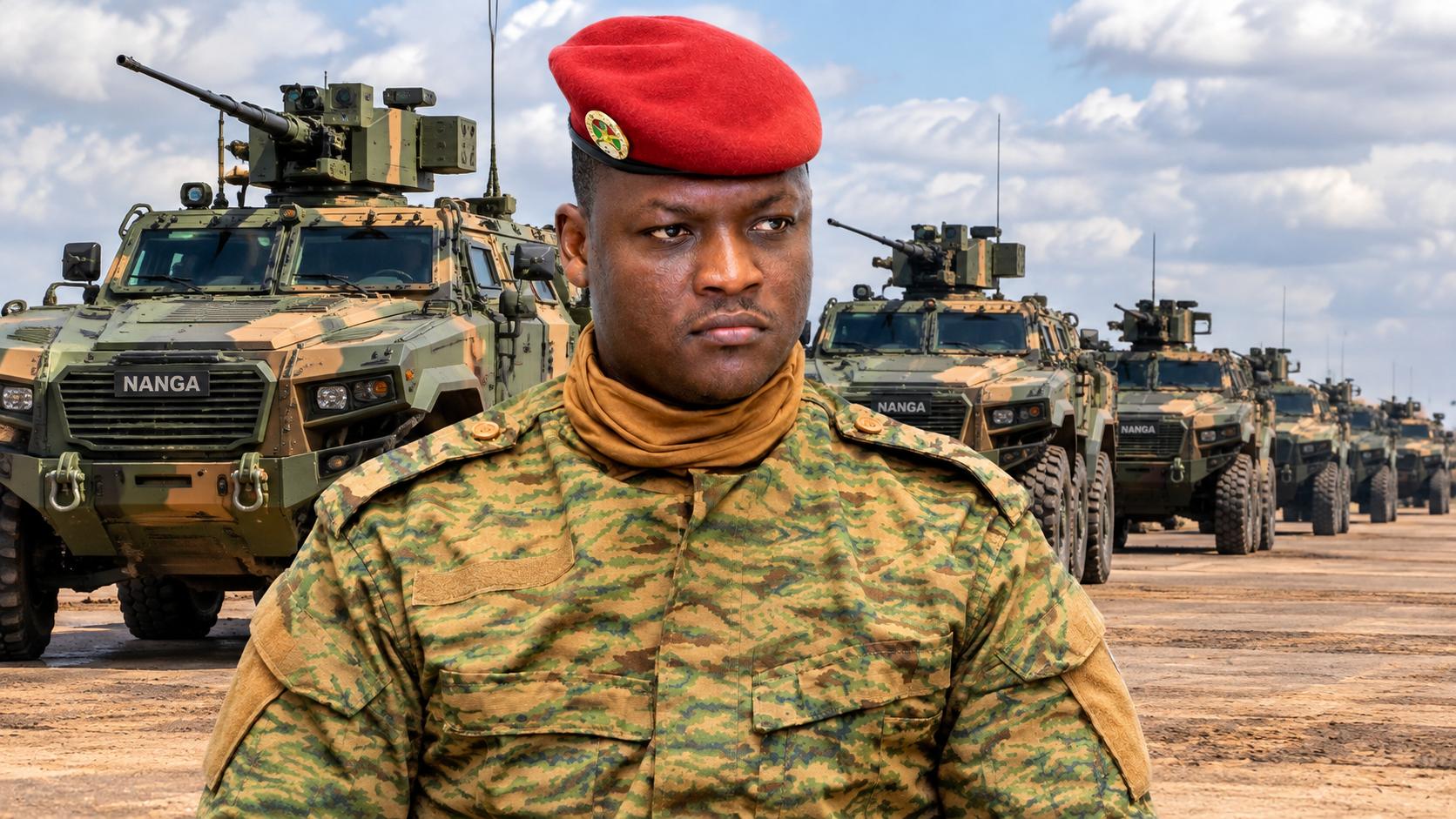
In a move designed to stir nationalist pride, Burkina Faso announced in late 2025 the domestic production of nearly 300 armored vehicles branded as ‘Nanga’—the scorpion—under the state-linked Faso Armored banner. President Ibrahim Traoré framed it as a historic milestone for military independence. Yet behind the fanfare lies a glaring paradox: no public facility exists, no assembly lines are visible, and a blanket ‘secret defense’ decree blocks all independent scrutiny.
Behind the ‘Made in Burkina’ label: assembly or illusion?
Manufacturing a functional armored vehicle demands specialized foundries, ballistic-grade steel, reinforced engines, and precision engineering. The reality appears far less sophisticated.
Repurposed civilian frames and rapid-fire claims
- Redesigned commercial chassis: Defense analysts suggest the ‘Nanga’ vehicles are likely modified Toyota truck chassis imported at low cost, retrofitted with makeshift armor plating in rudimentary workshops.
- Unrealistic production timeline: Producing 300 armored vehicles in under a year without pre-existing industrial infrastructure defies technical feasibility. Even well-established arms manufacturers with automated facilities take years to achieve such output.
Secret defense as a smokescreen for financial irregularities
The insistence on absolute secrecy raises critical questions about governance and accountability.
What the ‘secret defense’ really conceals
- Unchecked budget flows: Billions of West African CFA francs are funneled into military procurement without competitive bidding or judicial oversight.
- Hidden cost layers: Opaque supply chains inflate procurement costs, with regime-connected intermediaries siphoning off substantial commissions.
- Untested ballistic safety: No publicly verifiable ballistic tests (including STANAG standards for mine and IED resistance) have been conducted, leaving soldiers and civilian volunteers vulnerable on the battlefield.
Symbolic victories overshadow battlefield realities
The unveiling of the Nanga vehicles came amid rising domestic pressure for tangible security gains. After the launch of state-run textile complexes like TEXFORCES-BF, the narrative of total military self-sufficiency required a dramatic upgrade. Yet persistent insecurity across multiple regions exposes a gap between announcements and operational reality.
Accountability gap: when secrecy becomes a liability
By weaponizing ‘secret defense’ to shield opaque procurement and questionable manufacturing practices, the regime risks turning a perceived strategic advantage into a long-term liability—one that may exact a heavy financial and human cost on the Burkinabe people.