
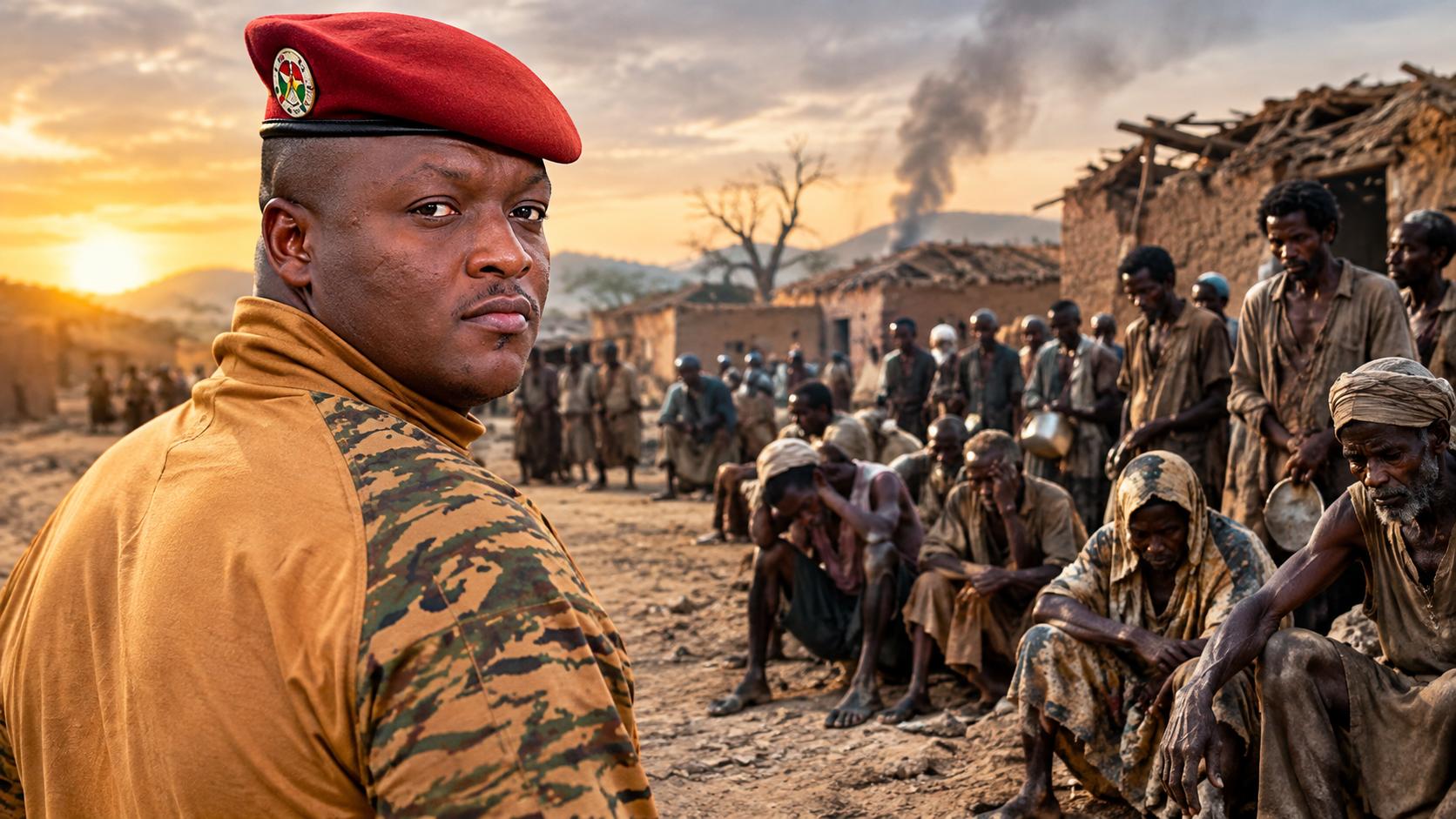
The tranquility of Boussouma, a once-thriving village 77 kilometers northeast of Ouagadougou, has been shattered by an unexpected security collapse. What was once a bustling crossroads of trade and social cohesion now stands as a stark symbol of Burkina Faso’s deepening crisis, its residents forced into a desperate exodus under relentless terror.
From community hub to ghost village: the human cost of abandonment
Boussouma’s transformation from a vibrant village to a deserted ghost town underscores the human tragedy unfolding across Burkina Faso’s most vulnerable regions. Families who once built livelihoods from agriculture and local trade now face an uncertain future, their homes and lands seized by the advancing shadow of armed groups. The psychological and economic toll on displaced residents—many of whom have sought refuge in Ouagadougou’s outskirts—highlights the profound social rupture caused by this crisis.
The institutional shift that cracked Boussouma’s defenses
The village’s rapid unraveling is not merely a consequence of external threats but reflects a critical internal failure. Recent administrative reforms, designed to modernize traditional governance structures, inadvertently dismantled the very institutions that had historically anchored security and social order in Boussouma. By restructuring the customary chieftaincy system and altering the framework of local leadership, authorities disrupted the informal networks responsible for early warning and community resilience—leaving the village dangerously exposed.
The domino effect of weakened traditions
Traditional leadership in Boussouma had long served as the first line of defense against instability, blending cultural authority with grassroots intelligence. The reforms, however, created a leadership vacuum, stripping away the mechanisms that once deterred violence and fostered collective action. In this power void, armed groups exploited the opportunity, systematically dismantling social cohesion and accelerating the village’s descent into chaos.
Ouagadougou’s security perimeter shrinks as Boussouma falls
Boussouma’s collapse within striking distance of the capital is more than a local tragedy—it signals a dangerous expansion of terror networks. The village’s strategic location, just 77 kilometers from Ouagadougou, had previously buffered the capital from direct confrontation. Its abandonment now serves as a warning: the state’s ability to protect even its closest peripheries is faltering, and the ripple effects risk destabilizing the entire region.
The displaced: a growing burden on Ouagadougou’s outskirts
As Boussouma’s residents flee, they swell the ranks of displaced communities in neighboring towns and the outskirts of Ouagadougou. Camps teeming with the newly homeless now dot the landscape, their survival dependent on dwindling aid and overstretched local resources. The crisis exposes the urgent need for a rethink in both security policy and humanitarian response, as Burkina Faso grapples with the consequences of territorial retreat.
Reform or recklessness? The debate over Burkina Faso’s governance choices
Boussouma’s downfall has ignited fierce debate over the unintended consequences of Burkina Faso’s administrative reforms. Critics argue that the dismantling of traditional structures—meant to streamline governance—has instead weakened the state’s most organic security tools. Proponents counter that the reforms were necessary for long-term progress, but the villagers of Boussouma now bear the cost of this gamble. As the nation watches the fallout unfold, the question looms: were these reforms a step toward modernity or a misstep toward vulnerability?
A call for adaptive governance in times of crisis
The Boussouma crisis demands an urgent reassessment of Burkina Faso’s approach to security and governance. Traditional systems, though imperfect, have proven critical in crisis response. The state must now consider how to integrate these structures into modern frameworks rather than discard them outright. Without this balance, more communities like Boussouma risk being abandoned to the whims of armed groups.
The fall of Boussouma is more than a statistic—it is a turning point that could redefine Burkina Faso’s future. Whether this moment sparks reform or deeper collapse remains to be seen, but one thing is clear: the security of Ouagadougou and the integrity of the nation are now on the line.