
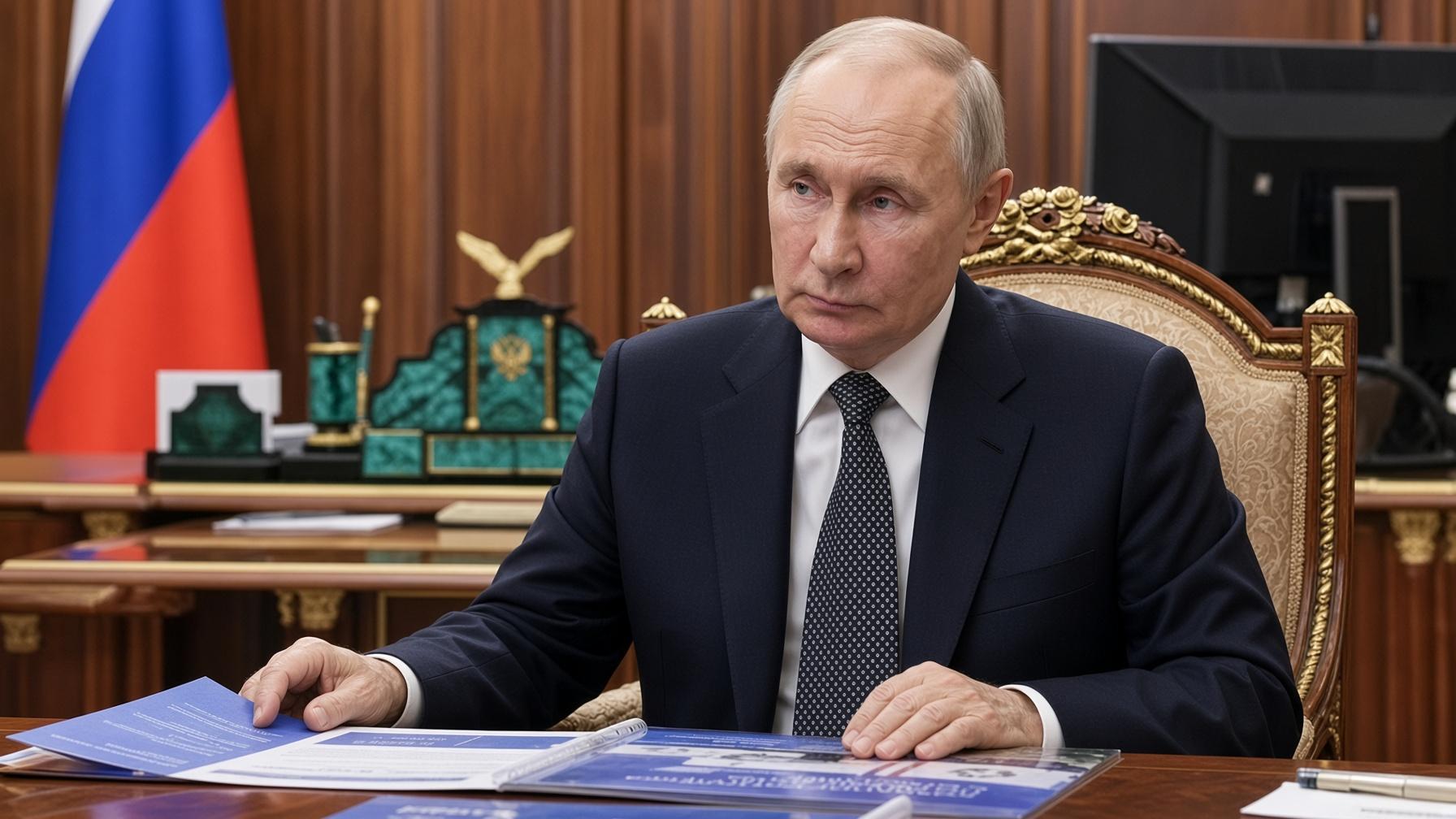
The Russian power play in Africa: a giant with clay feet
The Kremlin has spent years crafting a bold new image of itself as Africa’s strategic partner of choice. Through high-profile diplomacy, military pacts, private security deployments, and mining agreements, Moscow presents itself as a rising power reshaping the continent’s geopolitical landscape. Yet beneath the headlines, a troubling gap persists between Russia’s global ambitions and its economic footprint. With limited financial firepower compared to rivals like China or the European Union, the Kremlin’s African engagements increasingly revolve around extracting raw materials—at the expense of sustainable development across the continent.
Behind the numbers: Russia’s economic limits on the world stage
To gauge Moscow’s true capacity to shape Africa’s future, we must look beyond political rhetoric and examine hard economic data. Despite its global posturing, Russia’s economic scale remains modest on the world stage:
- GDP dwarfed by major powers: Russia’s nominal GDP hovers around $2.2 trillion, comparable to mid-sized European economies like Italy or Canada—but far behind France ($3.3 trillion) and a tiny fraction of the United States ($28 trillion) or China ($18 trillion).
- A marginal player in global trade: Russia accounts for less than 2% of the world’s GDP, constraining its ability to fund large-scale development aid or concessional financing packages for African partners.
- Weak industrial and technological influence: Unlike Western or Asian partners, Russia contributes virtually no heavy industrial equipment, advanced infrastructure, or high-value exports to Africa—focusing instead on raw materials and security services.
This structural imbalance forces Moscow to target its efforts in countries facing political isolation, security crises, or fragile transitions—where the cost of entry is lower and the perceived return on influence is higher.
What Africa actually imports—and what Russia truly offers
A closer look at trade flows reveals a one-sided economic relationship. While Russia positions itself as a key partner, the reality reflects a narrow, extractive model with little long-term value for African economies:
- Commercial volume: a drop in the ocean: Total trade between Russia and Africa stands at around $27 billion annually—a tiny fraction of Africa’s total external trade. For context, China-Africa trade exceeds $280 billion, while EU-Africa commerce tops $300 billion. Russia accounts for less than 3% of Africa’s overall trade volume.
- Exports skewed toward basic resources: Over 90% of Russian goods shipped to Africa fall into three categories:
- Wheat: Moscow supplies roughly 14–20 million tons annually, meeting immediate food security needs.
- Mineral fertilizers: Around 1.5 million tons exported per year.
- Refined petroleum products: Approximately 10–12 million tons of fuel oil and diesel delivered annually.
- Investments with minimal local impact: Russian Foreign Direct Investment (FDI) in Africa represents less than 1% of total incoming FDI. Unlike Western or Chinese investors, which fund ports, roads, and energy infrastructure, Russian capital flows mainly into securing mining concessions and security contracts.
In short, Africa imports essential goods to meet urgent needs, while Russia secures access to raw materials—without building local value chains or industrial capacity.
From partnership to predation: the extraction economy
In countries where Russia has deepened security and political ties—particularly in fragile Sahel states—economic engagement often follows a troubling pattern: access to strategic natural resources in exchange for political or military support. This model prioritizes short-term leverage over sustainable development, resulting in:
- Unregulated mineral exploitation: High-value deposits of gold, diamonds, uranium, and hydrocarbons are frequently managed through opaque corporate structures, often shielded from public oversight and parliamentary scrutiny.
- Lost fiscal revenue: Profits from resource extraction bypass formal economic channels, depriving national budgets of critical tax income needed for health, education, and infrastructure.
- A one-way geopolitical rent: While agreements may stabilize regimes or consolidate alliances, they rarely lead to local processing of raw materials or job creation for African workers.
This pattern reflects what economists call the “resource curse”: nations abundant in natural wealth yet trapped in cycles of poverty due to poor governance, weak institutions, and external predation.
Can Africa break free from the cycle of extraction?
The growing awareness among African policymakers, civil society, and economists is shifting the conversation. While diversifying international partnerships is a strategic necessity, many now argue that not all alliances are created equal. The goal is no longer merely to replace one foreign power with another—but to demand equitable, transparent, and developmental partnerships built on:
- Local value addition: Requiring foreign investors to process raw materials on-site before export, creating jobs and industrial capacity.
- Transparent governance: Enforcing public disclosure of contracts, revenues, and beneficiary ownership to prevent illicit financial flows.
- Skill and technology transfer: Insisting on training programs, technical partnerships, and infrastructure co-development—not just resource concessions.
Without these safeguards, Africa risks trading one form of dependency for another, where foreign powers extract wealth while leaving behind fragile states and disillusioned populations.
Conclusion: Africa’s future hinges on smarter partnerships
The Russian presence in Africa is not merely a geopolitical gambit—it is a mirror reflecting the continent’s enduring challenge: transforming its vast natural wealth into shared prosperity. Moscow’s strategy, though ambitious, reveals a fundamental contradiction: it can offer influence through security and raw materials, but not sustained economic transformation. For Africa to thrive, the next chapter must be written not by external actors alone, but by Africans themselves—demanding partnerships that prioritize development, equity, and sovereignty over extraction and dependence.