
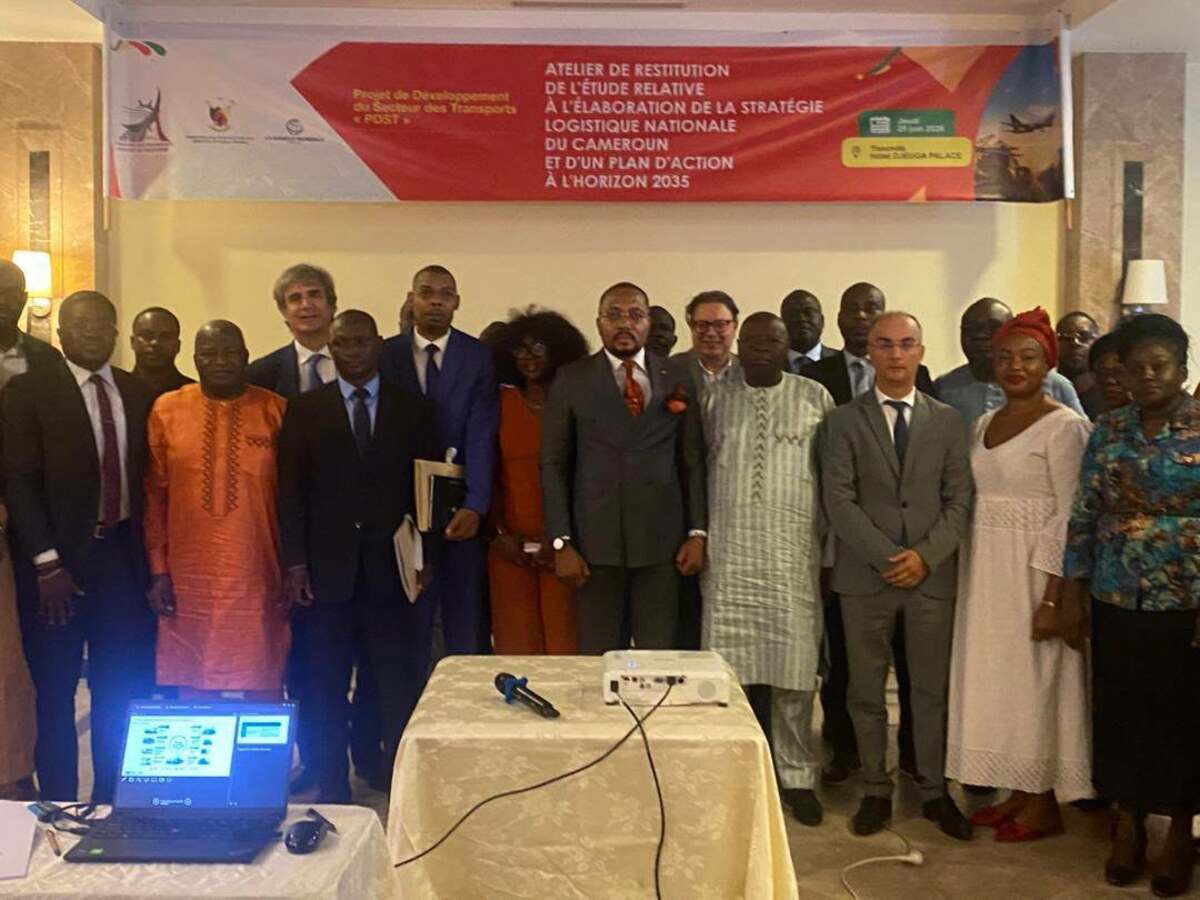
In a major move to enhance national competitiveness and accelerate development, Cameroon is implementing a comprehensive series of reforms to modernize its road, rail, urban, and airport infrastructure. This ambitious vision aims to transform the country’s transport landscape by the year 2035.
A high-level workshop took place on June 24 and 25, 2026, to present the feasibility findings for two pivotal projects: the establishment of the Land Transport Regulatory Agency (ARTT) and the formulation of the National Logistics Strategy (SLN). These initiatives represent the backbone of the government’s long-term action plan for the sector.
Establishing the Land Transport Regulatory Agency (ARTT)
The sessions brought together key officials, including Mbamome Nkendong Divine, Director of Road Transport, and Claude Misse Ntone, Director of Railway Transport. They were joined by experts from Idea Consult International/TRT Studi Cameroun and representatives from major financial institutions, including the World Bank and the African Development Bank.
According to the feasibility studies, the ARTT will be headquartered in Yaoundé. While its initial focus will remain on the road transport sector, its regulatory mandate is expected to expand over time. Launching this institution requires an estimated initial investment of 260 million FCFA, which will cover the legal framework, office setup, and essential technological equipment.
A 40 billion euro vision for national logistics
The National Logistics Strategy (SLN) study provides a detailed analysis of the current logistical challenges and strategic goals for Cameroon. To address these, a plan structured around eight key axes has been proposed, with a heavy emphasis on railway development. The total investment for this transformation is estimated at 40 billion euros.
A central component of this strategy is the creation of a National Logistics Council. This body will serve as a vital inter-ministerial coordination unit, handling arbitration and ensuring the smooth execution of the logistics roadmap.
Collaborative efforts for future growth
During the closing remarks, the Director of Road Transport praised the depth of the discussions and the quality of the contributions from all partners. He urged all stakeholders to remain fully committed as the country moves into the implementation phase of these structural projects, which are essential for the future of Cameroon’s land transport economy.