
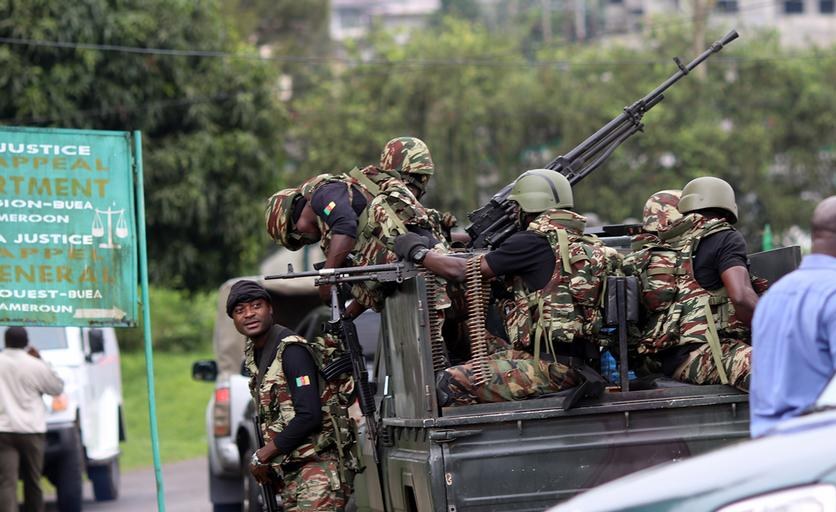
With President Paul Biya absent for 57 consecutive days, Cameroon’s military leadership undergoes a controversial reshuffle, deepening fears of an impending power vacuum and ethnic succession crisis.
Since departing for what officials called a brief private stay in Europe on June 7, 2026, the 93-year-old leader has not been seen in public. His prolonged absence has triggered a cascade of military decrees, reshaping the country’s defense hierarchy with five new brigadier generals, a new presidential guard commander, and a fresh army chief of staff—all while the head of state remains out of sight.
Military reshuffles raise succession questions
The strategic overhaul of Cameroon’s armed forces is anything but routine. Analysts warn that the rapid consolidation of power within military ranks—particularly the appointment of General Beko’o Abondo Raymond Jean Charles as head of the presidential guard—signals more than administrative adjustments. It suggests a preemptive maneuver to control security structures amid uncertainty over Biya’s health and return.
A retired colonel, speaking anonymously, emphasized the significance: « No one can authorize such military appointments except the president himself. » Yet these sweeping changes have proceeded despite Biya’s prolonged absence, fueling speculation about a hidden agenda.
Who truly holds power in Yaoundé?
The question looms large: With the president invisible for nearly two months, who is really calling the shots in Cameroon’s security apparatus? The sudden elevation of General Ebaka Hippolyte to major general of the armed forces, alongside six new regional commanders, has intensified concerns that factions within the regime are positioning themselves for a post-Biya era—by force if necessary.
Ethnic divisions threaten national stability
Cameroon’s political landscape is fracturing along clan lines. Two dominant factions vie for influence:
- The Biya family bloc, led by the president’s eldest son, Franck Biya, seen as the guarantor of the regime’s continuity.
- The First Lady’s faction, centered around Chantal Biya and Ferdinand Ngoh Ngoh, the powerful secretary-general of the presidency.
These tensions have been exacerbated by constitutional changes. In April 2026, parliament reinstated the vice-presidential position—a move intended to prevent power vacuums. Yet the role remains unfilled, leaving the succession mechanism paralyzed and raising fears of a constitutional crisis.
Health rumors and institutional paralysis
While officials insist Biya is merely recovering from a routine knee surgery in Geneva, opposition figures demand transparency. Maurice Kamto’s Movement for the Renaissance of Cameroon (MRC) has accused the government of concealing the president’s true condition, stating: « The Cameroonian people deserve to know if their leader is fit to govern. »
Questions persist: Why proceed with such sensitive military appointments without the president’s public approval? And why, after 57 days of silence, has Biya not addressed the nation directly?
History’s warning: Rwanda’s shadow
Analysts draw chilling parallels to Rwanda’s 1994 genocide, where ethnic divisions within the military fueled catastrophic violence. In Cameroon, where ethnic tensions simmer beneath the surface, the risk of militarized factionalism triggering a broader conflict cannot be ignored.
The opposition has not stayed silent. Deputies from the MRC have petitioned the Constitutional Council to declare a power vacuum, arguing that Biya’s absence meets the criteria for vacancy under the law. Yet without a vice president, the constitutional process remains frozen.
Can Cameroon avoid disaster?
The path forward is fraught but not without options:
- Clarity on Biya’s health: The government must disclose the president’s condition and expected return timeline to dispel rumors.
- National dialogue: A mediated process to reconcile rival factions and prevent ethnic polarization.
- Immediate vice-presidential appointment: Filling the vacant role to restore institutional balance and prevent a leadership vacuum.
As political scientist Jean-Pierre Bekolo warns, « Cameroon is not Rwanda—but the ingredients for disaster are being assembled in the dark. » The coming weeks will determine whether the country can avert a crisis or succumb to the forces tearing at its foundations.