
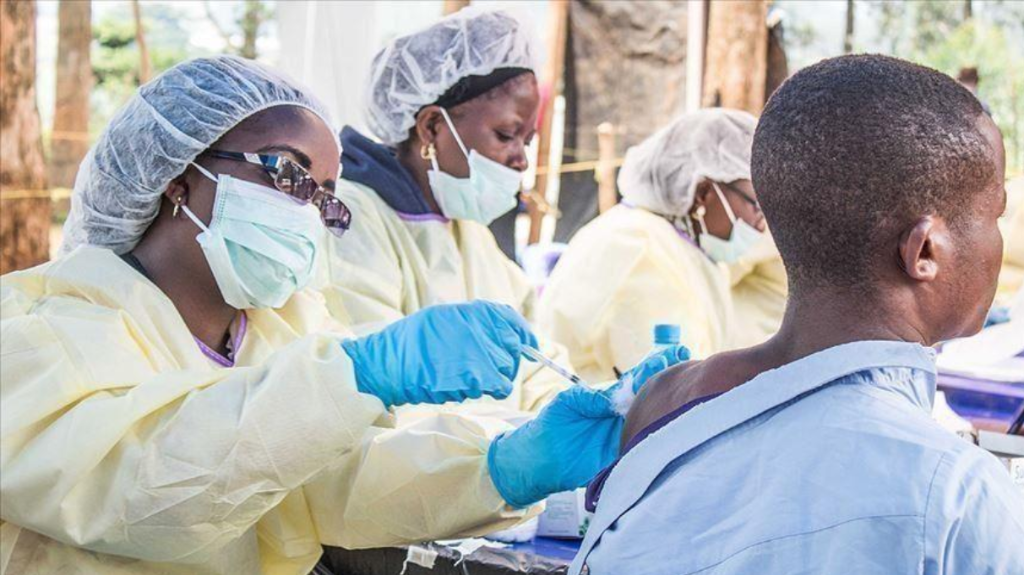
Nigeria has confirmed its first imported case of Ebola virus disease in the capital, Abuja, since the Bundibugyo strain began spreading across Central and East Africa earlier this year. The development has intensified concerns about cross-border transmission risks and exposed vulnerabilities in the continent’s health surveillance systems.
Health authorities in Nigeria announced on October 20 that a woman who recently traveled from East Africa had tested positive for Ebola. She developed symptoms on October 7, sought private medical care in Abuja on October 11, and received her diagnosis less than two weeks later. Since then, she has been isolated and is receiving treatment.
« She remains in isolation under medical supervision, » confirmed Health Minister Muhammad Ali Pate. Authorities have already identified 44 high-risk contacts and are conducting intensive contact tracing to prevent further spread. Every step in this process will be critical in determining whether this imported case triggers a wider outbreak.
From Central Africa to Abuja: how the outbreak crossed the continent
The Ebola outbreak currently devastating parts of Central and East Africa originated in the Democratic Republic of the Congo (DRC) in May 2026. Unlike the 2014–2016 West African epidemic, this outbreak is caused by the Bundibugyo virus—a distinct strain that has since spread to multiple provinces in the DRC and beyond.
As of October 20, Kenya confirmed nine cases linked to travel from the DRC, making it the fourth country outside the DRC to report infections. Nigeria’s detection now makes it the fifth, raising alarms across West Africa. The woman’s travel history suggests she may have been exposed during a professional trip in eastern DRC, though Uganda, where she transited, has not confirmed local transmission.
The investigation is still ongoing to pinpoint the exact origin of her infection. But one thing is clear: in a region defined by frequent cross-border movement, Ebola doesn’t need visas to travel. Air travel, commerce, and professional exchanges create pathways for the virus to cross borders before symptoms even appear. This demands rapid, coordinated public health responses across nations.
Lessons from history, urgency in the present
The last time Ebola reached Nigeria in force was during the devastating 2014–2016 epidemic, which killed over 11,000 people across Guinea, Liberia, and Sierra Leone. Nigeria managed to contain its outbreak quickly, thanks to robust contact tracing and public health intervention. But that success doesn’t guarantee immunity against a new strain.
Today, Nigeria’s health infrastructure is stronger, but the stakes are higher. The country is Africa’s most populous, a hub of regional trade, and a major transit point. A single undetected case could ignite a chain reaction, especially if health workers or communities delay reporting symptoms. The federal Ministry of Health, the Nigeria Centre for Disease Control (NCDC), the Abuja Health Services, the World Health Organization (WHO), and Africa CDC are now working in unison to detect new cases early, protect frontline workers, and prevent transmission.
Key priorities include strengthening border surveillance, improving laboratory diagnostics, and ensuring rapid information-sharing between countries. Every hour counts when containing a virus as deadly as Ebola.
What makes Ebola so dangerous—and how to fight back
Ebola virus disease is notorious for its high fatality rate and rapid progression. Symptoms begin with fever, muscle pain, and fatigue, then escalate to severe vomiting, diarrhea, and— in critical cases— internal and external bleeding. Transmission occurs only through direct contact with bodily fluids from an infected person or contaminated objects.
Crucially, Ebola does not spread through casual contact. The danger lies in unprotected exposure to blood or secretions during care or burial rituals. This makes healthcare workers and family caregivers particularly vulnerable. Prevention hinges on early detection, isolation, and strict infection control measures.
Public awareness is just as vital. Rumors and misinformation can undermine containment efforts, leading to delayed care or unsafe self-treatment. Authorities are urging anyone with symptoms—especially fever and bleeding— coupled with recent travel to East or Central Africa, to seek medical attention immediately. Early isolation saves lives.
What happens next? A test for Nigeria and West Africa
The detection of this single case does not mean an epidemic is underway in Nigeria. But it is a stark warning that Ebola has reached the continent’s most demographically and economically significant nation. The next 72 hours will reveal whether contact tracing succeeds in halting transmission chains.
For Nigeria and its West African neighbors, the challenge is clear: act swiftly, coordinate regionally, and reinforce health systems before the virus gains a foothold. Ebola thrives in silence and delay—but it can be stopped with urgency, vigilance, and solidarity.
One imported case. One moment of truth. The clock is ticking.