
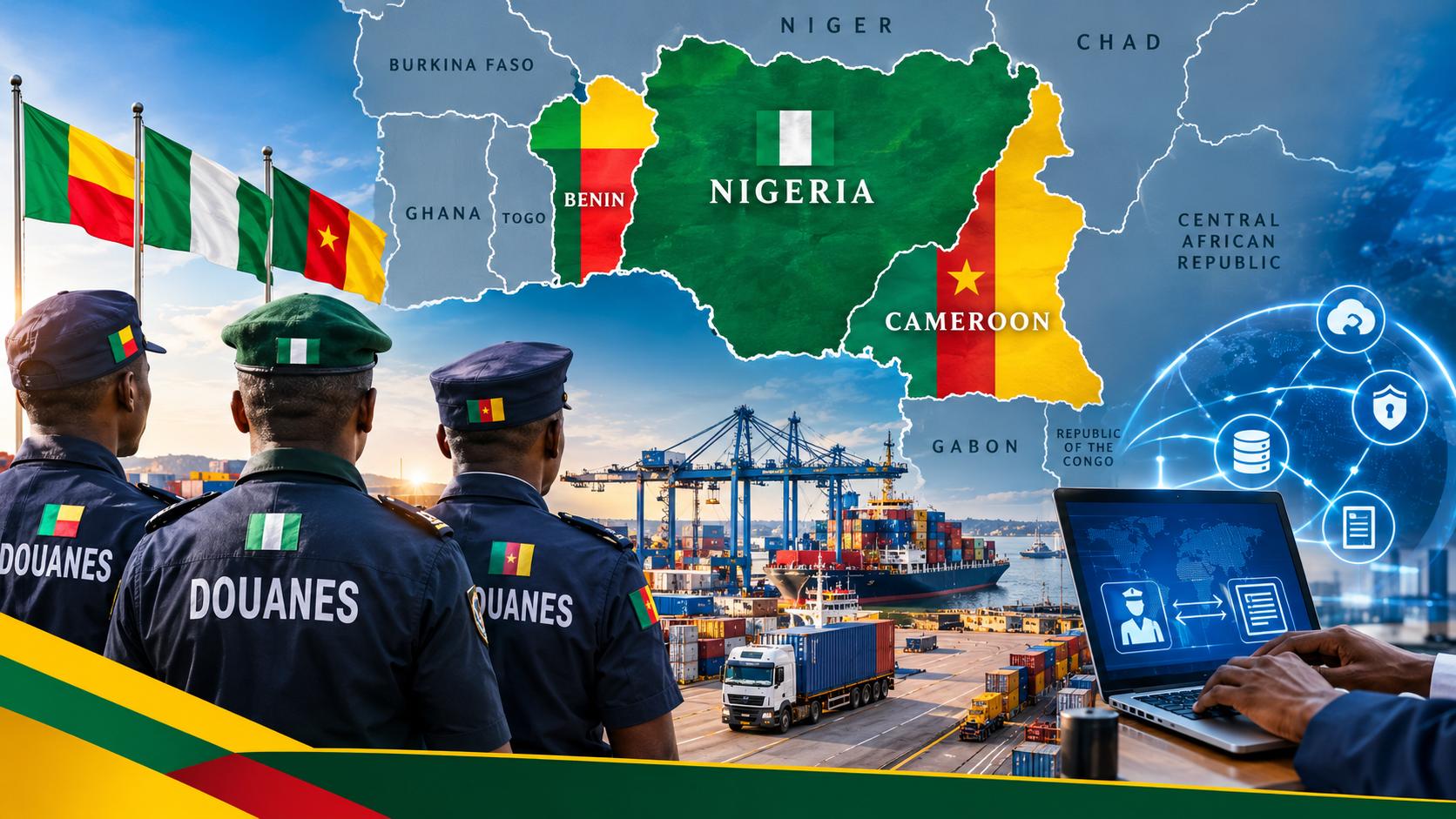
As West Africa seeks to bolster intra-regional trade, Benin, Nigeria, and Cameroon are advancing a pivotal initiative: the digital interconnectivity of their customs systems. Discussed during a high-level meeting in Cairo in October 2026, this project, supported by the African Export-Import Bank (Afreximbank), aims to dismantle longstanding barriers that have historically hindered cross-border commerce.
Transforming trade through synchronized customs technology
For decades, traders, importers, and logistics providers across Benin, Nigeria, and Cameroon have grappled with fragmented customs procedures, redundant paperwork, and inconsistent data exchanges. The result? Protracted clearance times, escalating operational costs, and unpredictable supply chains. The proposed digital interconnectivity seeks to address these inefficiencies by enabling real-time data sharing between customs authorities in Cotonou, Abuja, and Yaoundé.
By standardizing information flows, the initiative aims to eliminate repetitive data entries, streamline cargo tracking, and expedite inspection and clearance processes. However, technology alone cannot guarantee success. The seamless integration of systems will require synchronized regulatory frameworks, robust cybersecurity measures, and comprehensive staff training to ensure seamless adoption and operational continuity.
Benin’s strategic leverage in a connected trade ecosystem
Positioned as a key transit hub in West Africa, Benin’s economic vitality is deeply tied to the fluidity of its customs operations. The port of Cotonou serves as a critical gateway for goods destined for landlocked neighbors, including Niger and Burkina Faso. For Benin, this initiative represents more than a modernization effort it is a strategic move to enhance its competitive edge in regional trade.
A digitally interconnected customs system could significantly reduce clearance delays, improve transparency, and lower logistical costs for businesses operating across the three countries. Additionally, enhanced data sharing may strengthen fraud detection capabilities, ensuring that illicit trade activities are swiftly identified and addressed.
Afreximbank’s role in reshaping African trade logistics
The involvement of Afreximbank underscores the broader implications of this project. As a key financier of African trade, the bank has prioritized reducing non-tariff barriers such as cumbersome customs procedures to foster a more integrated and resilient African market. The Benin-Nigeria-Cameroon customs interconnectivity aligns with this vision, offering a scalable model for other regions to emulate.
Yet, critical questions remain unanswered. How will the three countries harmonize their technical platforms? What safeguards will protect sensitive trade data from cyber threats? How will success be measured, and what benchmarks will determine whether the initiative delivers tangible benefits? Without clear metrics and accountability, the project risks becoming another unfulfilled promise in Africa’s trade facilitation landscape.
From vision to measurable impact: the challenge ahead
The potential benefits of this initiative are undeniable. Faster clearance times, reduced operational costs, and improved predictability could unlock significant economic gains for businesses and consumers alike. For traders, the ability to move goods seamlessly across borders would enhance competitiveness and open new market opportunities.
But the true test lies in execution. Will the three countries align their regulatory frameworks, invest in the necessary infrastructure, and commit to continuous improvement? The success of this project hinges not on the novelty of the technology, but on the political will and institutional capacity to implement it effectively. As West Africa charts a course toward deeper economic integration, the Benin-Nigeria-Cameroon customs initiative could serve as a blueprint or a cautionary tale for future regional collaborations.
By Yvette Tchuente — Journalist