
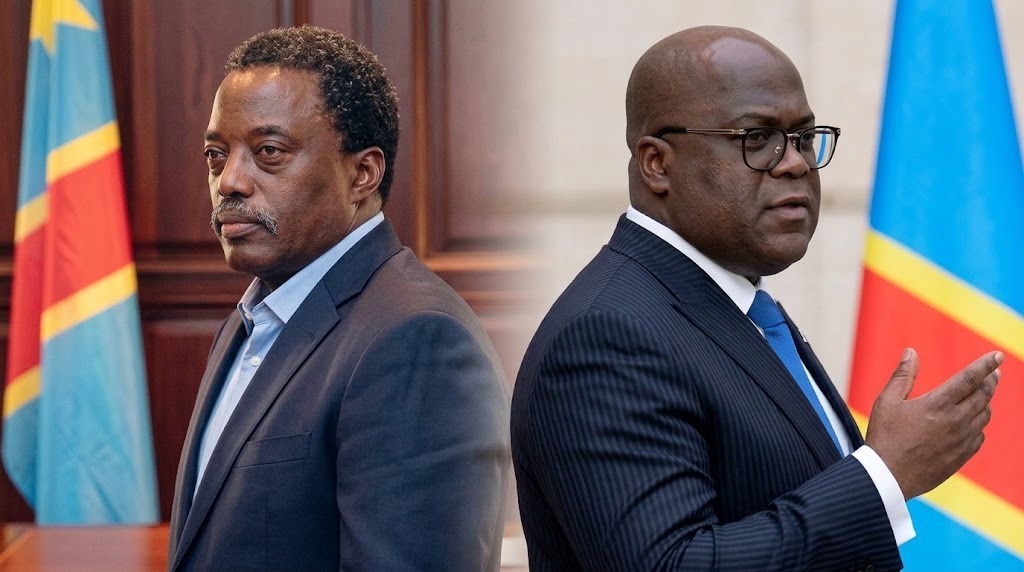
As diplomatic efforts to end the conflict in eastern Democratic Republic of Congo (DRC) intensify, a pivotal question looms over the region: can Joseph Kabila’s ascent to leadership at the helm of the new Front for National Reconstruction (FRN) unite or further fragment the rebel alliance? The announcement in Goma, a stronghold of the March 23 Movement (M23), marks a watershed moment in the political and military reorganization of opposition forces, raising both hope for cohesion and fears of intensified confrontation.
From AFC-M23 to FRN: A Strategic Shift in the Rebellion’s Leadership
The transformation of the Alliance of the Congo River (AFC-M23) into the FRN represents more than a rebranding—it signals a deliberate effort to centralize control under a unified command. Joseph Kabila, former president of the DRC (2001–2019), now stands at the forefront of the movement, flanked by key figures such as Corneille Nangaa, Bertrand Bisimwa, and Sultani Makenga. This alliance merges former political leadership with rebel command structures, creating a hybrid entity that blurs the lines between national opposition and armed resistance.
While the AFC-M23’s dissolution marks the end of one platform, the FRN’s emergence introduces a new dynamic. The movement’s leaders have publicly declared their intent to challenge Félix Tshisekedi’s government, including through military means. Yet questions linger: how will the M23’s institutional role evolve within this framework? And can the FRN reconcile the competing agendas of its diverse factions?
The Rwanda Factor: How Kigali’s Influence Shapes the Conflict
The FRN’s formation arrives amid persistent allegations—denied by Rwanda—that Kigali provides military backing to the M23. This regional dimension complicates the conflict’s trajectory, intertwining Congolese political grievances with cross-border security concerns. With Kabila’s involvement, the FRN gains a figure capable of elevating the rebellion’s political profile, potentially drawing broader domestic and international attention to its demands.
For Kinshasa, the challenge now extends beyond countering armed groups. It must navigate a rebellion that wields both military force and political legitimacy, complicating ceasefire negotiations and peace talks. The FRN’s leadership structure, with its blend of former state leaders and rebel commanders, could redefine the conflict’s narrative, making it harder to isolate military solutions from political solutions.
Diplomatic Roadblocks: Can Peace Talks Survive the FRN’s Rise?
The FRN’s debut coincides with ongoing diplomatic initiatives aimed at de-escalating the crisis. However, its emergence introduces critical ambiguities: who are the legitimate interlocutors for negotiations? How will the FRN enforce any agreements across its fragmented ranks? These uncertainties risk derailing or delaying peace processes already burdened by deep mistrust.
Adding another layer of complexity is Joseph Kabila’s contested legal status. Convicted in absentia of treason in 2025—a verdict he dismisses as politically motivated—the former president’s leadership role further complicates the conflict’s perception. Will his involvement bolster the FRN’s credibility, or will it deepen international skepticism toward the movement?
The Human Cost: Eastern DRC’s Unyielding Crisis
Amid these strategic shifts, the civilian population bears the heaviest burden. In North-Kivu and South-Kivu, communities face relentless displacement, eroding security, and economic collapse. The FRN’s formation does not immediately alleviate these hardships; instead, it introduces new variables that could either prolong the suffering or, in rare scenarios, create pathways toward dialogue.
One certainty emerges: the conflict can no longer be reduced to a binary between the Congolese army and the M23. The FRN’s integration of Kabila and other figures introduces a multi-layered crisis—one where military, political, and regional dimensions are inextricably linked. The coming months will determine whether this reshuffle leads to escalation or, against all odds, opens a fragile window for negotiation.