
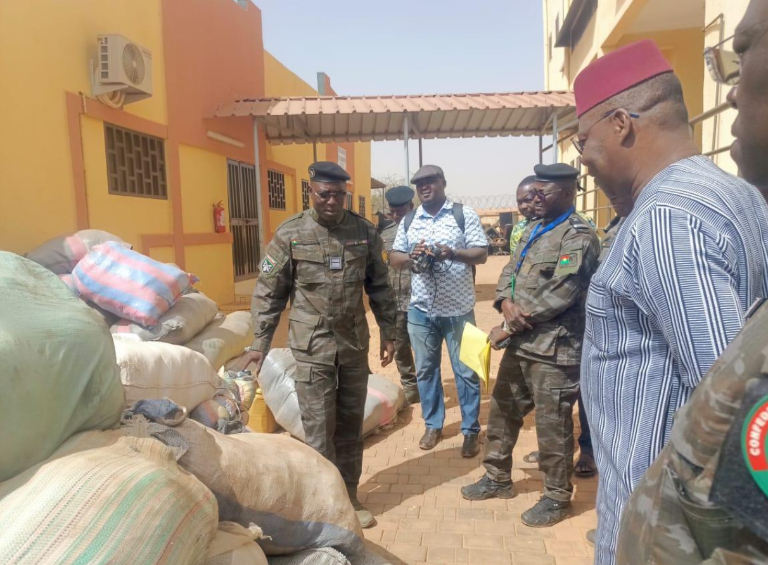
As smuggling networks evolve and adapt, the scale of intercepted illicit goods in Burkina Faso has reached alarming new heights. In just three months, customs authorities reported seizing merchandise worth over 10.8 billion West African CFA francs, revealing a sprawling underground economy that threatens public health, economic stability, and national security. The operation, codenamed Magnan, has exposed vulnerabilities across multiple sectors—from pharmaceuticals to agricultural inputs—demanding urgent systemic response.
Unprecedented seizures reveal hidden layers of illicit trade
Officials in Ouagadougou announced the results of the anti-smuggling campaign on October 20, 2026, detailing a sweeping crackdown that ran from July 10 to October 15. The haul included everything from life-saving medicines to volatile industrial chemicals, signaling a new level of sophistication in smuggling operations. In total, over 4.2 million tablets of Tapentadol—a powerful analgesic—were intercepted, accounting for more than 8 billion FCFA of the total value. Over 11 tonnes of counterfeit medications were also seized, raising serious concerns about drug safety and authenticity.
The operation did not stop at pharmaceuticals. Customs also intercepted significant quantities of illicit drugs, including cocaine and cannabis, as well as hazardous substances such as cyanide and mercury, often used in mining. Explosives and related equipment were among the contraband, underscoring the dual threats of public safety risks and potential criminal misuse. Even everyday goods like rice, cooking oil, unregulated pesticides, and counterfeit school supplies were found in the smuggling pipelines.
From medicines to mining chemicals: a diverse threat landscape
Statistics from the operation paint a stark picture:
- 4.2 million tablets of Tapentadol seized (8+ billion FCFA)
- 11 tonnes of counterfeit medicines (1.1+ billion FCFA)
- 500+ tonnes of unregulated fertilizers
- 490+ tonnes of smuggled rice
- Several thousand liters of adulterated cooking oil
- Illicit drugs including cocaine and cannabis
- Hazardous chemicals like cyanide and mercury
- Explosives and related accessories
These figures underscore that smuggling is not just a high-value game—it infiltrates essential supply chains, compromising food safety, agricultural productivity, and public welfare. When fake medications or contaminated food enter the market, the cost is measured not just in financial terms, but in human lives and long-term health consequences.
How illegal trade undermines fair markets and state revenues
Beyond immediate health risks, the smuggling epidemic erodes the foundations of Burkina Faso’s formal economy. Fraudulent imports and counterfeit goods create unfair competition for compliant businesses, distorting price signals and depressing tax revenues. Every tonne of smuggled rice or liter of counterfeit oil sold undercuts legitimate traders, driving down profitability and discouraging investment in local industries.
For public coffers, the impact is immediate. Lost customs duties and taxes limit funding for schools, hospitals, and infrastructure. In agriculture, the use of unregistered pesticides or substandard fertilizers can degrade soil quality and reduce crop yields, threatening food security over time. When consumers lose trust in available products—whether medicine, food, or household goods—the ripple effect weakens social cohesion and market stability.
The anatomy of a smuggling network
Investigations following the Magnan operation suggest that these illegal supply chains are highly organized, with multiple entry points, fake documentation, and layered distribution systems. Some networks reportedly import counterfeit drugs through porous borders, repackaging them in clandestine facilities before infiltrating pharmacies and informal markets. Others traffic hazardous chemicals under false declarations, exploiting weak inspection regimes in border regions.
What makes these operations particularly challenging is their adaptability. Smugglers quickly shift routes, use decoy shipments, and exploit gaps in law enforcement coordination. The sheer volume of intercepted goods—over 10 billion FCFA—shows that authorities are making progress, but the battle is far from won.
What’s next? From seizure to sustainable enforcement
The customs service has vowed to sustain pressure, emphasizing the need for intelligence-led interventions and interagency collaboration. Strengthening border surveillance, improving laboratory testing of seized goods, and prosecuting key operatives are all part of a long-term strategy. But experts warn that without systemic reforms—including digital tracking of pharmaceuticals, stricter agricultural input controls, and regional cooperation—smugglers will continue to exploit loopholes.
The message from Ouagadougou is clear: the fight against smuggling is not just about numbers. It’s about protecting citizens, preserving economic integrity, and securing a fair future for Burkina Faso’s markets and people. As the Magnan operation fades from headlines, the real test will be whether this crackdown leads to lasting change—or if the networks simply go deeper underground.