
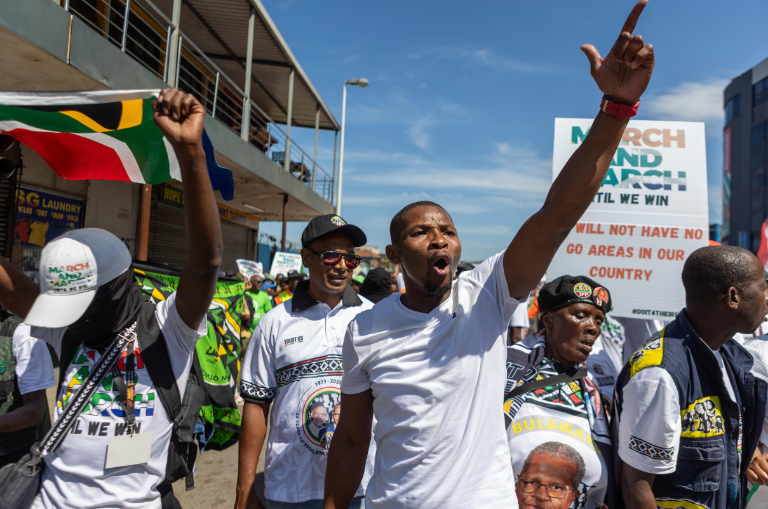
Durban’s brutal killing exposes South Africa’s fragile grip on social peace
When a foreign national was beaten to death by a mob in central Durban, the shockwaves rippled across the continent. The African Commission on Human and Peoples’ Rights didn’t mince words: this wasn’t just another crime—it was a potential crime against humanity, forcing Pretoria to confront its worst nightmare: systemic xenophobic violence spiraling out of control.
What we know about the Durban lynching that stunned South Africa
A man in his 30s or 40s, whose nationality remains undisclosed, was confronted by a group of around fifty individuals while walking near a busy road. The assault was swift and brutal. Despite immediate medical intervention, he succumbed to his injuries on the scene. South African police confirmed the killing occurred in broad daylight, underscoring the chilling brazenness of the attack.
Investigators have yet to release details on the victim’s identity or the attackers’ motives, but the timing—amid escalating anti-immigration protests—has drawn sharp scrutiny from human rights bodies across Africa.
Why the African Commission is warning of crimes against humanity
The African Commission on Human and Peoples’ Rights (ACHPR) didn’t hesitate in its condemnation. Citing the systematic pattern of xenophobic violence in South Africa—especially targeting migrants from other African nations—the Commission warned that the Durban killing could meet the threshold for crimes against humanity under international law.
This is no hyperbole. For a crime against humanity to be established, there must be evidence of a widespread or systematic attack against a civilian population. While a single murder doesn’t automatically qualify, the Commission is sounding the alarm: if the state fails to act decisively, the pattern may soon cross that line.
Its demands are clear: Pretoria must launch a prompt, transparent, and impartial investigation, bring the perpetrators to justice, and dismantle the culture of impunity fueling these attacks. Failure to do so, the Commission argues, would signal tacit approval of mob violence—and embolden further bloodshed.
A country at the mercy of simmering immigration tensions
South Africa has long been a magnet for migrants fleeing conflict, poverty, and instability across the continent. But as economic pressures mount—unemployment nearing 33%, overstretched public services, and widening inequality—the mood has turned.
Militant groups now openly demand the expulsion of undocumented migrants, blaming them for rising crime and job scarcity. Durban, the country’s third-largest city, has become a flashpoint. Recent anti-immigration demonstrations have devolved into looting, arson, and targeted attacks on foreign-owned businesses, leaving communities fractured and grieving.
The irony isn’t lost on observers: South Africa’s own history of solidarity—its fight against apartheid, and the continental support it once received—now stands in stark contrast to the violence unfolding on its streets today.
What Pretoria must do to regain control
The South African Human Rights Commission (SAHRC) echoed the ACHPR’s urgency, calling the Durban killing a violation of constitutional rights that cannot be ignored. The message is unambiguous: protecting life isn’t optional—it’s a legal obligation, regardless of nationality or migration status.
But rhetoric alone won’t suffice. Authorities must:
- Disrupt the cycle of vigilante violence by deploying targeted policing in high-risk areas like Durban’s central business district.
- Launch a credible judicial process—one that investigates not just the attackers, but the systemic failures that allowed mob justice to take root.
- Confront the rhetoric of hate by dismantling the narratives linking migrants to crime and economic decline.
The continental reckoning: can Africa afford to stay silent?
This isn’t just South Africa’s crisis—it’s a test of Africa’s unity. The African Union’s silence would be deafening. How can the continent champion free movement and regional integration when its citizens live in fear of being beaten to death in another AU member state?
The ACHPR’s warning is a clarion call: the principles of human dignity and solidarity aren’t negotiable. Pretoria’s response will determine whether this becomes a footnote in history—or the beginning of a much darker chapter.
One death, one reckoning: where does South Africa go from here?
The Durban mob killing has stripped away any illusion of safety for foreign nationals in South Africa. It’s a moment of reckoning—not just for the government, but for every South African. The question now is simple: will this tragedy be the catalyst for change, or the first step toward a deeper unraveling?
The answer lies in Pretoria’s hands. Justice delayed is justice denied. Impunity nurtured today will fuel tomorrow’s bloodshed. The clock is ticking.