
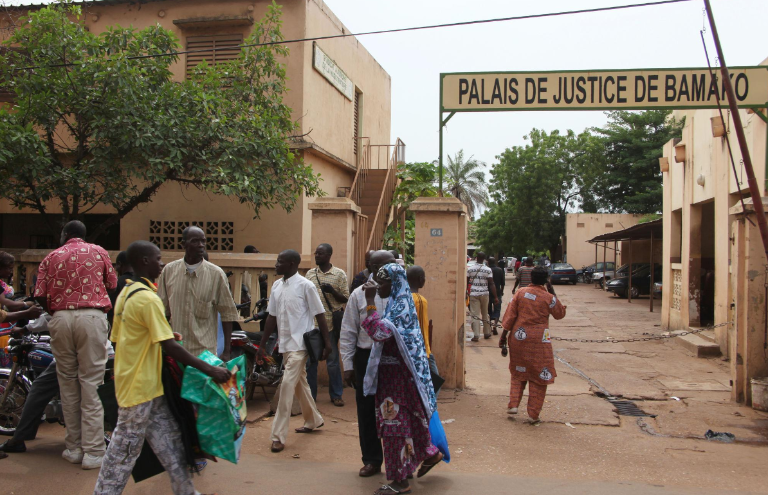
Land dispute verdict shakes Mali’s real estate sector
The landmark verdict against Adama Sangaré, former mayor of Bamako District, has intensified debates over public land allocations in Mali. Sentenced to a decade behind bars on October 26, 2026, Sangaré was convicted by the Criminal Chamber of the National Economic and Financial Pole for alleged irregularities in the subdivision and allocation of parcels in the Bamako-Sénou airport zone. While the prosecution framed the case as a criminal breach of public trust, the defense has mounted a vigorous challenge, arguing that the core issues are administrative, not penal.
The case revolves around a series of land subdivisions and allocations in an area alleged by prosecutors to belong to the state’s public domain. Charges include alleged falsification of documents, misappropriation of public funds, and complicity. Yet Sangaré’s legal team contends that the actions in question fall under routine administrative decisions, not criminal intent.
With a potential appeal already announced, the verdict raises critical questions: Can local officials be held criminally liable for administrative decisions? And where does the line between policy execution and penal misconduct truly lie?
The blurred line between administrative discretion and criminal liability
At the heart of the defense strategy is a fundamental challenge to the court’s jurisdiction. The lawyers argue that the subdivision and allocation of land—even if irregular—constitute administrative acts that should be reviewed under administrative, not criminal, law.
They point out that decisions made during Sangaré’s tenure as mayor were not only routine but were allegedly issued on verbal instructions from former President Ibrahim Boubacar Keïta. The defense claims this context—part of national reconciliation efforts—justifies the procedural choices made in allocating land to internally displaced persons from northern Mali.
But the prosecution has dismissed this narrative, insisting that the legal procedures were improperly followed and that the state suffered financial harm exceeding 483 million FCFA in demolition costs alone.
This legal tug-of-war highlights a growing tension in Mali’s justice system: How should courts distinguish between flawed policy execution and criminal acts by public officials?
The role of verbal orders and presidential influence
Sangaré’s defense introduced a politically sensitive argument during the trial: that key decisions were made under direct presidential instruction. While the former president—who passed away in 2022—cannot confirm or deny these claims, the assertion raises ethical and legal dilemmas. Was Sangaré acting as an obedient official, or did he abuse his authority by implementing instructions outside legal frameworks?
The prosecution countered that even if such instructions were given, they do not absolve officials from responsibility for ensuring compliance with land and financial laws. The court ultimately sided with the prosecution, concluding that the administrative irregularities crossed into criminal territory.
Was the airport zone really the target of land allocations?
Another layer of defense strategy questioned whether the disputed parcels even fell within the actual airport footprint. Sangaré argued that the land involved was peripheral, possibly outside the protected zone, and therefore subject to different regulatory oversight. This claim, however, did not sway the judges, who found the evidence sufficient to support the conviction.
Financial stakes: fees, fines, and public losses
The economic dimension of the case has drawn significant attention. The prosecution alleged that 49.39 million FCFA in édilité fees were misappropriated, with an additional 483.964 million FCFA in public funds lost through unauthorized demolition and land-use changes.
Sangaré denied personal involvement in managing these funds, claiming that fee waivers granted to certain beneficiaries were within his discretion as mayor. He also argued that responsibility for fund management lay with state agencies, not his office.
>The court, however, ordered the payment of 483.964 million FCFA in demolition costs and 50 million FCFA in damages to the state, to be covered jointly by multiple defendants—including Sangaré.
A broader wave of convictions in Bamako’s land scandal
Adama Sangaré was not the only figure sentenced. Two former sub-prefects—Daha Keïta and Ibrahim Koïta—also received ten-year prison terms. Five other officials, including former Mayor Souleymane Dagnon (sentenced in absentia to 20 years), were convicted on similar charges. Only Sékou Keïta was acquitted.
The prosecution had originally sought 15 years for most defendants and 20 years for Dagnon, signaling the gravity with which authorities view the case. Yet the defense’s appeal signals that the legal battle is far from over.
The appeal strategy: challenging jurisdiction and fairness
>The defense has signaled it will challenge both the substance of the verdict and the court’s jurisdiction. Key points of appeal include:
- The court’s authority to rule where administrative procedures were at issue
- The admission of evidence allegedly obtained under duress or procedural irregularities
- The proportionality of sentences compared to alleged financial losses
- The lack of individualized assessment of each accused’s role
If successful, the appeal could set a precedent for how future land disputes involving public officials are adjudicated in Mali.
What’s next for Mali’s land governance after the verdict?
The Sangaré case has become more than a legal dispute—it is a barometer of Mali’s struggle to reconcile rapid urbanization with equitable land governance. As the appeal process begins, the outcome will influence how future generations of officials balance policy execution with legal compliance.
For citizens, the case underscores the importance of transparency in land allocation and the dangers of conflating administrative discretion with criminal negligence. Whether the verdict is upheld or overturned, the debate it has sparked will shape Mali’s public land management for years to come.