
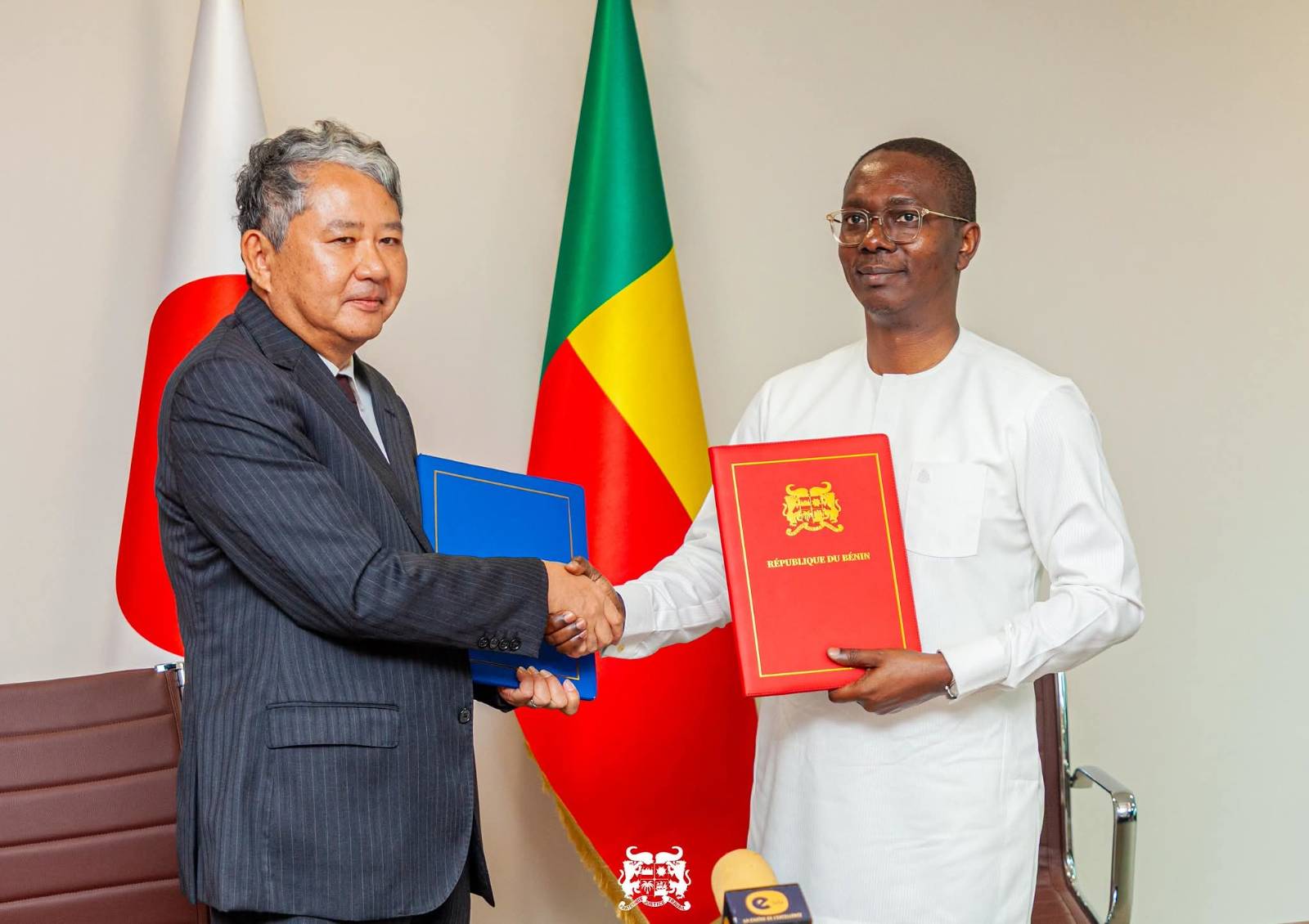
As Cotonou’s traffic gridlock reaches critical levels, one question looms over the city’s most congested junction: What will it take to transform the Vêdoko interchange into a game-changer for daily commuters? The crisis at this strategic crossroads has forced countless drivers, commuters and businesses to confront a harsh reality—Cotonou’s urban mobility is at a breaking point. With the latest Japanese funding injection of 10.8 billion FCFA, announced on October 9, 2026, the stakes for transforming this transportation bottleneck have never been higher.
From funding boost to traffic relief: What the new investment means for daily commuters
The signing of a new 10.8 billion FCFA grant by the Government of Benin and Japan marks a pivotal moment in the ongoing development of the Vêdoko interchange. This fresh infusion of resources brings the project’s total funding to 26.228 billion FCFA—pushing the construction phase into its second critical stage. But while the financial commitment is undeniable, the real question remains: Will this be enough to deliver the long-awaited relief to the thousands of commuters navigating this vital artery each day?
The funds are earmarked for the construction of an elevated overpass running east-west across the junction, along with associated drainage and roadworks that are essential to the project’s completion. With construction already underway since October 2025, the challenge now is to keep the momentum going—ensuring that the finished structure delivers on its promise of smoother, faster travel through one of Cotonou’s most vital intersections.
Why Vêdoko matters: More than just a traffic hotspot
Vêdoko isn’t just another congested intersection in Cotonou—it’s a lifeline for commerce, labor, and daily life. The convergence of taxis, commercial vehicles, motorcycles, and pedestrians here creates a daily bottleneck that extends far beyond simple delays. Workers face mounting stress as commute times balloon unpredictably. Small businesses, from market vendors to logistics operators, report lost productivity and unpredictable delivery windows. Even students and healthcare workers must navigate unreliable travel times that disrupt routines and strain budgets.
At the heart of the problem is the absence of clear traffic flow. Without an elevated structure to separate directional flows, vehicles, motorcycles, and pedestrians compete for limited space—creating stop-and-go patterns that waste fuel, increase emissions, and contribute to urban noise pollution. The planned interchange is designed to eliminate these conflicts by creating a dedicated elevated passage, allowing smoother transitions between major routes.
For workers: reclaiming lost time in the daily commute
For thousands of office workers, teachers, and healthcare professionals, the interchange promises more than just reduced travel times—it offers the return of predictability. A predictable 30-minute commute instead of an unpredictable 90 can mean the difference between on-time classes and lost income. Parents can plan school runs without fear of gridlock detours. Emergency services could move more efficiently through the city. If executed properly, this infrastructure could ripple positively across the local economy.
For businesses: predictable deliveries, reliable logistics
Entrepreneurs in Cotonou’s vibrant markets and industrial zones see daily disruptions as a major cost. Vendors relying on fresh produce from rural areas face spoilage when trucks are stuck for hours. Delivery drivers navigating chaotic routes increase fuel consumption and risk delays. With a functioning interchange, supply chains could stabilize—reducing waste, improving profit margins, and fostering trust between suppliers and retailers.
Challenges ahead: Construction vs. everyday life
While the long-term benefits are clear, the immediate realities of the construction phase present real challenges. For residents and daily commuters, road closures, detours, and temporary signal disruptions are unavoidable. During peak hours, these adjustments could aggravate existing frustrations—unless managed with precision.
To minimize disruption, authorities must prioritize clear signage, real-time traffic updates, and alternative route guidance. Temporary measures need to be communicated widely through local media, digital platforms, and community leaders to ensure that every driver, pedestrian, and motorcyclist knows how to navigate the changing landscape. Effective traffic management during construction will be as crucial as the engineering of the final structure.
Japan’s role: More than money, a partnership for urban transformation
The Japanese grant is more than a financial lifeline—it’s a vote of confidence in Benin’s urban development strategy. This funding builds on a decades-long partnership focused on infrastructure, technology transfer, and sustainable urban planning. As construction progresses, the inclusion of Japanese engineering expertise and local workforce training could leave a lasting legacy beyond the concrete and steel of the interchange.
The project also underscores Benin’s commitment to addressing urban mobility challenges through targeted infrastructure investments. With cities across West Africa grappling with rapid population growth and inadequate transport networks, the Vêdoko interchange serves as a model of how targeted funding—when paired with smart design—can yield long-term public value.
When will Cotonou breathe easier? The timeline to relief
As the project enters its second phase, completion timelines remain a moving target. While the funding ensures continuity, construction delays remain a real possibility—especially in urban environments where utilities, land use, and community needs must be balanced.
Once operational, the benefits won’t be immediate. Traffic patterns take time to adjust. New bottlenecks may emerge at nearby intersections. Authorities will need to monitor performance closely—measuring average travel times, fuel consumption, and air quality before and after the interchange’s opening. Only sustained data and public feedback can validate whether the investment has truly delivered.
Measuring success: What real traffic relief looks like
Success won’t be measured in fanfare or ribbon-cuttings alone. Real indicators include:
- Reduced average commute times—especially during rush hours
- Decreased idle time at traffic signals and intersections
- Lower fuel consumption across the city’s vehicle fleet
- Improved air quality near congested corridors
- Increased public satisfaction with urban mobility options
The Vêdoko interchange has the potential to be transformative—but only if it evolves from a construction site into a functional, well-maintained artery of the city. That transition requires not just funding, but diligent execution, community cooperation, and adaptive management.
The final test: From blueprint to daily reality
The people of Cotonou have waited long enough for relief at Vêdoko. With the latest funding secured, the focus now shifts from financial commitments to tangible outcomes. The citizens of Cotonou deserve more than an exchange of contracts—they deserve an exchange that moves people, goods, and the city itself forward.
Only time will tell whether this interchange lives up to the promise. But with every new day of construction and each kilometer of elevated roadway laid, the dream of smoother, faster commutes draws closer—one beam, one paver, one traffic light at a time.