
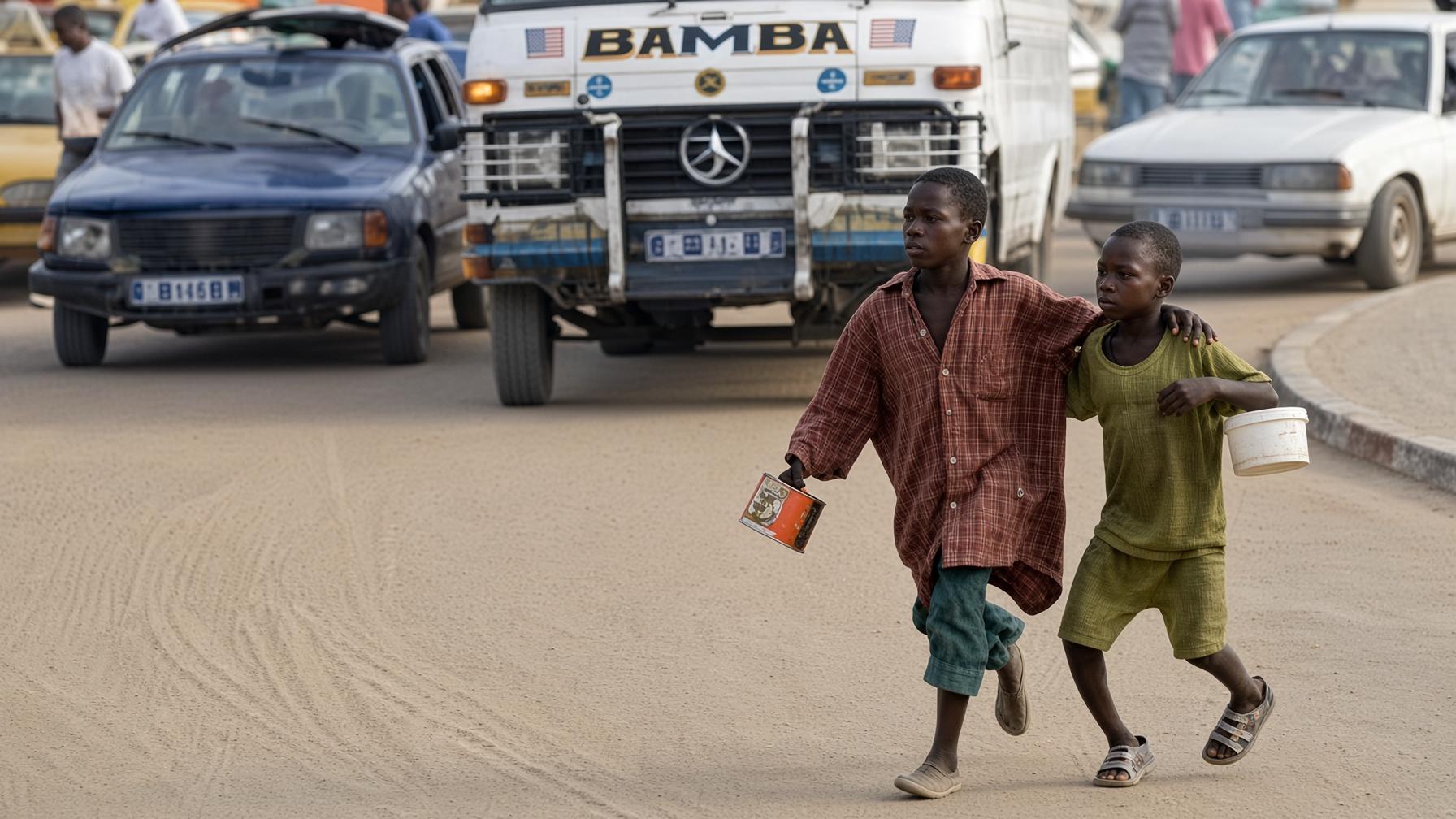
The streets of Bamako tell a grim story of systemic failure. Every day, children, the elderly, and persons with disabilities crowd intersections, government buildings, and religious sites, their outstretched hands a constant reminder of the state’s inability to protect its most vulnerable citizens. Despite repeated pledges and high-profile campaigns, the tide of street begging continues unabated, exposing deep cracks in Mali’s governance and social fabric.
Why has Bamako become the epicenter of a begging epidemic?
What was once a sporadic sight in Mali’s cities has now evolved into a structural component of urban life. At traffic lights, in front of banks, and near mosques, waves of young children—many of them talibés sent by unregulated Quranic schools—risk life and limb darting between vehicles. Others are outright orphans, abandoned by families unable to cope with extreme poverty.
Government initiatives aimed at removing children from the streets have yielded little more than temporary relief. Sweeping operations and awareness campaigns led by the Ministry of Women, Child, and Family Promotion often end in disappointment. Without sustainable shelters, adequate funding, or robust follow-up mechanisms, most returned individuals find themselves back on the streets within hours.
How systemic neglect fuels the begging economy
The surge in street begging is not an isolated tragedy—it is the visible symptom of a state in retreat. Behind the scenes, four key failures are accelerating the crisis:
- Collapse of basic social services: Years of underinvestment in education and social protection have left millions in precarious conditions. The lack of free, quality schooling forces impoverished families to push children into survival strategies that often mean begging on a daily basis.
- Unregulated religious education: Informal Quranic schools operate with near-total opacity. Authorities turn a blind eye to the exploitation of children forced into begging under the guise of religious tradition, despite laws that should protect them.
- Misallocation of public funds: While security and institutional costs consume the majority of the national budget, allocations for human development and poverty reduction remain critically low. This skewed priority system starves social programs of the resources needed to create meaningful change.
- Institutional corruption and inefficiency: Social programs—whether funded by the state or international partners—suffer from chronic mismanagement. Bureaucratic bottlenecks, lack of transparency, and outright graft divert aid away from those in need, rendering even well-intentioned interventions ineffective.
From social crisis to national security threat
The consequences of this failure extend far beyond public image or urban aesthetics. Tens of thousands of children growing up in extreme poverty, illiteracy, and abuse represent fertile ground for recruitment by criminal networks and armed groups operating across the Sahel. Without urgent intervention, these vulnerable youth could become both victims and perpetrators of further instability.
The street begging crisis is not just a humanitarian emergency—it is a litmus test for governance. Every day that passes without decisive action erodes public trust and exposes the widening gap between state promises and lived reality. Mali’s future depends on whether its leaders choose to confront this crisis with honesty, investment, and unwavering political will—or continue to let the most marginalized pay the price.