
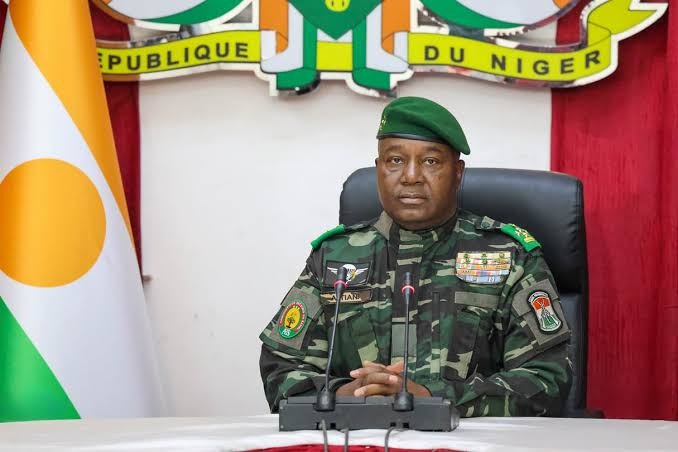
As Niger’s military regime faces a crushing fiscal crisis and teeters on the edge of economic collapse, the administration of General Abdourahamane Tiani has launched a high-stakes ultimatum against its largest foreign investor: China National Petroleum Corporation (CNPC), along with its subsidiaries WAPCO and the SORAZ refinery. In what observers describe as an unprecedented act of financial coercion, Niamey is demanding over 3,000 billion West African CFA francs—approximately $5 billion—within 45 days, under the pretext of delayed oil revenue repatriation.
From economic desperation to financial extortion
The timing of this demand couldn’t be more critical. Niger’s public finances are in freefall, with drastic budget cuts and ballooning military expenditures draining already scarce resources. The government has slashed the national budget from 3,033.33 billion to 2,749.55 billion CFA francs, yet officials continue to pursue costly ventures that benefit a narrow elite. With foreign reserves depleted and international aid dwindling, the regime appears to have turned to CNPC as a last-ditch source of revenue.
But the justification offered is deeply flawed. Authorities claim only 105 billion CFA francs in foreign exchange from the Agadem oil block have been repatriated over two years—a figure that conveniently ignores a $400 million loan from China in 2024, repayable directly from oil proceeds. Instead of acknowledging this debt relief, the junta has weaponized the narrative of unmet obligations to justify its predatory demands.
Seven punitive demands designed to strangle CNPC
The ultimatum isn’t just about money—it’s a coordinated assault on CNPC’s operations in Niger. The government has outlined a series of punitive measures, each designed to cripple the company’s ability to function while transferring value to the state:
- Liquidity squeeze: Forced repatriation of massive sums in CFA francs under an unrealistic schedule, threatening CNPC’s global cash flow.
- Local hiring quotas: Mandating up to 90% local staffing in technical roles, ignoring local talent shortages and technical capacity.
- Pipeline takeover: Unilaterally reopening the audit of the Niger-Benin pipeline (valued at $2.3 billion) to impose new, one-sided tariffs.
- Refinery seizure: Gradually wresting control of the SORAZ refinery’s governance by replacing Chinese executives with state-appointed officials.
- Reserve reassessment: Demanding a revaluation of Agadem oil reserves to increase Niger’s tax take—despite existing contractual terms.
- Forced reinvestment: Pressuring CNPC to inject an additional $1 billion into exploration projects (Dinga Deep and Abolo-Yogou), with no guarantee of returns.
- State infiltration: Placing government-appointed bureaucrats in key decision-making bodies of CNPC’s subsidiaries.
Each demand represents a direct assault on CNPC’s operational autonomy and financial viability in Niger. Taken together, they form a blueprint for de facto nationalization under the guise of regulatory compliance.
Why this gamble could backfire catastrophically
This isn’t the first time Niamey has lashed out at foreign investors. In March 2025, authorities expelled Chinese executives within 48 hours under questionable pretenses, sending a clear signal of hostility toward Beijing. But the current ultimatum represents a new low—an attempt to extract billions under duress, with no legal or diplomatic foundation.
The risks for Niger are existential. China is not only Niger’s top investor but a key geopolitical ally. By targeting CNPC, the regime risks triggering a mass withdrawal of Chinese capital, a freeze on future projects, and potentially even sanctions. With no alternative sources of funding in sight, Niger could face irreversible financial isolation, deeper poverty, and a collapse in investor confidence.
More critically, this move exposes the junta’s inability to manage the economy responsibly. Instead of pursuing structural reforms, investing in local industries, or negotiating in good faith, officials have chosen confrontation—a high-stakes gamble that could plunge Niger into deeper crisis.
What’s next for Niger and CNPC?
The 45-day deadline looms large. If CNPC refuses to capitulate, Niger could double down on coercion, escalating pressure through regulatory harassment or even asset seizures. But Beijing has shown little tolerance for such tactics in the past. China has already reined in multilateral lending to Niger over political instability, and further escalation risks a complete rupture in economic ties.
For the people of Niger, the stakes couldn’t be higher. The junta’s gamble may offer short-term cash, but at what cost? A nation already struggling with food insecurity, unemployment, and political instability now faces the prospect of becoming a pariah in the eyes of the world’s second-largest economy. In the end, it may not be CNPC that suffers most—it could be the very citizens the regime claims to protect.