
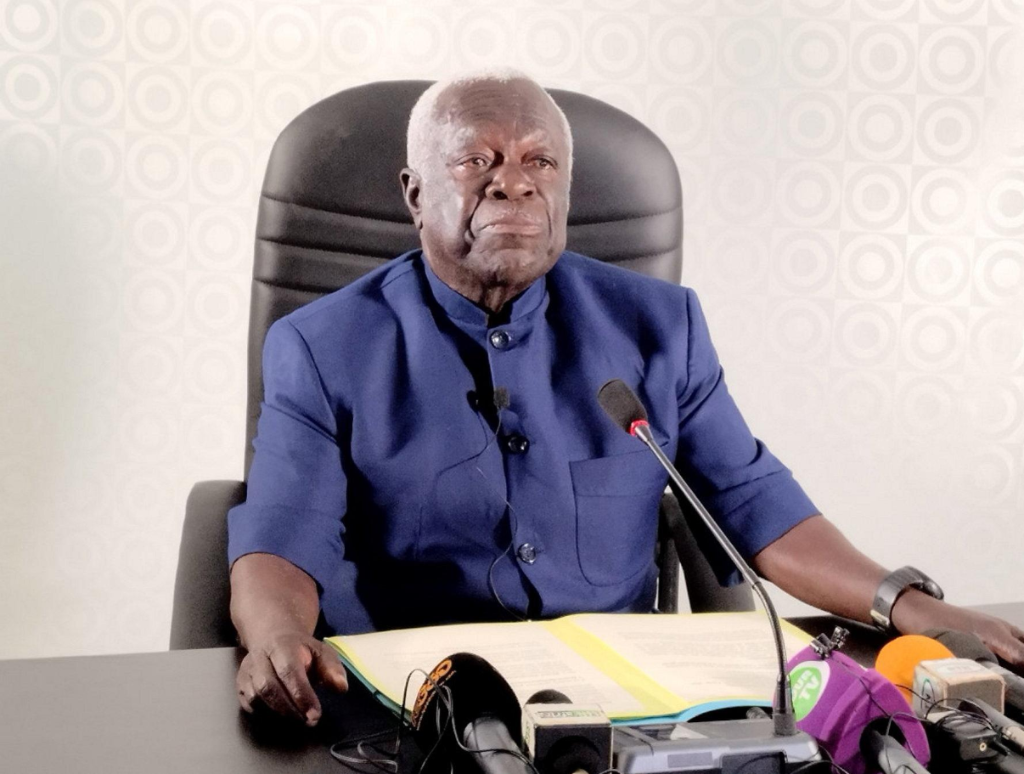
When a former police chief and government minister opens fire on a youth football match in Libreville, the question isn’t just about a single incident—it’s about whether Gabon’s judicial system can truly uphold equality before the law. The case of Jean-Boniface Assélé, once one of the country’s most prominent political figures, now behind bars on charges of attempted murder, has ignited a national debate that cuts to the heart of justice in Gabon.
From Sibang’s football field to Gros-Bouquet prison: the fall of a Gabonese powerbroker
On the evening of November 13, 2026, what should have been an ordinary football match between adolescents at Stade Augustin Monedan in Libreville’s sixth arrondissement took a violent turn. According to prosecutors, Jean-Boniface Assélé, a retired police general and multiple-time former minister under Omar Bongo, arrived at the stadium armed with a 16-gauge shotgun. Witnesses report that after allegedly ordering the young players to leave the field, he discharged his weapon. A single bullet struck 12-year-old Jason Merlin Midioko—popularly known as Dylan—severely wounding him in the right flank.
Unlike past incidents where powerful figures avoided scrutiny, Assélé did not flee. Instead, he voluntarily surrendered to judicial police the following night, prompting the opening of a preliminary investigation into the shooting and his possession of an unlicensed firearm.
Dylan’s fight for survival amid national outrage
The incident sparked immediate public outrage, encapsulated in the social media hashtag #JusticeForDylan. While Assélé faced legal consequences, Dylan’s condition became a focal point of national concern. Rushed to the Centre Hospitalier Universitaire Mère-Enfant Fondation Jeanne-Ebori, the young boy underwent emergency surgery and was admitted to intensive care. Though his condition stabilized, a bullet fragment remained lodged in a sensitive area, requiring ongoing medical supervision.
Gabon’s leadership responded swiftly. President Brice Clotaire Oligui Nguema visited Dylan in hospital, ordering full coverage of his medical evacuation costs, while ministers of health and social affairs mobilized support for the family. The public response reflected a demand for accountability—not just for Assélé, but for a judicial system that must treat all citizens equally.
From minister to inmate: justice catches up with Gabon’s elite
Jean-Boniface Assélé is no ordinary defendant. A former commander of the national police force, he served as a minister on multiple occasions under President Omar Bongo and later as a member of parliament. He led the Cercle des Libéraux Réformateurs, a significant political bloc, and was long regarded as one of Gabon’s most influential political operatives.
Yet on November 16, 2026—just days after the shooting—Assélé was taken into custody. Following his appearance before a prosecutor in Libreville, a investigating judge ordered his detention at the country’s central prison in Gros-Bouquet. The charges: attempted murder and illegal possession of a firearm. The message was clear: Senegal’s judicial system—no, Gabon’s—would not grant immunity based on political stature or past influence.
What the law says: charges, presumption of innocence, and the path ahead
Under Gabonese law, Jean-Boniface Assélé is presumed innocent until proven guilty. The judicial process now enters a critical phase. The investigating judge must review evidence, examine motives, and reconstruct the events of November 13. Key questions remain unanswered: Was the shooting deliberate? Did Assélé give any prior warnings? Were there other individuals involved in the decision to use force?
The investigation must proceed with rigor, ensuring fair treatment for all parties—including the accused. Yet the symbolic weight of this case is undeniable. Can a figure with decades of public service be held to the same standards as any other citizen? The government’s response—immediate legal action and high-level support for Dylan—suggests a willingness to uphold the principle that justice must be blind to privilege.
Equality before the law: a test for Gabon’s judiciary
The shooting in Sibang has become more than a tragedy—it has become a referendum on justice in Gabon. President Oligui Nguema emphasized this point during his hospital visit, stating unequivocally that “justice is the same for all.” Such remarks carry weight in a country where elites have historically operated with impunity.
Public reaction has been swift and vocal. Social media erupted with calls for transparency. Civil society groups and media outlets have demanded a full accounting of the facts. The family of Assélé has expressed regret over the incident, even as they await legal developments.
As the case proceeds, Gabonese citizens watch closely. Will Dylan’s shooter face the full consequences of his actions? Will Gabon’s judicial system demonstrate that no individual—regardless of past power—is above the law?
The road to truth: what’s next in the Dylan shooting case?
For now, the judicial process is just beginning. Dylan continues his recovery under medical care, while Assélé remains in detention awaiting trial. The investigating judge will need to reconstruct the events with precision: the sequence of shots, the presence of others, and the legal status of the weapon used.
But beyond the legal technicalities, the case raises a deeper question: Can Gabon—with its history of entrenched elites and informal power networks—finally demonstrate that the law applies equally to all, from the former minister in Gros-Bouquet prison to the young football player fighting for his life?
One thing is certain: the eyes of the nation are on the courts. And the world is watching whether Gabon’s judiciary can deliver justice—fair, transparent, and unyielding—even when the defendant once wore the uniform of the state.