
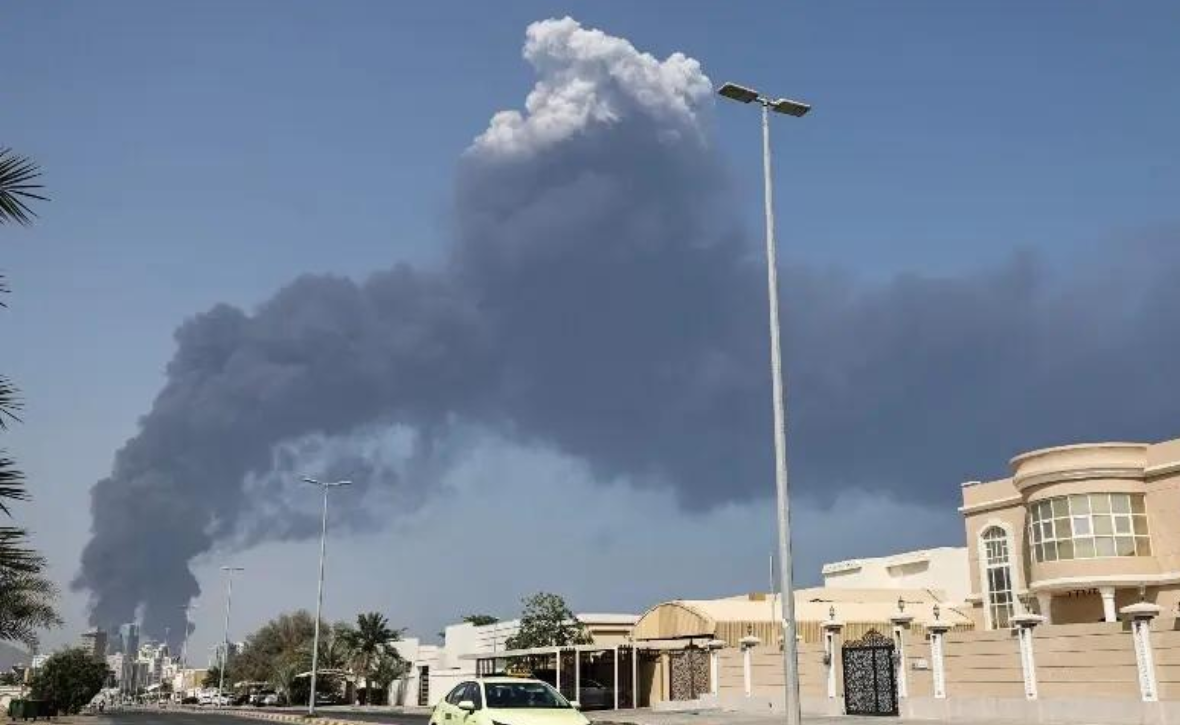
The latest military confrontation between Iran and the United States has escalated dramatically in the Persian Gulf, with Tehran launching targeted strikes on key American military installations in Bahrain and Kuwait. These attacks, reported on November 18, 2026, have intensified regional tensions and raised critical questions about the future of US military operations in the Gulf.
Military strikes target US strategic hubs in Bahrain and Kuwait
The Iranian strikes have specifically hit military infrastructure critical to US operations in the region. Among the targets were the Ali Al Salem Air Base in Kuwait, a major logistics and operations hub, and suspected drone attacks on Bahrain’s Sheikh Isa Air Base, which houses advanced radar systems.
Kuwaiti authorities reported intercepting hostile drones, though the full extent of the damage remains unclear. Bahrain, home to the US Fifth Fleet’s headquarters, confirmed multiple air threats but has not verified direct hits on the fleet’s command center.
Bahrain’s Fifth Fleet: At the heart of regional tensions
Bahrain’s strategic importance cannot be overstated. The US Fifth Fleet, based in Manama, plays a crucial role in securing maritime routes in the Persian Gulf, the Gulf of Oman, and the Arabian Sea. Any disruption to its operations could have far-reaching consequences for regional stability and global trade.
While social media reports suggested a massive strike on the Fifth Fleet headquarters, Bahraini officials have not confirmed such an attack. The distinction is vital, as misinformation could further inflame tensions.
Kuwait’s vulnerability in the crossfire
Kuwait’s close military cooperation with the US has made it a focal point in Iran’s retaliatory strategy. The Ali Al Salem Air Base, a cornerstone of American military logistics in the region, has become a symbol of the growing risks faced by Gulf states caught in the Iran-US standoff.
The interception of drones over Kuwaiti airspace underscores the increasing pressure on regional defense systems. For Gulf nations, the challenge is twofold: protecting their sovereignty while avoiding direct involvement in a conflict that could destabilize the entire region.
Revenge strikes or strategic deterrence? The Iranian calculus
Iran’s latest operations appear to be a calculated response to US military actions in the region. Tehran has framed its strikes as retaliatory measures, justified by previous US operations against Iranian targets. However, this logic risks triggering a dangerous cycle of escalation, where each strike heightens the chances of a broader military confrontation.
A single miscalculation—or a strike resulting in significant US casualties—could compel Washington to launch a large-scale military response. The stakes are higher than ever, with the potential for a regional war that would engulf not just Iran and the US, but the entire Gulf.
The Strait of Hormuz: A ticking time bomb for global energy markets
The Persian Gulf’s geopolitical tensions are not just a military concern; they pose a direct threat to the world’s energy supply. The Strait of Hormuz, a chokepoint for nearly a third of global oil shipments, remains a flashpoint in any escalation.
Disruptions to maritime traffic in the strait could trigger a surge in oil prices, destabilize global energy markets, and exacerbate economic volatility worldwide. The fear of commercial shipping being targeted or blockaded adds urgency to diplomatic efforts to de-escalate the situation.
Diplomacy’s uphill battle: Can the Gulf avoid a new war?
As military actions intensify, diplomatic channels are struggling to keep pace. Countries like Oman and Qatar, which maintain relations with both Iran and the US, are attempting to mediate. However, the recent strikes have eroded trust and made meaningful dialogue increasingly difficult.
Washington’s priority remains the protection of its troops and military assets, while Iran views its strikes as essential to deterring further US aggression. The question now is whether these opposing objectives can be reconciled before the cycle of violence spirals out of control.
What’s next for the Persian Gulf?
The coming hours and days will be decisive. Will the region find a path to de-escalation, or will the latest strikes mark the beginning of a new, more destructive phase of conflict? One thing is certain: the military pressure on US installations in Bahrain and Kuwait has never been greater, and the consequences of failure could reshape the Middle East for generations.