
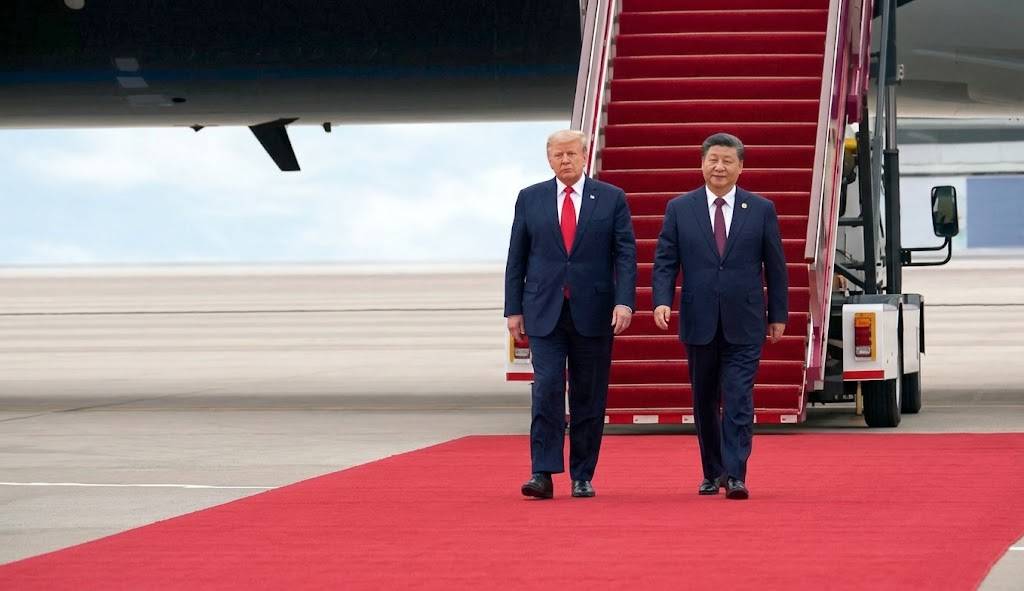
Shenzhen, China — November 2026. Air Force One touches down at Shenzhen Bao’an International Airport, marking the arrival of a president whose policies have redefined American diplomacy. Donald Trump’s presence at the APEC summit isn’t just another diplomatic stop; it sets the stage for a historic trilateral meeting with China’s Xi Jinping and Russia’s Vladimir Putin. The world watches: can three of the world’s most influential leaders realign global power in a single room?
Three superpowers, one high-stakes negotiation table
The convergence of Donald Trump, Xi Jinping, and Vladimir Poutine in Shenzhen represents more than a diplomatic formality — it’s a potential inflection point for international relations. The United States, China, and Russia collectively shape global economics, military strategy, and geopolitical alliances. Their discussions could ripple across continents, influencing trade, security, and technological progress.
For Trump, the meeting is an opportunity to assert American interests, strengthen ties with Beijing and Moscow, and push for progress on pressing international security issues. Xi Jinping, meanwhile, uses Shenzhen’s stage to reinforce China’s growing role in global governance, positioning Beijing as a key mediator in high-stakes diplomacy. And for Putin, amid ongoing Western sanctions and the Ukraine conflict, this summit offers a critical platform to reassert Russia’s strategic voice.
The stakes couldn’t be higher. Each leader brings a distinct agenda to the table, with outcomes that could reshape alliances, redefine economic policies, and alter the balance of global influence.
Nuclear arms, Iran, and Ukraine: the flashpoints on the agenda
Among the most pressing topics likely to dominate the closed-door discussions is nuclear disarmament. Trump has long advocated for reducing global nuclear arsenals — a delicate issue when three of the world’s largest nuclear powers are at the table. Any tangible progress here would send a seismic signal to global security frameworks.
The crisis in Ukraine remains another central concern. Despite starkly opposing positions — Washington pushing for diplomacy, Moscow defending its territorial claims — China’s role as a mediator could offer a rare chance for de-escalation. Meanwhile, the ongoing tensions involving Iran in the Middle East add another layer of complexity, with implications for energy markets and regional stability.
Trade and technology will also be critical discussion points. From advanced semiconductor restrictions to controls on critical minerals, the three nations wield immense influence over the global tech supply chain. Any compromise or conflict here could trigger economic ripple effects felt from Silicon Valley to Shenzhen’s tech hub.
But can these leaders move beyond rhetoric and deliver concrete agreements?
Can three capitals reshape global order — or just reinforce division?
Some analysts are drawing parallels to the 1945 Yalta Conference, where Allied leaders outlined the post-war world. Yet the comparison is fraught with risk. The geopolitical landscape of 2026 is far more fragmented, multipolar, and interconnected than the mid-20th century. There’s no indication that Trump, Xi, or Putin are negotiating a new division of global spheres of influence.
What’s truly at stake is whether this summit can produce a framework for cooperation — one that includes, rather than excludes, smaller nations, international institutions, and emerging powers. Europe, Ukraine, and Asian allies will scrutinize every word and gesture. But no three leaders, no matter how powerful, can rewrite the rules of global governance unilaterally.
The world waits — and the consequences will be irreversible
In an era marked by trade wars, shifting alliances, and rising military tensions, the Shenzhen summit arrives not a moment too soon — and not a moment too late. The world holds its breath as Trump, Xi, and Putin prepare to sit down. Will they use this opportunity to build bridges or deepen divides?
The answer could define the next decade. From nuclear security to technological dominance, from energy flows to financial systems, the ripple effects of this meeting will extend far beyond the walls of the conference hall. One thing is certain: the decisions made in Shenzhen won’t just shape the future of these three nations — they’ll shape the future of billions.
As cameras flash and microphones record, one question lingers in the air, unspoken but undeniable:
What kind of world will emerge from this meeting — and who will get to decide?