
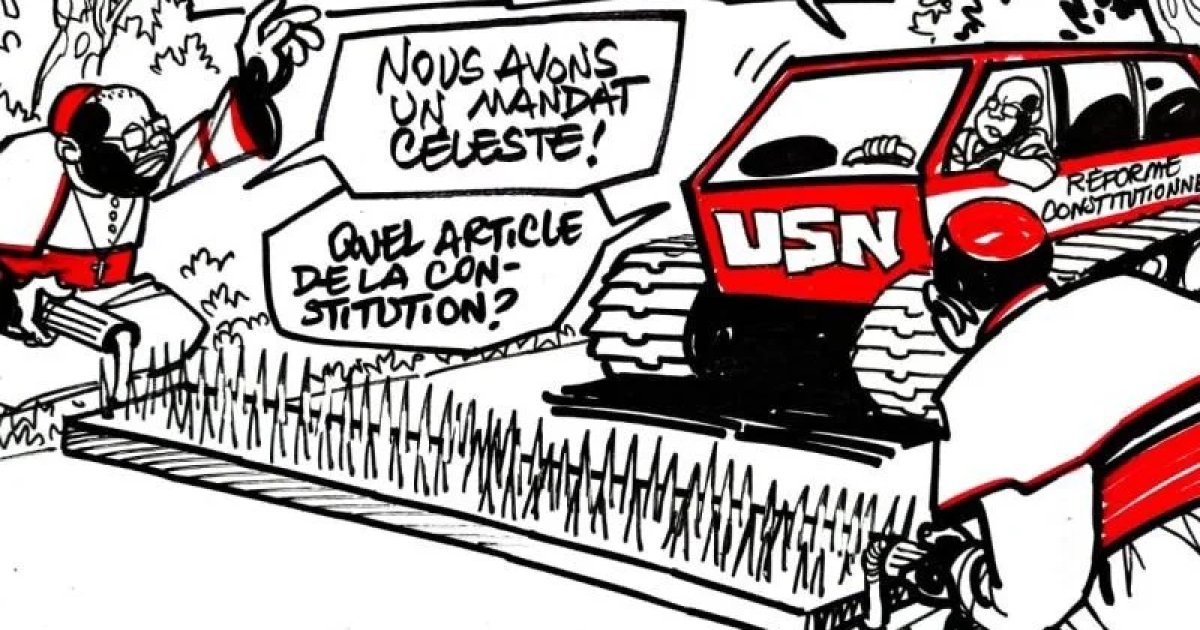
A fresh wave of political friction has emerged in the République démocratique du Congo as the Catholic Church openly clashes with the government. This latest confrontation follows a decisive stance taken by the Conférence épiscopale nationale du Congo (CENCO) against proposed constitutional amendments that would enable President Félix Tshisekedi to seek a third term in 2028.
The leadership of the Church has called upon Félix Tshisekedi to respect the sacred oath he took before both God and the citizens of the nation. In a stern warning, the clergy indicated they are prepared to mobilize public actions should the government persist. They have urged the population to stand firm against any maneuvers that might lead to the balkanization of the country or ignite a devastating civil war.
The threat of internal conflict
Under the current legal framework of the Congo, a president is restricted to two terms in office. Having assumed power in January 2019 and secured a second term in 2023, Félix Tshisekedi is technically serving his final mandate. However, during a press briefing last May, the head of state hinted at the possibility of a third term, suggesting a referendum could be organized to modify the Constitution. Since that announcement, his political allies have been actively campaigning for this change.
A history of defending the Constitution
This is not the first time the Catholic Church has stood as a bulwark against constitutional overhauls. Previously, the clergy successfully opposed former President Joseph Kabila when he attempted to bypass term limits. Deeply concerned by the current trajectory, the CENCO convened an extraordinary plenary assembly in Kinshasa from June 18 to 20, 2026.
In a comprehensive 17-point declaration, the 37 members of the episcopal conference—comprising cardinals, bishops, and priests—warned that the nation is in grave danger. They highlighted that despite various peace agreements, the country remains embroiled in conflict. For four years, rebels from the Alliance du Fleuve Congo and the Mouvement du 23 mars (AFC/M23) have maintained control over parts of Nord-Kivu and Sud-Kivu, where they continue to establish their own administrative structures.
Security crises and health risks
The situation is equally dire in Ituri and other sectors of Nord-Kivu, where armed groups like the Forces démocratiques alliées (ADF) are responsible for the deaths of thousands of Congolese civilians. Compounding these security challenges is the resurgence of the Ebola virus in the East, which poses a significant threat of a wider epidemic.
The clergy expressed profound alarm over the rising tensions fueled by the ruling majority’s push to alter the Constitution of February 18, 2006. They noted that this campaign is being conducted using state resources within an atmosphere of intimidation. Dissenting voices within the ruling coalition are being silenced through fear, while opposition protests are frequently met with police violence, often involving a political militia known as the ‘Force du progrès’.
For the Congolese bishops, there is no logical necessity or urgency to amend the fundamental law. They maintain that the government’s true priorities should be restoring peace, ensuring social welfare, and fostering national unity.
Government supporters cry subversion
The response from the presidency’s supporters was swift and sharp. The Union sacrée pour la Nation (USN), a massive coalition of 400 political parties backing Félix Tshisekedi, expressed outrage at the Church’s position. The coalition condemned the bishops’ declaration, labeling it an act of subversion aimed at undermining democratically established institutions.
Supporters of the President argued that the language used by the bishops was inflammatory. They claimed the clergy’s rhetoric was designed to incite a popular uprising and provoke a collapse of the existing constitutional order.