
Cameroon and UNESCO champion multilingual education on mother tongue day
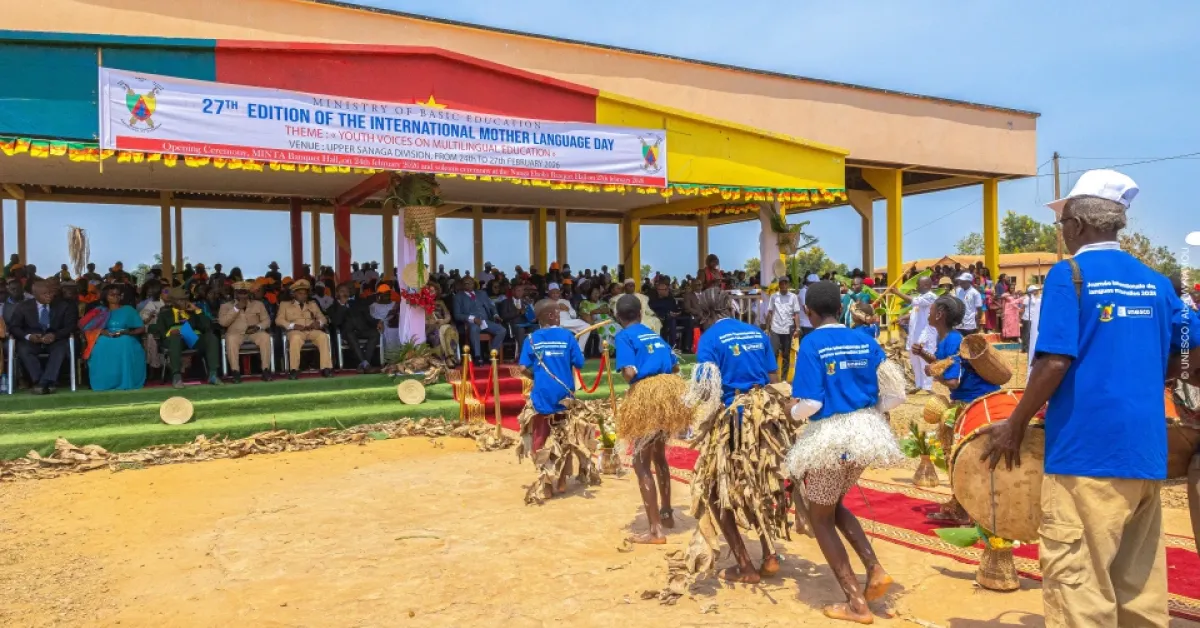
The 27th edition of the International Mother Tongue Day, held on February 27, 2026, in Nanga Eboko, Cameroon, concluded with a vibrant celebration of linguistic diversity and educational innovation. Organized under the theme “Youth voices for multilingual education”, the event highlighted the pivotal role of young learners in preserving and promoting mother tongues as cornerstones of cultural heritage and academic success.
Over a week of nationwide activities, schools, communities, and policymakers across Cameroon engaged in discussions, workshops, and performances designed to underscore the importance of learning in one’s first language. This year’s focus on youth participation reflected a growing recognition that multilingual education begins with empowering the next generation to value and sustain their linguistic roots.
a week of linguistic celebration and educational initiatives
The closing ceremony was led by Cameroon’s Minister of Basic Education, Professor Laurent Serge Etoundi Ngoa, alongside Mr. Hilaire Mputu, Director of UNESCO’s Central Africa Regional Office. Both leaders emphasized the transformative power of mother tongue education, particularly in early childhood, as a catalyst for improved learning outcomes and social cohesion.
UNESCO’s global advocacy for multilingual education aligns with its broader mission to safeguard linguistic diversity as a driver of sustainable development and intercultural dialogue. The annual International Mother Tongue Day, observed globally on February 21, serves as a vital platform to advocate for educational policies that prioritize linguistic inclusion and cultural preservation.
youth performances showcase linguistic richness
The event featured lively cultural and linguistic presentations by primary school students, showcasing the vibrant tapestry of Cameroon’s more than 200 languages. From rhythmic drumming to poetic recitations in local dialects, the performances demonstrated how mother tongues serve not only as vehicles of communication but also as repositories of collective memory and identity.
Through these activities, UNESCO reaffirmed its commitment to supporting member states in integrating multilingual education into national curricula. The organization underscored that languages are not merely tools for communication but essential components of educational equity, social cohesion, and cultural sustainability.
why mother tongue education matters
Research consistently shows that children learn best when educated in their mother tongue during their formative years. This approach not only enhances cognitive development and academic performance but also fosters a sense of pride and belonging among learners. By preserving linguistic diversity, Cameroon and UNESCO are investing in a future where education is accessible, inclusive, and rooted in cultural authenticity.
The collaboration between UNESCO and Cameroon reflects a shared vision: to ensure that every child, regardless of their linguistic background, has the opportunity to thrive in an educational environment that respects and nurtures their identity. As the world becomes increasingly interconnected, the preservation of mother tongues offers a bridge between tradition and modernity, enabling communities to share their heritage while participating fully in global discourse.
This year’s Mother Tongue Day in Cameroon served as a powerful reminder that language is more than words—it is the heartbeat of culture, the foundation of learning, and a key to unlocking human potential.