
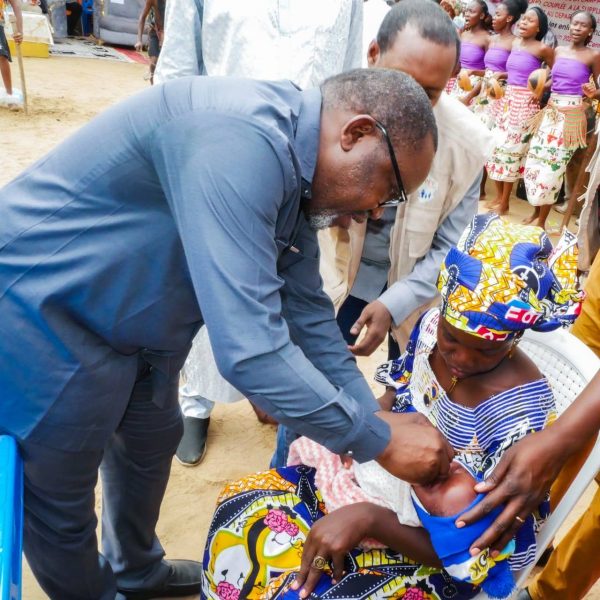
Chad’s public health minister initiates a critical polio vaccination campaign alongside vitamin A supplementation and deworming from June 5–7, 2026.
The campaign, launched at a health center in N’Djamena’s 7th arrondissement, targets 6.4 million children under five for polio immunization, while 4.6 million will receive vitamin A and 4.2 million will undergo deworming with albendazole.
Government and partners rally for child health protection
The government’s delegate to N’Djamena, Amina Kodjienna, urged households to support health teams by ensuring all eligible children receive vaccines. She highlighted that this initiative strengthens ongoing efforts to safeguard the nation’s youngest citizens.
Luciano Calestini, UNICEF representative in Chad, stressed the urgency of eradicating polio, calling for sustained dedication from all stakeholders to eliminate this devastating disease.
Progress and persistent challenges
Chad has remained free of wild poliovirus since June 14, 2012, and was officially declared polio-free in 2016 by the WHO Regional Certification Commission for Africa. However, the circulation of vaccine-derived poliovirus continues to pose risks, demanding constant vigilance and collective action.
Public Health Minister Dr. Abdelmadjid Abderahim emphasized that achieving at least 95% coverage in every health district is essential to consolidating earlier gains and halting vaccine-derived poliovirus transmission nationwide.
Community-driven success
Minister Abderahim commended the May campaign’s achievements, praising the dedication of field teams, supervisors, local authorities, and communities. He underscored that child health is a shared responsibility, extending beyond healthcare workers to include families, local leaders, partners, and citizens alike.
The minister expressed gratitude to technical and financial partners, including the WHO, UNICEF, Gavi, Rotary International, and Nutrition International, for their unwavering support in protecting Chadian children from vaccine-preventable diseases.
Special recognition was also extended to health agents, supervisors, vaccinators, social mobilizers, volunteers, and community actors whose combined efforts are driving the campaign’s success.